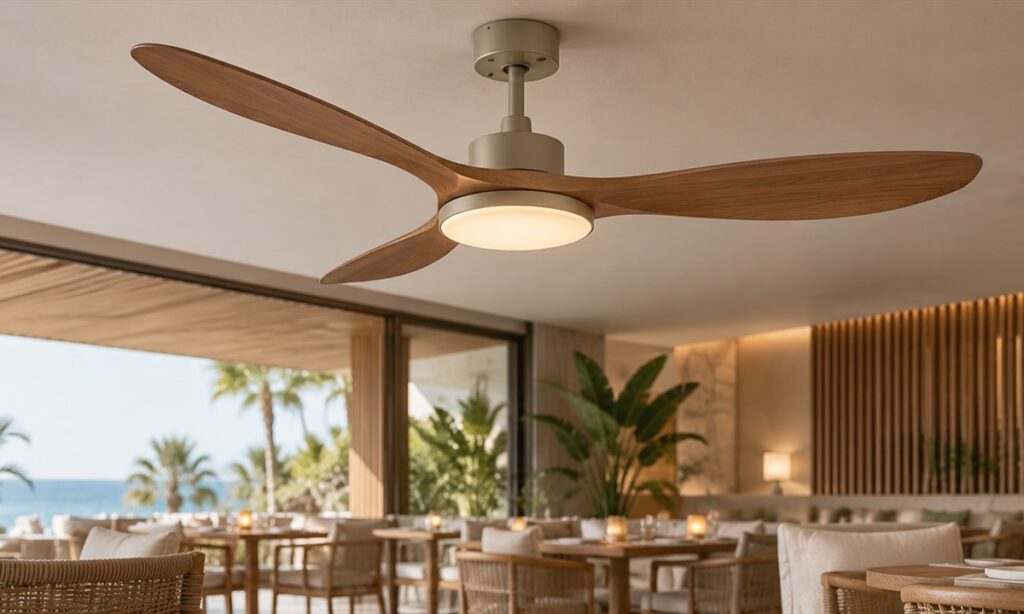













A ceiling fan with light combines several functions in one installed product: a rotating appliance, a suspension system, electrical controls, an LED light source and sometimes a radio remote. That means “CE,” “ETL” or another familiar mark cannot be assessed from a catalogue image alone.
Importers should build a compliance matrix for the exact model and target market before approving packaging or mass production. This guide is a purchasing framework, not legal advice; applicable rules must be confirmed with qualified local professionals and the relevant authority.
Define the model before selecting standards
Record the fan type, blade span, rated voltage and frequency, motor technology, input power, mounting method, light-kit construction, replaceability, controller and remote functions. Note whether the product is sold as one complete unit or whether the fan, light kit and control can be supplied separately.
Small changes may affect scope or evidence. A Wi-Fi module adds radio requirements; a different driver can alter EMC and safety results; a revised downrod or blade set can affect mechanical tests. Keep a bill of materials and model-difference table tied to the reports.
Check appliance and suspension safety
For household and similar electric fans, IEC 60335-2-80 is an important international reference used with the general appliance standard. Its scope includes ceiling fans and separate controls supplied with fans. A test program should address relevant electrical, thermal, mechanical and abnormal-operation hazards.
The suspension system is central to risk. Review mounting hardware, locking features, instructions, permissible ceiling structures, blade clearance and any wobble or endurance criteria required by the destination market. Installation instructions should state who may install the product and how the supply is isolated.
Treat the light kit as a defined subsystem
Document the LED module, driver, optical cover, thermal path and replacement method. Confirm whether the light source or control gear is user-replaceable, service-replaceable or non-replaceable and make instructions and markings consistent with that decision.
Do not use one generic LED report to cover unrelated fan models without a documented technical rationale. The assembled product’s temperatures, wiring and enclosure can differ from the standalone component test.
Add energy and performance rules by market
In the United States, ceiling fans are covered products under Department of Energy rules, with prescribed energy-conservation standards, test procedures and certification provisions. Determine the exact product class and effective requirements for the manufacturing date.
Other markets may regulate comfort fans, motors, standby power, lighting energy performance or energy labels differently. Create a row for each country rather than assuming one global test package.
Include EMC, radio and restricted substances
Electronic speed controls, LED drivers and DC-motor electronics can introduce electromagnetic compatibility obligations. If the remote uses radio frequency, identify the band, output, module approval status and destination-country radio requirements. Bluetooth or Wi-Fi functions also require accurate user information and software/configuration control.
For markets with substance restrictions or environmental declarations, maintain supplier declarations and risk-based material test evidence for relevant parts. A declaration should be traceable to the actual bill of materials, not simply copied from an unrelated product family.
Build a technical file an importer can defend
The file should contain:
- Product description, photos, ratings and model list.
- Applicable-regulation and standard matrix by market.
- Construction drawings, wiring diagram and bill of materials.
- Critical-component certificates and model-difference rationale.
- Full reports, certificates and declarations.
- Risk assessment and corrective-action records.
- Labels, packaging and instructions in required languages.
- Production controls and change-notification procedure.
- Traceability code, factory and batch records.
RFQ questions that expose gaps early
Ask which exact model numbers appear in each report; which product and component changes require retesting; who owns the certificates; whether the importing entity can access the complete technical documents; and how labels and manuals will be approved. Request a sample whose construction matches the evidence set.
New Lights can prepare a model-level document list for a ceiling fan lighting project. Send the destination countries, electrical ratings, control functions and proposed model family with your inquiry.
References
- IEC (הנציבות הבין־לאומית לאלקטרוטכניקה), IEC 60335-2-80:2024 — particular requirements for fans
- משרד האנרגיה של ארה״ב, Ceiling Fans — standards, test procedure and compliance
- הנציבות האירופית, The Blue Guide on EU product rules 2022)
- New Lights (ניו לייטס), LED fan light RFQ checklist