












Commercial lighting wholesale decisions are rarely won or lost on unit price alone. A lower quotation can become the more expensive option after mixed specifications, repeated samples, missing compliance documents, late production or unstructured claims.
Use one evidence-based checklist so every supplier answers the same commercial and technical questions.
1. Define the supply scope first
State whether you need standard catalogue products, private label, color and packaging changes, or a new product development project. List target markets, annual volume, expected order frequency and launch date. Separate “must-have” requirements from preferences.
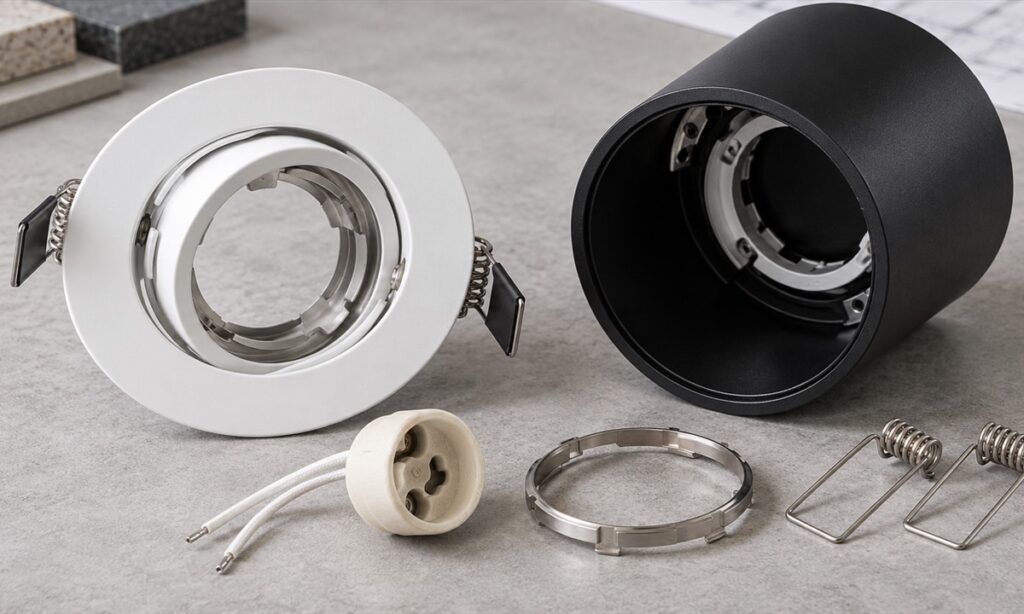
For each SKU, freeze a specification sheet covering electrical input, output, CCT and tolerance, CRI, beam or distribution, dimming protocol, finish, installation method, rated environment, packaging and included accessories. Version-control the document so a sample approval cannot be confused with a later quotation.
2. Ask for model-level compliance evidence
A factory certificate is not the same as product conformity. Request reports and certificates that identify the applicable model family, standard edition, applicant/manufacturer, test laboratory, issue date and any critical components or construction limitations.
The importer’s obligations differ by market. EU economic operators should review the applicable product rules and technical documentation; U.S. importers may carry testing or certification responsibilities for regulated consumer products. Treat a logo in a brochure as a starting point, not the conclusion of due diligence.
3. Use samples to close decisions
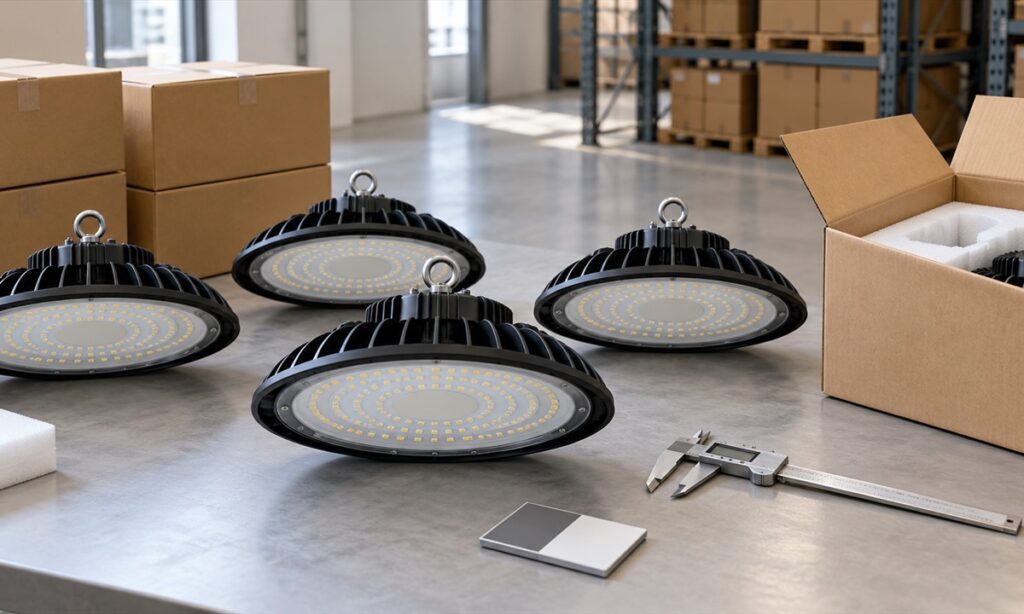
Approve samples against written criteria: construction and finish, markings, dimensions, electrical readings, light output and color, dimming behavior, thermal behavior, installation steps and packaging. Photograph the approved sample and retain its label and test data.
If several SKUs share a platform, define which differences are covered by one tested representative and which require separate checks. Record every approved deviation in writing.
4. Break MOQ into its real constraints
“MOQ 500 pieces” may be driven by LEDs, drivers, housings, surface finish, printed packaging or assembly efficiency. Ask for:
- MOQ per model, wattage, color, finish and package;
- mixed-SKU and mixed-container rules;
- private-label setup quantities and charges;
- spare-part and replacement-unit quantities;
- price breaks and their exact conditions.
This reveals whether a pilot order can be designed without creating obsolete packaging or non-serviceable stock.
5. Separate production time from total lead time
Build a milestone schedule: specification freeze, sample production, sample approval, material purchase, mass production, inspection, corrective work if needed, booking, export documents and departure. Identify what starts the clock—deposit, artwork approval or final specification sign-off.
Ask the supplier to flag long-lead components and seasonal capacity risks. A credible lead time includes buffers and dependencies; it is not merely the shortest number a salesperson can quote.
6. Agree inspection and change control
Define incoming checks, in-process controls, ageing or functional testing and pre-shipment inspection. If you use AQL sampling, specify the standard edition, inspection level, defect classes and acceptance limits in the purchase documents. Sampling is a lot-acceptance method, not proof that every unit is defect-free.
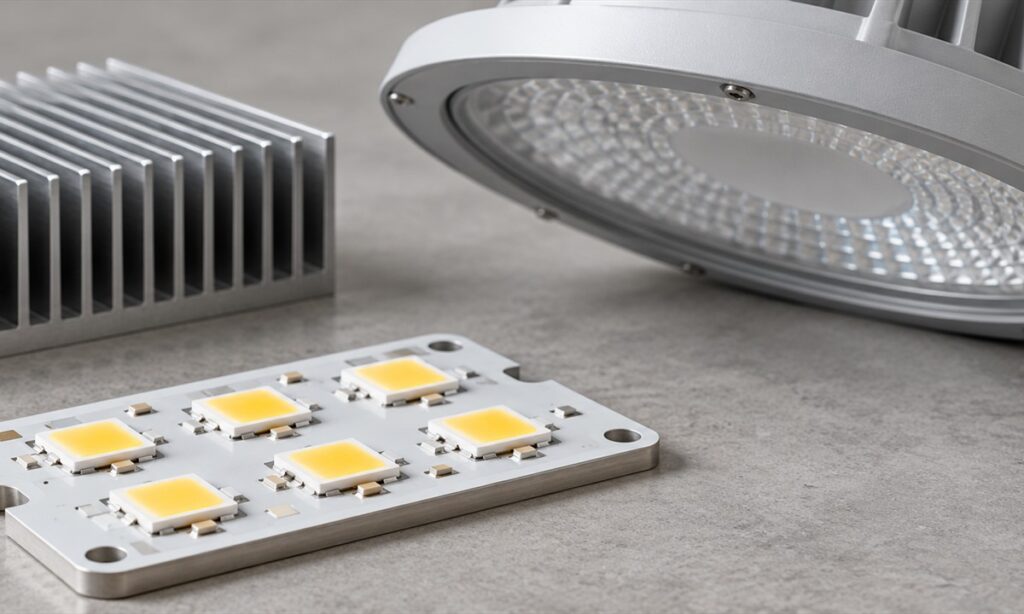
Require written approval before changing an LED package, driver, optical component, cable, housing material or coating process. Revalidation should match the risk created by the change.
7. Make after-sales measurable
Before purchase, agree the warranty start point, coverage, exclusions, claim window, evidence package and remedy options. Clarify who pays freight, labor and duties, and whether spare drivers or complete replacements are supplied. Ask how failure data will be summarized by model, batch and symptom.
Supplier scorecard
Weight the decision according to your business: specification fit, evidence quality, sample result, landed cost, flexibility, delivery reliability, quality controls and claim response. Keep “unknown” separate from “fail”; an unknown item requires evidence before approval.
New Lights supports importers, distributors and project buyers with product selection, samples, model-level documentation and order execution. Send your target market, SKU list and required launch date for a structured quotation.
References
- 유럽연합 집행위원회, The Blue Guide on EU product rules 2022)
- U.S. CPSC, eFiling resources for importers
- ISO, ISO 9001:2026 quality management systems
- New Lights(뉴 라이츠), LED 조명 샘플 평가 체크리스트
- New Lights(뉴 라이츠), pre-shipment inspection and AQL