

Outdoor lighting can support observation, camera imaging, safe movement and after-dark work, but it is only one part of a security system. Start with the site tasks: decide what people or cameras must detect, recognize or inspect; assign permanent floodlights to repeatable zones; reserve portable work lights for temporary tasks; then verify the complete scene at night. More output is not automatically a better result when glare, deep shadows or camera overexposure hide useful detail.
Start With Site Zones, Not Fixture Wattage
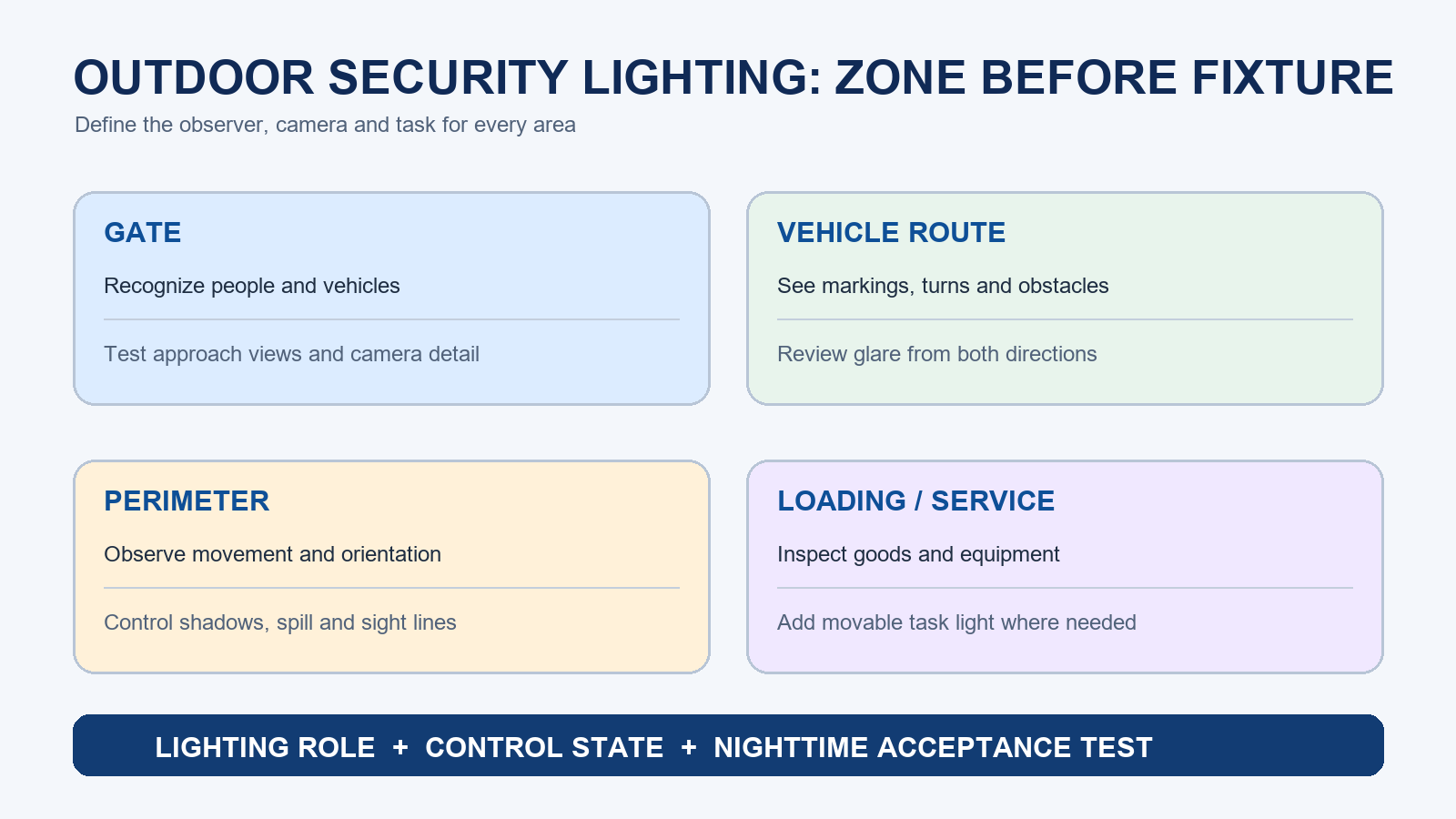
Map entrances, pedestrian routes, vehicle lanes, loading points, equipment yards, blind corners, boundaries and camera fields of view. For each zone, write one observable task. A vague objective such as “improve security” is difficult to design or test. “Recognize a person approaching the gate,” “read a vehicle plate at the stop line,” or “inspect a damaged pallet at the loading bay” gives the project team something measurable.
U.S. Department of Energy Better Buildings guidance notes that more lighting is not automatically supported as safer. Useful exterior lighting works with site design, operations and surveillance. This is why the first design document should be a zone-and-task schedule rather than a list of wattages.
| Site zone | Primary visual task | Lighting question | Verification method |
|---|---|---|---|
| Gate or entrance | Recognize people, vehicles or credentials | Is the subject visible from the guard and camera positions? | Nighttime approach test using representative people and vehicles |
| Perimeter or yard | Observe movement and maintain orientation | Are important areas visible without intense sources in the normal sight line? | Walkthrough from patrol and fixed observation points |
| Vehicle lane | Drive, turn and stop safely | Are transitions, markings and obstacles visible without driver glare? | Driver-view review in both directions |
| Loading or service area | Inspect goods, labels and equipment | Is local task light available where work actually occurs? | Representative loading or maintenance task |
| Camera field | Retain identifying detail | Does the camera hold detail in bright and dark parts of the frame? | Recorded footage review in normal and event modes |
Give Permanent Floodlights a Defined Role
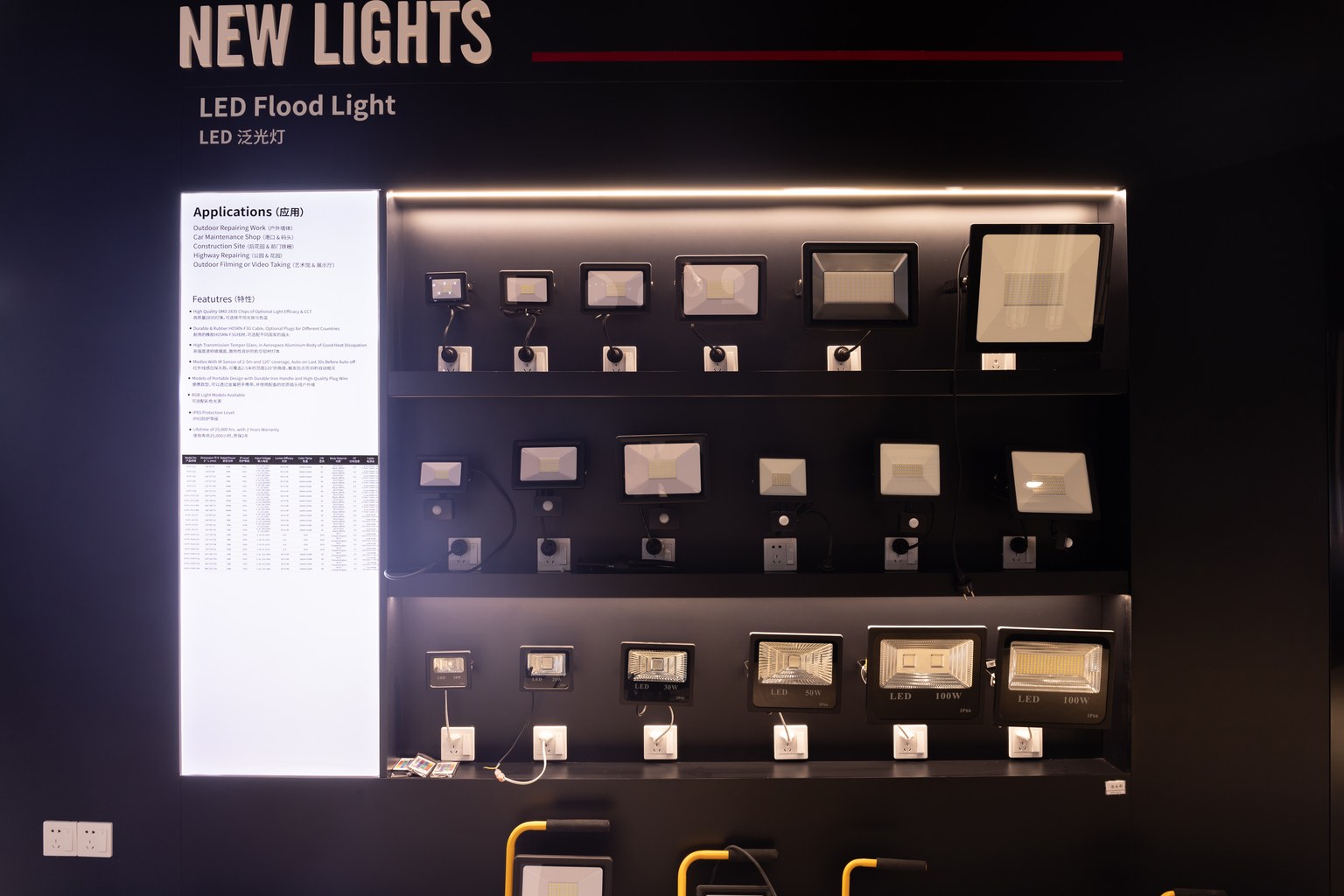
Permanent floodlights suit repeatable exterior zones where mounting points, supply and control logic can be designed as part of the site. They may provide background illumination for a yard, controlled light at a gate, or directional coverage where another luminaire form is unsuitable. Their value comes from distribution and placement, not from the word “flood” on the product label.
For each candidate luminaire, review the photometric file for the exact optic. Total lumens do not show where light lands. Mounting height, tilt, beam spread, nearby surfaces and obstructions all change the result. A high-output luminaire aimed too horizontally can illuminate the source more effectively than the target, producing discomfort for people and a bright patch that forces a camera to reduce exposure.
The industrial and warehouse lighting solution provides a useful planning context for yards, loading areas and circulation routes. Product selection still needs project drawings, photometric data and the installation environment.
Use Work Lights for Temporary, Movable Tasks
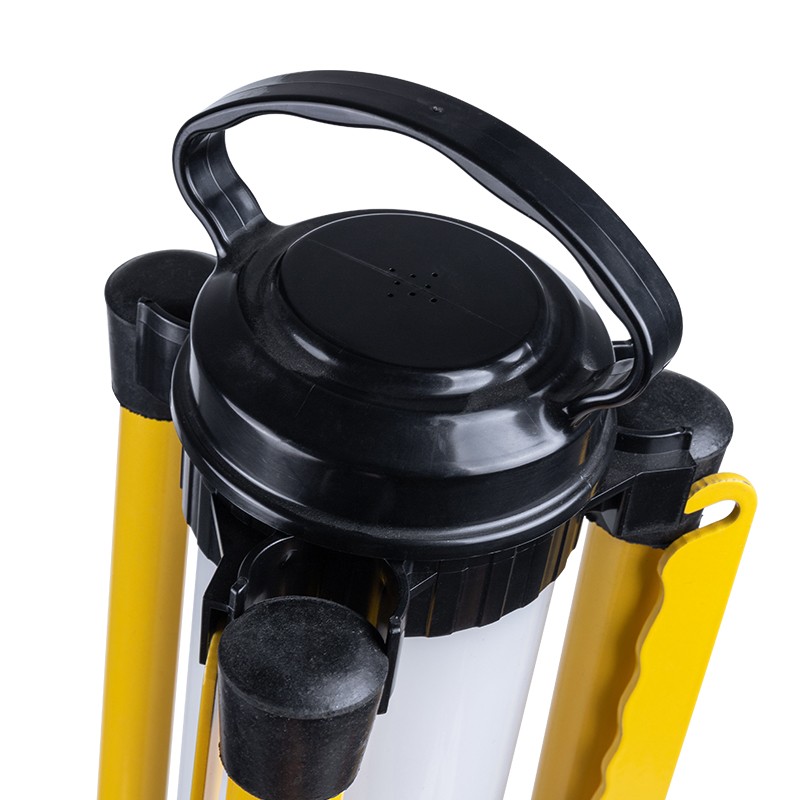
Portable work lights serve a different job. They bring light close to an inspection, repair point, temporary loading station or incident area. Crews can reposition them as the task changes, making them useful where permanent lighting is unavailable, obstructed or intentionally shut down.
That flexibility also creates operating risks. A portable light can be moved, disconnected, damaged or aimed incorrectly. Cords and stands affect access and trip risk. The complete assembly—not only the lamp head—must suit the location, supply and handling conditions. The U.S. Occupational Safety and Health Administration requires portable electrical equipment used where workers may contact water or conductive liquids to be approved for those locations, and damaged equipment must be removed from service.
| Decision point | Permanent floodlight | Portable work light |
|---|---|---|
| Typical role | Repeated illumination of a defined exterior zone | Temporary illumination near a changing task |
| Position | Fixed mounting and documented aiming | Repositioned by the crew |
| Supply | Permanent branch circuit and planned controls | Cord, plug, battery or temporary distribution, depending on the product |
| Main design risk | Glare, spill, shadows and incorrect beam placement | Damage, unstable placement, unsuitable environment and cable management |
| Verification | Photometric review plus nighttime commissioning | Pre-use inspection plus task observation |
| Not a substitute for | Access control, surveillance, procedures or response | A designed permanent perimeter-lighting system |
Plan Useful Contrast and Camera Visibility
People and cameras both depend on contrast, but they do not respond to a scene in the same way. A person adapts while moving between zones. A camera responds through its sensor, lens, exposure settings, dynamic range, infrared mode and compression. A scene that looks acceptable to a person may still produce overexposed faces, unreadable plates or deep camera shadows.
Check the direction of light on the subject, not only the horizontal reading on the ground. Recognition at a gate often depends on vertical illumination. Wet pavement, glass and reflective vehicle plates can create bright returns. Backlighting at a doorway can turn an approaching person into a silhouette. Vegetation, fences and parked vehicles can block a calculated beam after installation.
Coordinate the lighting and camera teams before final mounting positions are fixed. Test representative movement, day-to-night switching, exposure recovery after an event-based light increase, motion blur and reflections. Avoid aiming a floodlight into the lens. If the camera uses infrared illumination, test the white-light and infrared modes separately instead of assuming they reinforce each other.
Control Glare, Trespass and Abrupt Transitions
Exterior light that misses the task can affect drivers, guards, neighbors and the wider night environment. U.S. General Services Administration guidance recommends downward-facing exterior lighting and optical accessories where appropriate to control distribution. In practice, the project team should select the beam and shielding for the zone, keep intense sources out of normal sight lines, check nearby windows and property boundaries, and avoid unnecessary uplight.
Do not correct weak coverage by increasing output everywhere. Re-aiming, changing the optic, adjusting mounting height or adding a lower-output luminaire in a better position may improve visibility with less spill. Also inspect transitions between adjacent zones. A bright gate next to an unlit approach may make adaptation difficult, while a controlled background level can preserve orientation.
The outdoor and solar lighting solution shows the wider product and application context. For a security-support project, the final decision still depends on the actual site, environmental exposure and operating plan.
Choose Controls Around the Operating Plan
Photocells, schedules, occupancy or motion sensors, dimming and central monitoring can reduce unnecessary operating hours and create event-based responses. Controls must be coordinated with the security strategy rather than added as a separate energy-saving layer.
A site may maintain a verified background level, raise selected zones when movement is detected, and return after an approved delay. A staffed gate may need continuous output while an unused service yard follows a schedule. U.S. Department of Energy FEMP guidance recognizes the value of exterior controls for reducing or switching off lighting in unoccupied areas, but whether full off is appropriate remains a site decision involving operations, cameras, emergency requirements and applicable codes.
Document normal, event, manual-override and fault states. Confirm sensor coverage, delay time, fade behavior and what happens if a network or controller fails. Coordinate sudden output changes with camera exposure so the first useful frames are not lost during adaptation. The LED driver, dimming and control compatibility guide explains why control behaviour must be checked as a system rather than inferred from one component label.
Match the Complete Luminaire to the Environment
Environmental suitability cannot be inferred from appearance. Confirm the exact model’s mounting method, supply, control interface, temperature range, water and dust exposure, corrosion conditions, impact or vibration exposure, cable entry, drainage, maintenance access and market documentation. A rating applies only within the conditions and assembly described for that product.
For portable equipment, include the cord, plug, connector, stand and instructions in the review. For permanent floodlights, include brackets, fasteners, junctions and drainage orientation. The LED product compliance document checklist can help buyers separate a family-level statement from evidence that applies to the ordered model and target market.
Commission the Whole Scene at Night
Calculations and product data are inputs, not the final acceptance result. Conduct a nighttime walkthrough with facilities, security and relevant contractors. Observe every zone from the real pedestrian, driver, guard and camera positions. Trigger each control state, test manual overrides, review recorded footage, check boundary spill and note shadows caused by current equipment or landscaping.
For adjustable floodlights, record final aiming positions so maintenance work does not silently change the scene. Label circuits and control groups. Capture baseline photographs and measurements under known conditions. Include portable lights in the inspection schedule, covering cords, guards, seals, connectors, stands and batteries where applicable.
Maintenance should also address dirty optics, vegetation growth, shifted brackets, failed sensors and changes to the site layout. A functioning luminaire can stop serving its task when a new container, sign or tree blocks the intended path of light. The warehouse lighting RFQ checklist provides a related framework for documenting layout, controls and validation inputs.
Build the Project Brief Before Selecting Models
Give the supplier and project team enough information to review the real application:
- Marked site plan with zone names and dimensions.
- Camera locations, directions, representative views and image objectives.
- Observer positions, pedestrian routes and vehicle movements.
- Available mounting points, heights and aiming constraints.
- Supply voltage, circuits, control interfaces and operating schedule.
- Temperature, water, dust, corrosion, impact and access conditions.
- Required photometric, safety and market documents.
- Nighttime acceptance tests and the people responsible for sign-off.
This brief makes product questions specific. Instead of asking for “a bright security floodlight,” the buyer can request an optic, mounting arrangement and control sequence for a defined zone. Instead of treating a work light as emergency perimeter lighting, the team can identify the temporary task, placement, supply and inspection procedure.
Frequently Asked Questions
Do brighter floodlights automatically make a site more secure?
No. Excessive output can create glare, deep contrast and camera exposure problems. Lighting should support defined observation and movement tasks within a broader security plan.
Can a portable work light replace permanent perimeter lighting?
It should normally be treated as temporary task or backup equipment. Portability, supply, aiming, environmental suitability and availability create different risks from a designed permanent installation.
Are motion-activated floodlights better than continuous lighting?
It depends on the operating strategy. Motion response can reduce unnecessary light, but detection coverage, background level, delay, camera response, overrides and failure behaviour must be tested.
What matters most when lighting an outdoor camera zone?
Coordinate light direction, vertical illumination, glare, reflections, contrast and control transitions with the actual camera’s lens, exposure and operating modes. Verify the result with recorded nighttime footage.
Should outdoor floodlights always be aimed downward?
Controlled downward aiming is a useful starting principle for reducing spill and glare. The final optic and direction must still serve the task and comply with project and local requirements.
What should I send for a model-level review?
Send the site plan, zones, camera views, mounting points, supply, controls, operating schedule, environment, required documents and current photographs. You can contact New Lights with these inputs for a focused project review.
Editorial Sources
- U.S. Department of Energy Better Buildings, “Exterior Lighting for Energy Savings, Security, and Safety.”
- U.S. General Services Administration, “Lighting.”
- U.S. Department of Energy FEMP, “Purchasing Energy-Efficient Exterior Lighting.”
- U.S. Occupational Safety and Health Administration, 29 CFR 1910.334, “Use of Equipment.”