












A double-sided T8 LED tube should be compared as part of a complete lighting system, not by lamp lumens or a “360-degree” label alone. The useful decision depends on where the tube sends light, how the host fixture redirects or absorbs it, which electrical retrofit route applies, and whether the exact lamp, installation and warranty evidence match the project.
Start by separating optical sidedness from electrical endedness. Then compare the candidate in the actual fixture or lightbox, measure useful output and installed power, review temperature and controls, confirm the applicable certification record, and read the warranty as an operating contract.
Separare tre diverse descrizioni del tubo
“A doppia faccia”, “a doppia estremità” e “Type A/B/C” rispondono a domande diverse. Trattarli come sinonimi può portare a un confronto errato dei prodotti o a un'ipotesi di installazione non sicura.
| Termine | Cosa descrive | Documentazione da richiedere | Cosa non stabilisce |
|---|---|---|---|
| A doppia emissione o ad ampia emissione | Le superfici luminose o la distribuzione angolare della luce attorno al tubo | Sezione trasversale, foto, distribuzione dell'intensità e dati IES/fotometrici | Quali pin ricevono l'alimentazione |
| Alimentazione a un'estremità o a due estremità | La topologia della connessione elettrica presso i portalampada | Schema elettrico del modello, marcature e istruzioni di installazione | Distribuzione del fascio o output utile dell'apparecchio |
| Tipo A | Funzionamento tramite un reattore fluorescente compatibile identificato | Elenco esatto di compatibilità del reattore e istruzioni della lampada | Compatibilità con ogni reattore |
| Tipo B | Lampada con driver interno collegata alla tensione di rete in una configurazione approvata | Ambito del kit di retrofit, requisiti per attacchi/cablaggio, etichette e istruzioni | Che il bypass sia universalmente preferibile |
| Tipo C | Lamp operated by a separate external LED driver | Documenti del sistema lampada-driver abbinato e istruzioni di installazione | Intercambiabilità con driver non correlati |
| Type A/B | Più di una modalità operativa approvata | Evidenze separate per ciascuna modalità consentita | Che la stessa prestazione si applichi in entrambe le modalità |
Il articolo T8 a un'estremità rispetto a due estremità è responsabile della questione relativa alla topologia elettrica. Questo articolo si concentra sul fatto che un'ampia emissione ottica aggiunga valore utile in un particolare apparecchio ospite e su come confrontare l'offerta completa.
Definire l'obiettivo ottico prima di confrontare le lampade
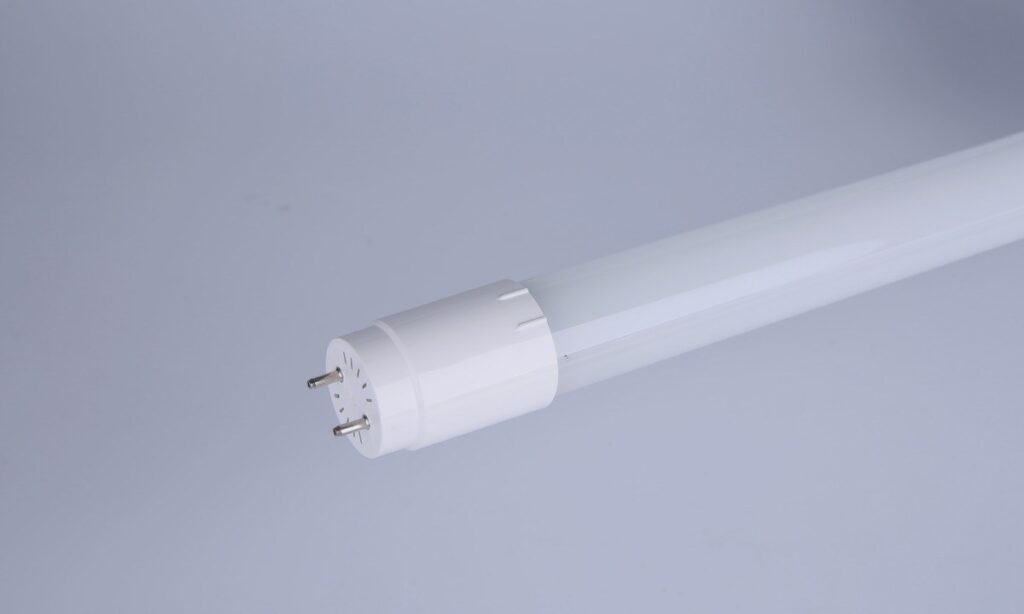
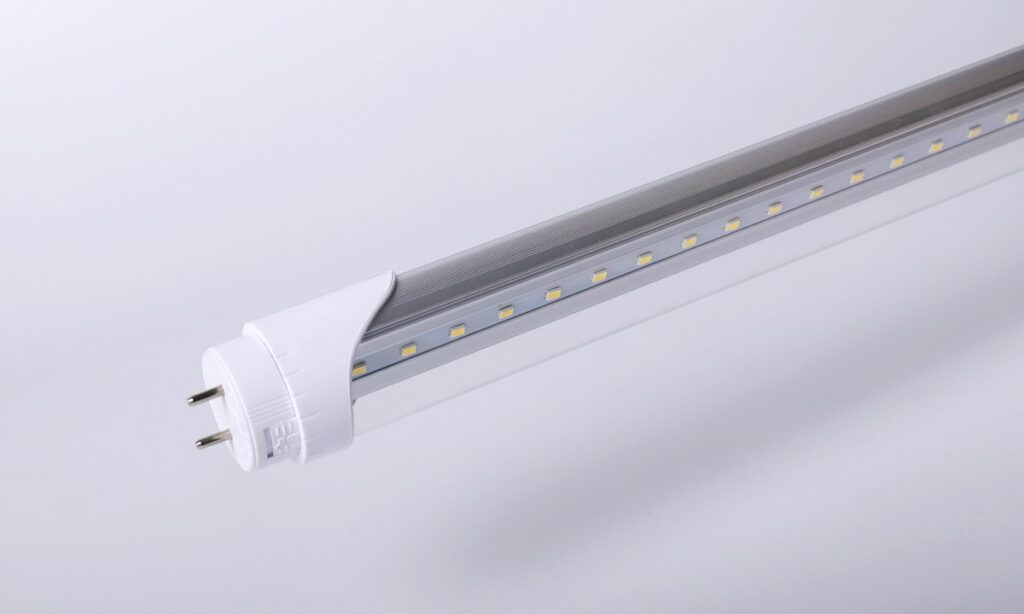
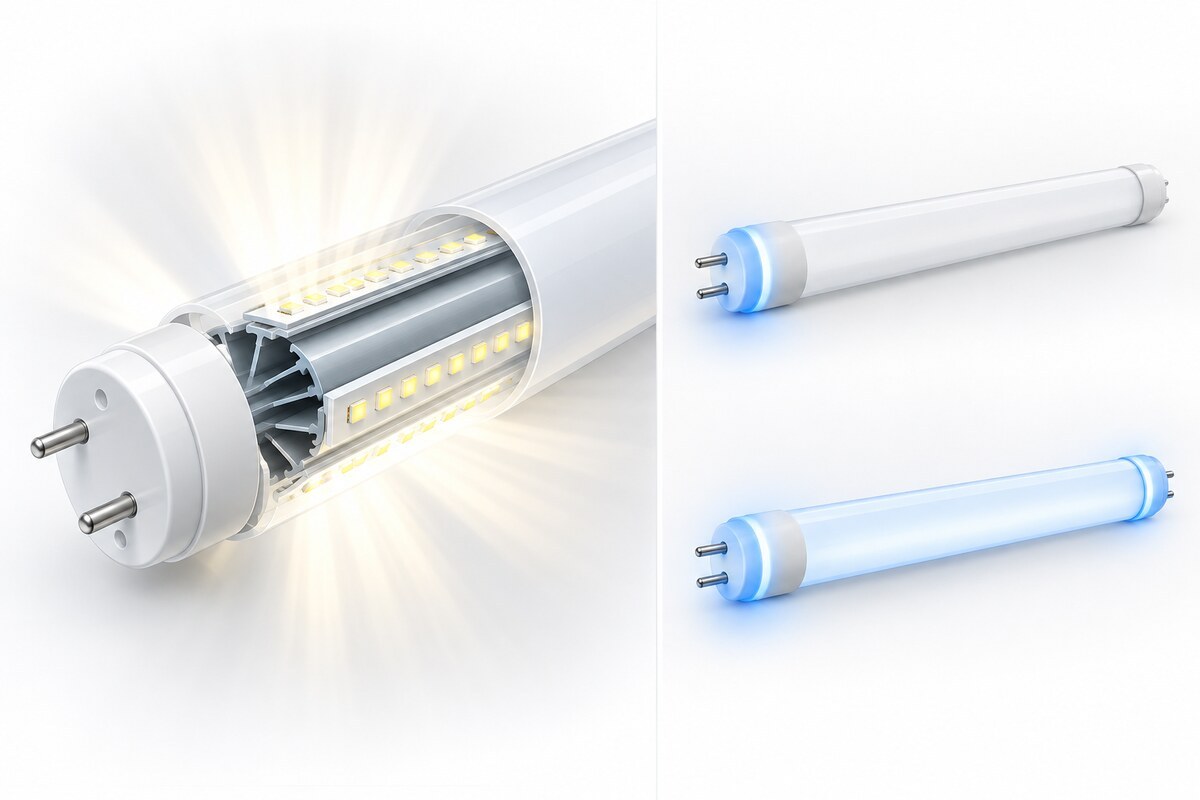
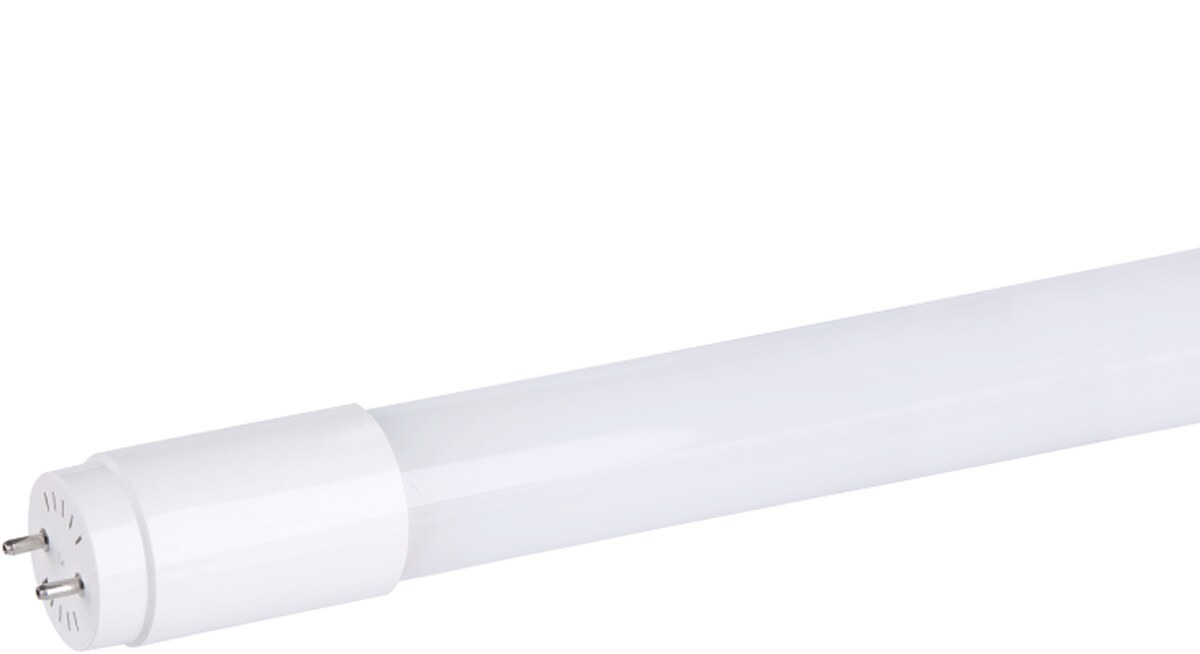
A conventional directional LED tube often directs most light toward one side of the host. A double-sided or 360-degree-style tube sends more light around the tube profile. That can be useful when the host is designed to collect rearward output, illuminate two opposing faces, or distribute light around an exposed tubular source.
It is not automatically an advantage. Rearward light can strike a high-reflectance surface and return to the useful plane, or it can be absorbed by a dark housing, trapped behind a diffuser, create unwanted brightness, or miss the task area. The tube’s angular intensity and the host geometry must be evaluated together.
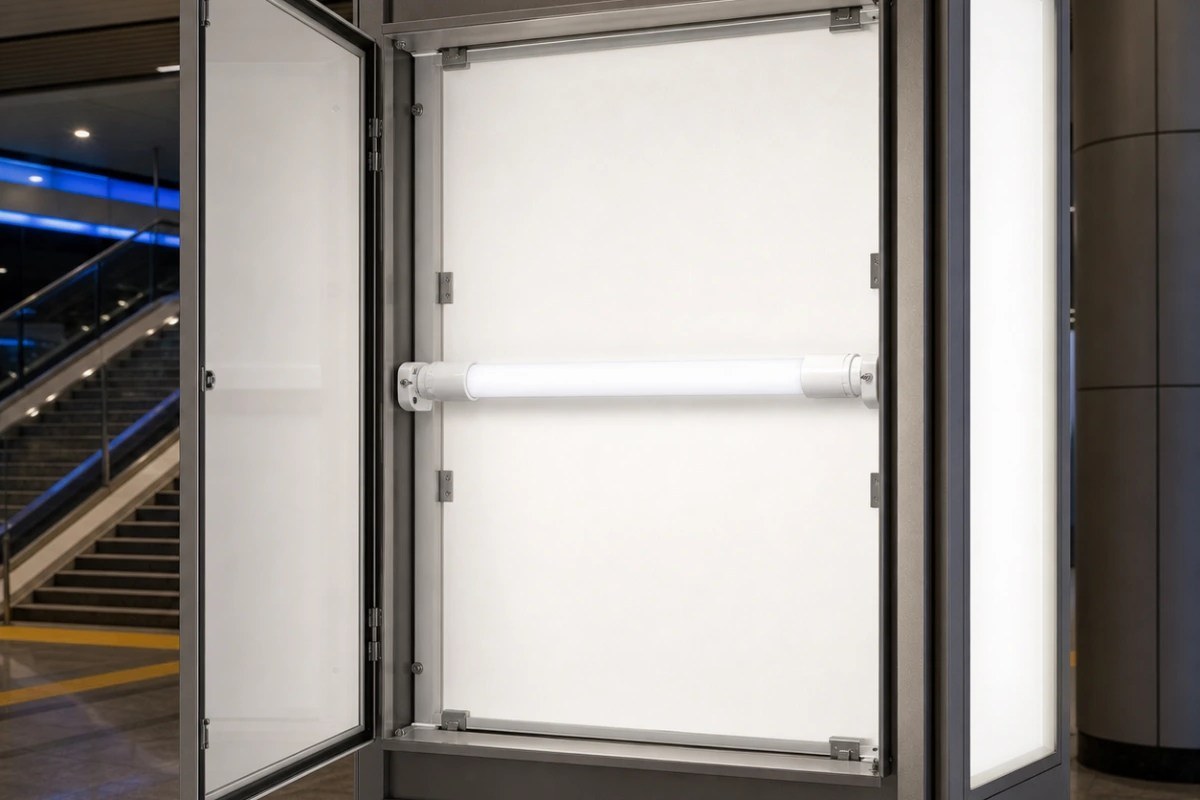
Il New Lights 360-degree double-sided T8 LED tube family is designed around LED arrays positioned around an internal aluminum heat sink. The current family includes models for double-sided lightboxes and similar installations that use light around the tube profile. That product direction is a useful example of a defined optical job—not evidence that broad emission improves every fluorescent retrofit.
Mappare l'apparecchio ospitante prima di selezionare il tubo
Record the host manufacturer, fixture type, dimensions, number and spacing of lamps, lamp-holder orientation, reflector shape and reflectance, diffuser transmission, ventilation, ballast or driver, wiring, controls and surrounding surfaces. Photograph the fixture both assembled and open.
Physical fit includes more than T8 diameter and G13 pins. Check end-cap clearance, rotation, lamp-holder engagement, retention, diffuser distance and the final direction of each luminous surface. A tube that rotates in the socket can change distribution even when electrical operation remains normal.
Ispezionare cablaggi fragili, portalampada danneggiati, corrosione, scolorimento da calore, parti allentate e precedenti modifiche in campo. Una lampada nuova non corregge un apparecchio ospite non sicuro. Il più ampio commercial LED tube selection guide può essere utilizzato per l'inventario iniziale del retrofit prima di iniziare questo confronto ottico specializzato.
Confrontare separatamente i dati della lampada nuda e i risultati del sistema ospitante
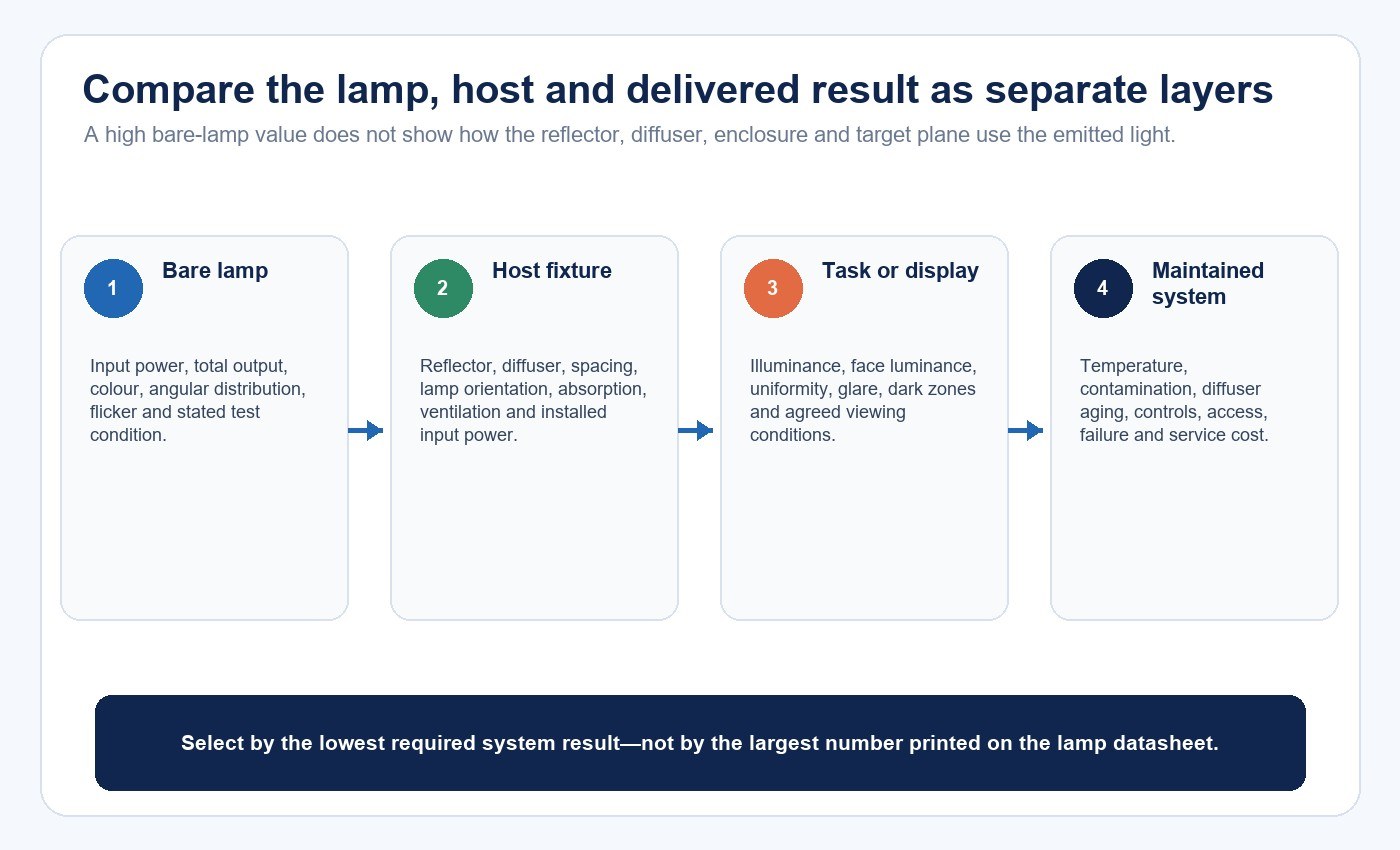
Bare-lamp testing is useful for comparing the lamp itself under a stated condition. It does not predict how much light reaches the work plane or both faces of a sign cabinet after reflector, diffuser and housing losses.
DLC’s current SSL V6.0 material treats linear replacement lamps as a defined product category and specifies lamp-level testing conditions for Type A, Type B and Type C pathways. That program evidence can support product screening, but the application decision still needs the real host fixture.
Utilizzare due livelli di evidenza:
| Livello di confronto | Misurazioni utili | Decisione supportata | Errore comune |
|---|---|---|---|
| Lampada nuda | Potenza in ingresso, emissione totale, efficacia, colore, distribuzione angolare, flicker e condizione di temperatura | Confrontare lampade esatte entro confini di prova allineati | Supporre che il valore lm/W più elevato vinca in ogni apparecchio ospitante |
| Lampada più apparecchio ospitante | Potenza in ingresso installata, emissione dell'apparecchio, distribuzione zonale, luminanza della superficie, uniformità, abbagliamento e temperatura | Selezionare il tubo per l'apparecchio o la lightbox effettivi | Applicare il risultato di un alloggiamento di riferimento a un involucro diverso |
| Ambiente o esposizione | Illuminamento, luminanza verticale, uniformità della faccia del cartello, spaziatura e accettazione visiva | Confermare il risultato del progetto | Usare l'etichetta di una lampada come progetto illuminotecnico |
| Sistema mantenuto | Sporco, invecchiamento del diffusore, comportamento del driver/reattore e accesso per la manutenzione | Stimare le prestazioni nel ciclo di vita | Confrontare solo l'output iniziale |
For a double-sided lightbox, measure both faces at agreed points and review the minimum-to-maximum relationship, dark zones around framing, hot spots near the tube and color consistency. For a reflector fixture, compare useful downward and vertical output rather than simply counting rearward lumens.
Usare un esempio pratico per identificare il vero collo di bottiglia
Consider two candidate lamps for a double-sided display cabinet. Lamp A has higher bare-lamp efficacy but sends most light toward one face. Lamp B has lower headline efficacy but distributes light around the tube and works with the cabinet reflector to illuminate both faces more evenly.
The correct comparison is not Lamp A watts versus Lamp B watts. Install each exact lamp in the same cabinet, stabilize operation, measure total input power, record luminance or illuminance on both faces, and compare the lowest acceptable point. If Lamp A requires more lamps, a brighter setting or additional diffusion to pass uniformity, its higher bare-lamp efficacy may not produce the lower-energy system.
The same logic can reverse in a one-direction troffer. If rearward output is absorbed, a directional lamp may deliver more useful light per installed watt. Broad emission is therefore an application tool, not a universal upgrade.
Scegliere in modo indipendente il percorso di retrofit elettrico
After the optical candidate is identified, determine how the exact model is intended to operate. UL explains that certified retrofit kits include installation instructions identifying suitable host luminaires, major components and required field labels. It also distinguishes Type A/B lamp evaluation as a stand-alone lamp from evaluation as part of a luminaire retrofit kit.
Type A can reduce initial modification when the exact ballast is approved, but the installed result includes ballast losses and compatibility behavior. Type B removes the fluorescent ballast from operation but requires the approved conversion, correct sockets and persistent maintenance labels. Type C uses a matched external driver and has its own system boundaries.
Do not infer a wiring route from the number of luminous surfaces or from whether both lamp ends have pins. Electrical work should follow the exact instructions and applicable local requirements. For step sequencing and safety boundaries, use How to Install LED Tube Lights Safely.
Confrontare il comportamento termico nell'involucro effettivo
Double-sided LED placement changes how heat is distributed around the tube. An internal aluminum structure can support heat spreading, but material alone does not establish acceptable operating temperature or lifetime. Drive current, LED-board contact, driver components, end-cap design, enclosure, ambient condition and duty cycle all matter.
Request the rated ambient range and restrictions for enclosed fixtures. Measure temperatures at the points defined by the product or test plan after the representative host reaches stable operation. Repeat the check at the required voltage, control mode and worst credible ambient condition.
Thermal behavior is also an optical issue. Temperature can affect light output and color, while heat-damaged reflectors or diffusers can change distribution over time. A comparison that omits the enclosure may miss the condition most likely to limit the system.
Esaminare sfarfallio, qualità dell'alimentazione e controlli per modalità operativa
Record flicker using an identified metric and method. Also review power factor, total harmonic distortion, inrush current, surge behavior, audible noise and standby power when relevant. Measurements should identify the ballast, driver, dimmer or sensor and the operating point.
A Type A lamp may behave differently across ballasts on the compatibility list. A dual-mode lamp may have different input power, flicker or control behavior in ballast-operated and line-voltage modes. A tube that operates without visible failure is not necessarily performing as specified.
Do not add dimming, 0–10 V, DALI, wireless, sensing or emergency claims unless the exact product architecture includes them. The guida alla selezione di T8 dimmerabili tratta separatamente l'intera catena di controllo.
Verificare la conformità a livello del modello offerto
Check the certification database entry, product category, standard, model and suffix, electrical ratings, environmental limitations, factory, installation instructions and current status. Match those details to the physical label and quotation.
UL’s retrofit guidance explains that Type A/B lamps can be investigated to UL 1993 as stand-alone products and additionally to UL 1598C when they form part of a luminaire retrofit kit. A component recognition, a certification logo in a brochure or a report for a neighboring model does not define the offered configuration.
Per i mercati al di fuori del Nord America, predisporre una matrice di conformità separata. Il LED tube certification requirements guide spiega come mappare architettura del prodotto, mercato ed evidenze senza considerare un unico certificato come approvazione globale.
Leggere la garanzia come un insieme di condizioni
Warranty length is only one field. Compare the covered model and suffix, start date, operating-hour limit, ambient range, enclosed-fixture restrictions, approved ballast or driver, switching and controls, installation qualification, maintenance duties, lumen or color criteria, exclusions, claim evidence, labor, freight and remedy.
Separare quattro concetti:
- una garanzia di sostituzione del prodotto;
- una proiezione del mantenimento del flusso luminoso;
- una specifica prestazionale per il sistema installato;
- conformità legale e alle certificazioni.
One does not automatically establish the others. Price uncovered access, labor and downtime in the lifecycle model. A low-cost replacement lamp can become an expensive failure if the sign face must be dismantled or a lift is required for each claim.
Usare una matrice decisionale anziché un punteggio delle caratteristiche
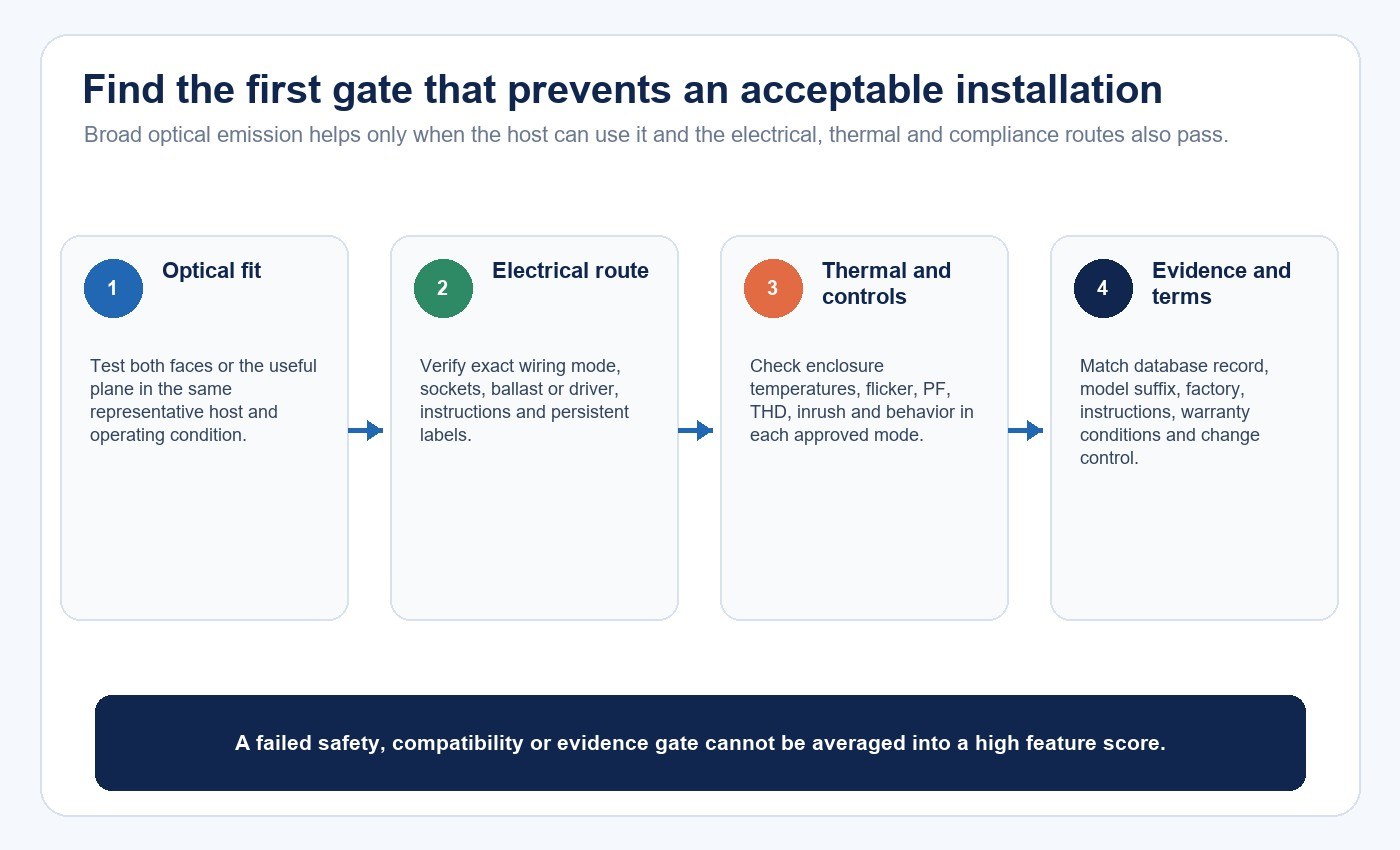
| Cancello | Evidenza di superamento | Condizione da soddisfare | Conseguenza commerciale |
|---|---|---|---|
| Idoneità ottica | Il file di distribuzione e il test su un apparecchio rappresentativo soddisfano l'obiettivo | È disponibile solo un'etichetta di marketing a 360 gradi | Il rischio di non uniformità o abbagliamento rimane non quantificato |
| Percorso elettrico | Sono identificati modalità operativa esatta, reattore/driver, attacchi e istruzioni | Il cablaggio viene dedotto dal nome del prodotto | L'ambito di installazione e sicurezza non è definito |
| Compatibilità termica | I limiti nominali e le temperature dell'involucro rappresentativo risultano conformi | Viene descritto solo il materiale del dissipatore di calore | Permangono i rischi relativi a output, driver e durata utile |
| Conformità | Il record nel database e il modello/l'etichetta fisici corrispondono | Il certificato appartiene a un altro modello o componente | L'affermazione di accesso al mercato non è supportata |
| Garanzia | Le condizioni scritte coprono l'uso previsto e definiscono il rimedio | La durata è indicata senza condizioni | Il confronto del ciclo di vita è incompleto |
| Controllo delle modifiche | Lampada, ottica, driver e documenti approvati sono bloccati alla revisione | Il fornitore può effettuare sostituzioni senza revisione | L'approvazione del campione potrebbe non rappresentare la produzione |
Approve the candidate only when the required gates pass. Do not average a failed safety or compatibility gate into a high feature score. Missing evidence should remain visible as missing.
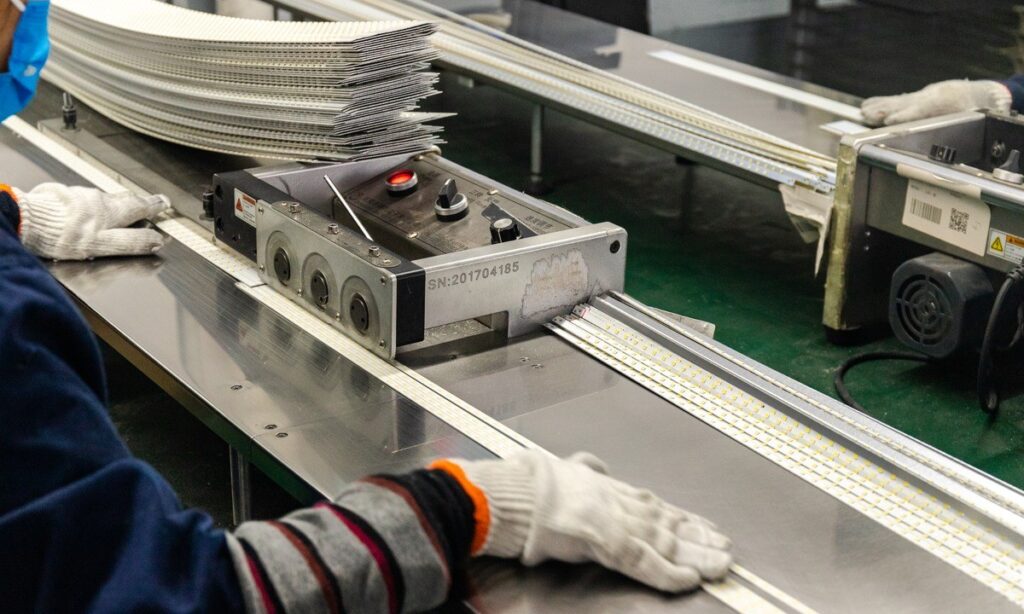
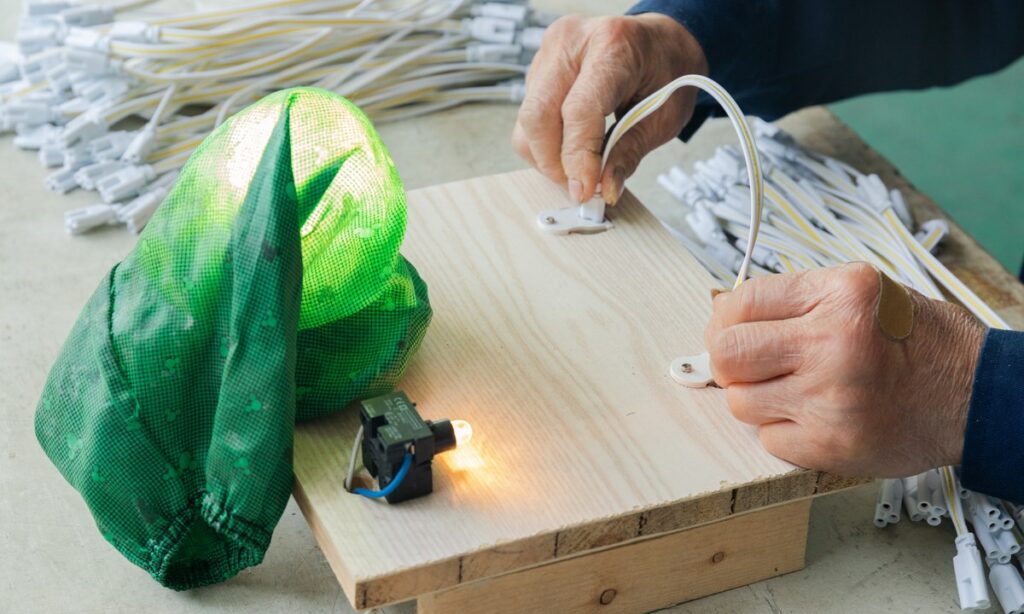
Utilizzare il LED lighting sample evaluation checklist per registrare la lampada esatta, l'apparecchio ospite, la modalità operativa e i criteri di accettazione. Per un confronto vincolato al modello, contatta New Lights con fotografie dell'apparecchio, informazioni su reattore o cablaggio, dettagli dei portalampada, ambiente, distribuzione target e requisiti di mercato. Il pagina dedicata a fabbrica e produzione fornisce il contesto per le discussioni sulla produzione e sul controllo delle modifiche.
Domande frequenti
Doppia estremità significa che il tubo è alimentato da entrambe le estremità?
No. Double-sided describes optical emission, while double-ended describes electrical connection. Confirm both independently from the cross-section, markings and installation instructions.
Un tubo T8 a 360 gradi è sempre più efficiente?
No. Bare-lamp efficacy and useful system efficiency are different. The host reflector, diffuser, absorption, geometry and target surfaces determine how much emitted light becomes useful.
Dove possono risultare utili i tubi T8 a emissione ampia?
They can be relevant in double-sided lightboxes, display cabinets or other hosts designed to use light around the tube profile. A representative host test should confirm the result.
Un tubo a doppia estremità può sostituire qualsiasi T8 fluorescente?
No. Devono tutti corrispondere adattamento fisico, percorso elettrico, reattore o driver, attacchi, condizione dell'apparecchio ospite, limiti ambientali, istruzioni di installazione e ambito di conformità.
Qual è il miglior test comparativo singolo?
Use the exact candidate in a representative host and measure installed power, useful output and distribution while also checking fit, temperature, flicker, controls, labels and model-level compliance evidence.
Fonti editoriali
- UL Solutions, “FAQ—UL Certified LED Retrofit Luminaire Conversion Kits”: https://www.ul.com/thecodeauthority/knowledge/faq-ul-certified-led-retrofit-luminaire-conversion-kits
- DesignLights Consortium, “Technical Requirements for LED Lighting: SSL V6.0 & LUNA V2.0”: https://designlights.org/wp-content/uploads/2025/11/SSL-V6-LUNA-V2-TR_final_12082025.pdf
- DesignLights Consortium, “Comprendere la Qualified Products List”: https://designlights.org/our-work/solid-state-lighting/understanding-the-qualified-products-list/