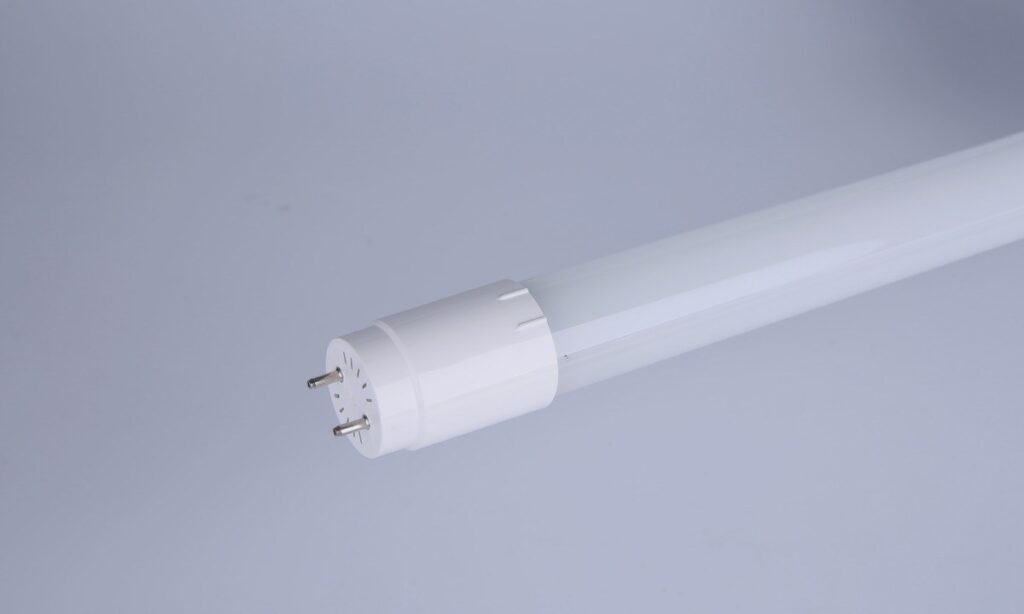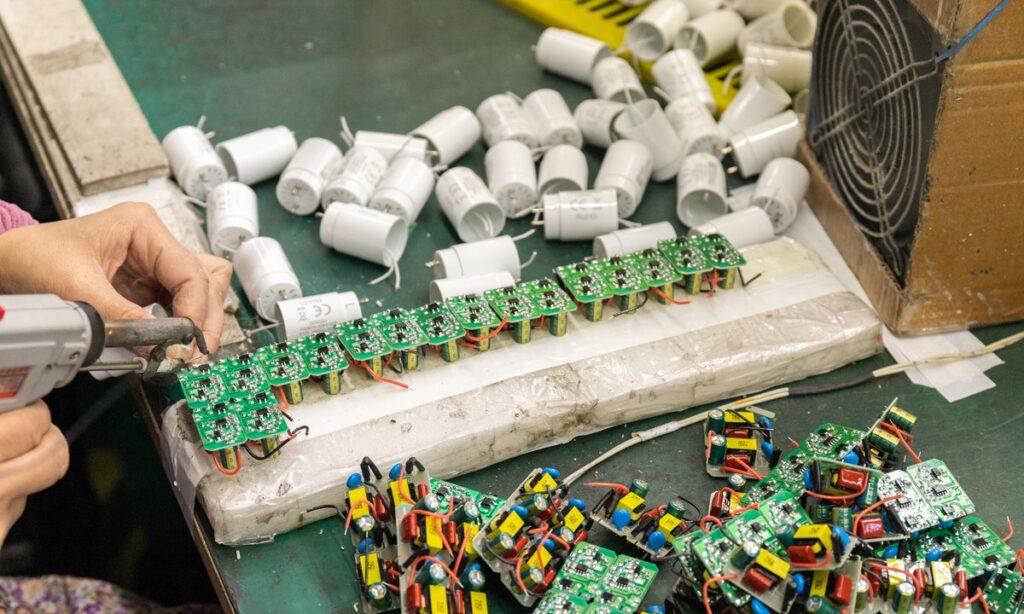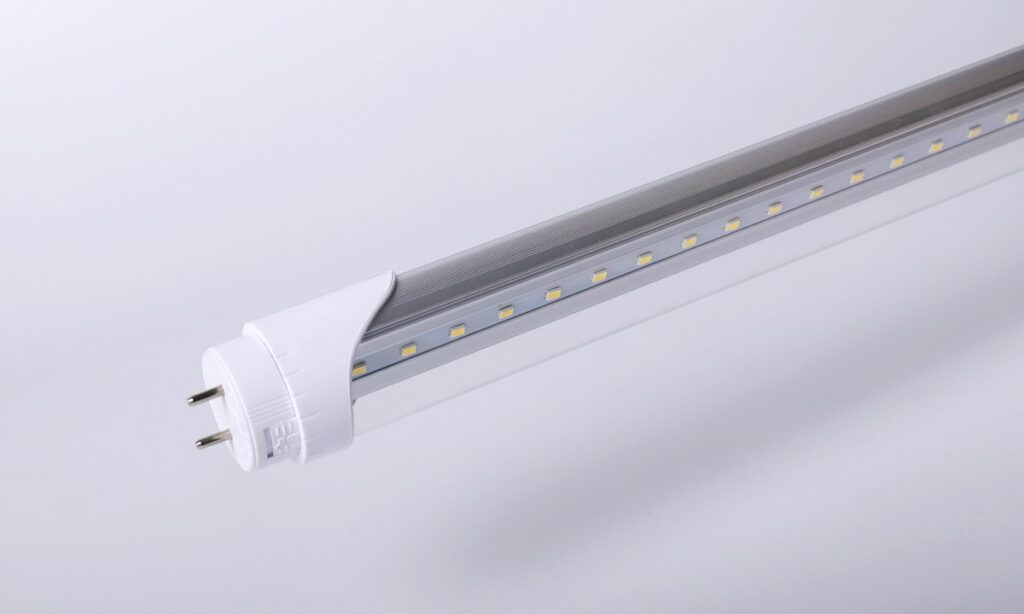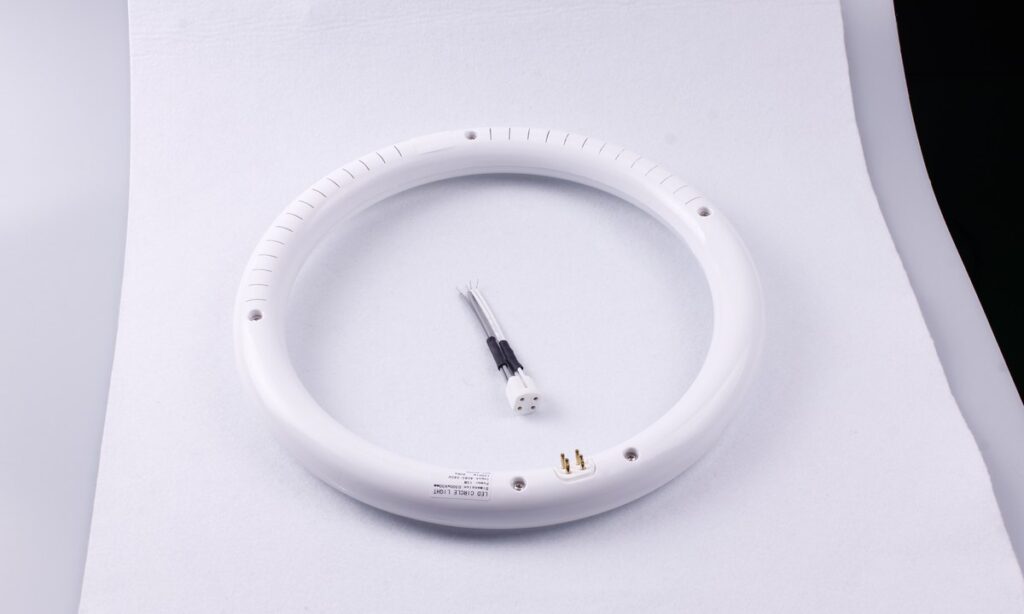













New Lights publishes a T10 LED tube family for fishing-boat and other applications with AC/DC 12–24V input, M10 connectors and an IP65 claim. These features can suit selected auxiliary lighting, but they do not make the tube submersible, saltwater-proof or approved as a navigation, emergency or hazardous-location light.
When a tube flickers, dims or stops operating, diagnose the complete circuit. Boat batteries, chargers, converters, cable runs, connectors, linked loads, mounting and environmental exposure can all contribute.
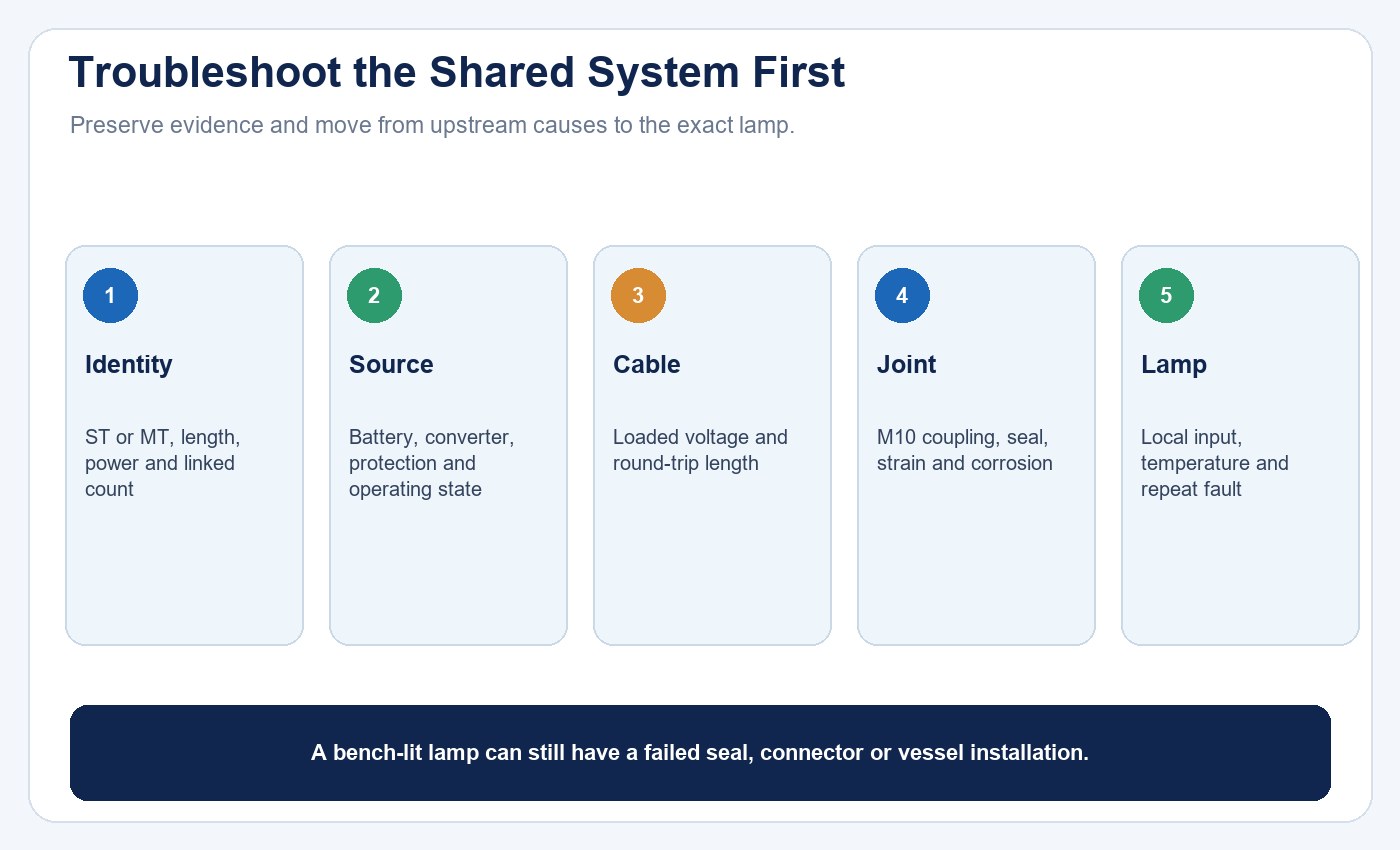
Iniziare dalle cause comuni al sistema prima di sostituire la lampada. Conservare la configurazione guasta affinché le evidenze non vadano perse durante la ricerca guasti.
Il più ampio LED failure diagnosis guide explains how to separate supply, driver and LED-board causes. This article applies that logic to the New Lights low-voltage T10 fishing-boat family.
Identificare i modelli ST e MT
The published range includes 350, 550 and 750 mm tubes at 10W, 20W and 30W. Each size appears in an ST and MT version.
The table marks ST models as not interconnectable and MT models as interconnectable. The page says that up to three lamps can be linked. Do not connect an ST product merely because its connector looks similar, and do not exceed the approved linked quantity.
Record the complete model, input arrangement, serial or batch, cable, power source and linked count before troubleshooting.
| Campo identificativo | Versione ST | Versione MT | Conseguenza diagnostica |
|---|---|---|---|
| Lunghezze pubblicate | 350, 550 and 750 mm | 350, 550 and 750 mm | Verificare il modello fisico prima di sostituire componenti |
| Potenze pubblicate | 10, 20 and 30 W | 10, 20 and 30 W | Current and voltage-drop calculations depend on the exact load |
| Interconnessione | Non identificato come interconnettibile | Interconnettibile, massimo tre lampade | Non creare mai una catena basandosi solo sull'aspetto |
| Input family | 12–24 V AC/DC | 12–24 V AC/DC | Obtain exact tolerance, polarity and protection for the model |
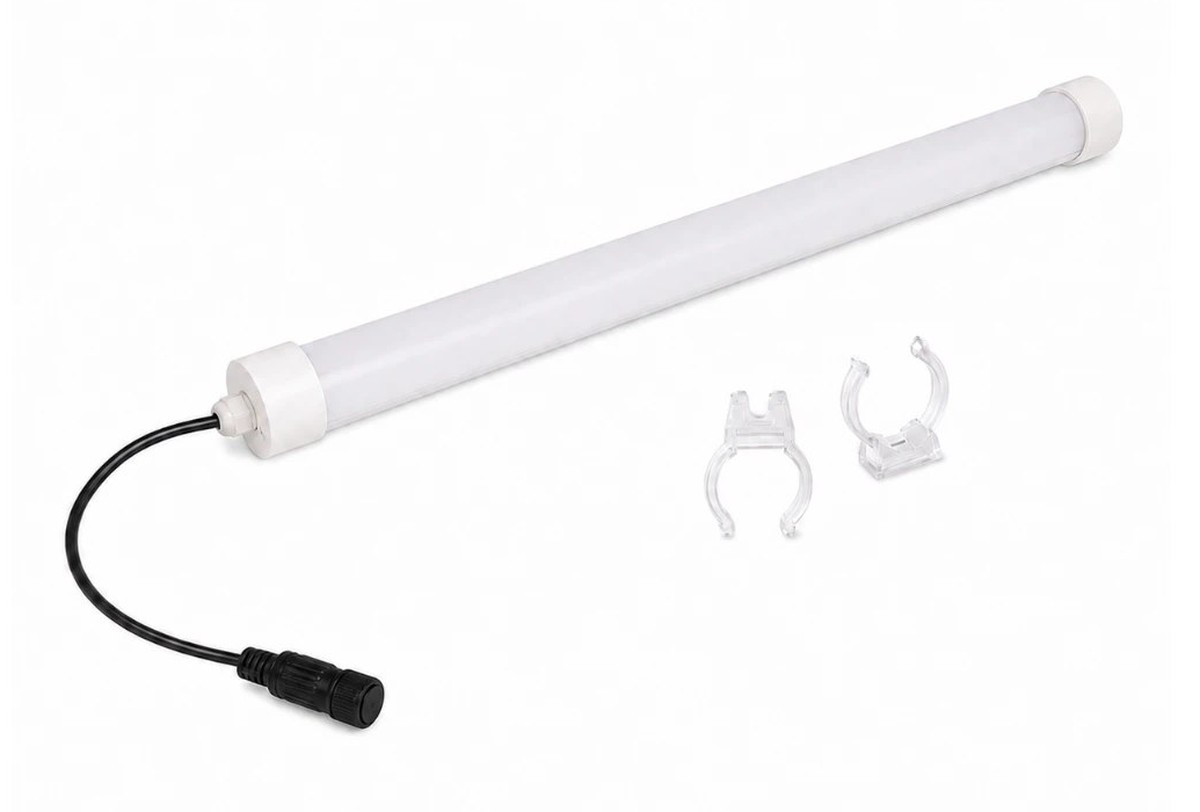
Problema 1: Nessuna luce
Start with safe checks at the circuit level. Confirm that the supply is available, the correct circuit is selected and protective devices have not operated. Inspect cables and connectors for damage, looseness, contamination or corrosion.
The page states AC/DC 12–24V, but the exact input tolerance, polarity behavior and protection details were not retrieved. Follow the model instruction. Do not assume that every DC polarity or AC source is accepted simply from the range label.
Qualified personnel can verify voltage at approved points under appropriate vessel procedures. A normal reading at the battery does not prove adequate voltage at the last lamp after cable and connector losses.
Record voltage with the circuit loaded, not only open-circuit. Compare the source, first connector and lamp input while the symptom is present. Note whether the charger, engine or other loads were operating, because a fault that appears only in one vessel state may be upstream of the lamp.
Problem 2: Flicker or Intermittent Operation
Flicker can be caused by a loose M10 connector, damaged cable, unstable converter, charger interaction, poor battery connection, voltage drop, internal driver fault or moisture. Note whether the symptom follows engine speed, charging, another load, waves, movement or rain.
Gently observing whether vibration changes the symptom can help locate a mechanical connection issue, but do not pull or twist energized damaged wiring. Isolate power before opening or reseating components according to instructions.
If several lamps flicker together, investigate the shared supply and upstream connections. If only one lamp is affected, compare its connector, cable section and tube with the others while preserving evidence.
Utilizzare il checklist per sfarfallio, fattore di potenza e THD to separate visible symptoms from electrical measurements. On a low-voltage vessel circuit, source and converter stability remain part of the test boundary.
Problem 3: Voltage Drop in Linked Runs
A 12V or 24V circuit can experience meaningful voltage drop across long or undersized cables and multiple connectors. The final lamp may dim, cycle or fail to start even when the source voltage is acceptable.
Calculate the circuit from actual load current, conductor size, round-trip length, connector resistance and source limits. The New Lights page states a maximum of three interconnected lamps, but it does not publish cable-length or current rules in the retrieved content. Obtain those limits before designing a chain.
Do not treat “maximum three” as proof that any three wattages can operate on any adapter or cable. Verify total load and protection.
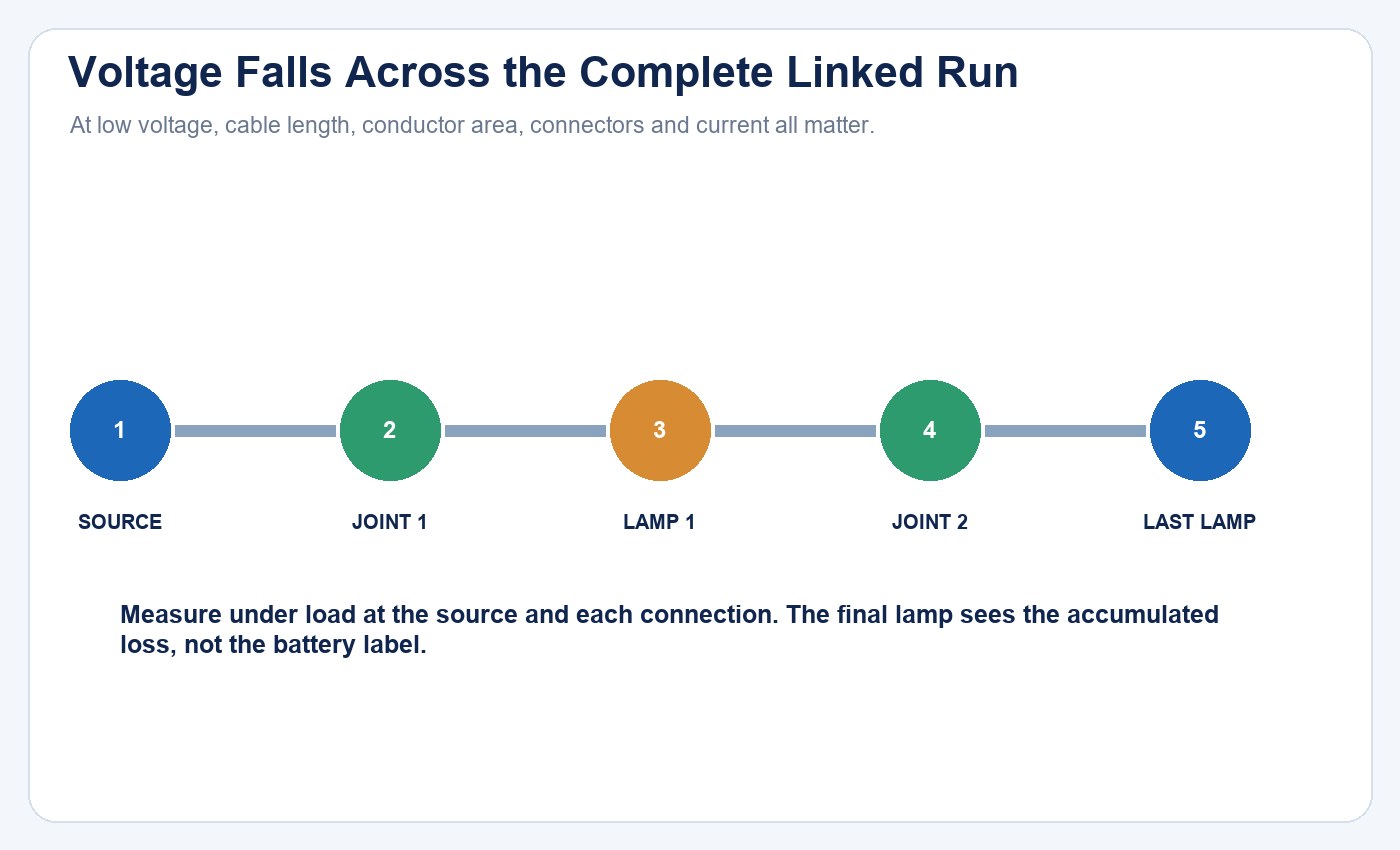
Every cable section and connector adds resistance. Measure the final lamp under load and compare the result with the exact model input limit.
| Osservazione | Probabile confine | Test che distingue le cause |
|---|---|---|
| Tutte le lampade si attenuano insieme | Battery, converter or shared feed | Measure source and feed voltage under the same load state |
| Solo l'ultima lampada cicla | Lunghezza del cavo, resistenza del connettore o limite della catena | Measure voltage at each connection under load |
| Il guasto segue un singolo tubo | Lampada o relativo connettore locale | Scambiare solo all'interno di configurazioni identiche approvate e registrare il risultato |
| Il guasto cambia con il motore o il caricabatterie | Regolazione dell'alimentazione o interferenza | Confrontare gli stati di funzionamento definiti dell'imbarcazione |
Problema 4: Corrosione del connettore
Salt, moisture and dissimilar materials can increase contact resistance. Early signs include discoloration, deposits, heat marks, intermittent light or a voltage difference across a connection.
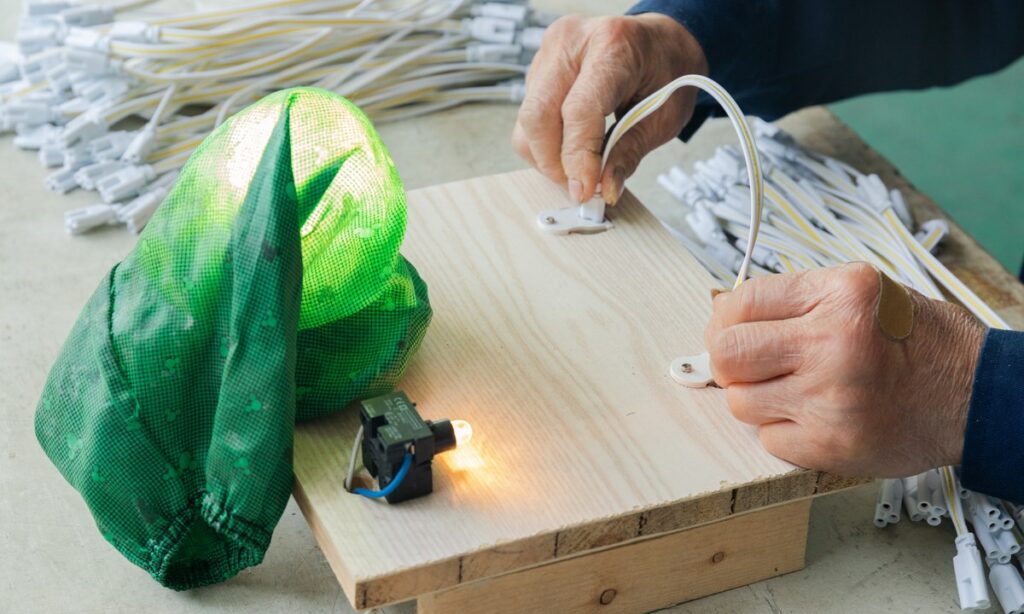
Inspect M10 mating surfaces, seals, cable strain relief and caps. Replace damaged parts with approved components; improvised connectors may change ingress protection and current capacity.
Do not claim corrosion resistance from IP65. IP tests address defined dust and water ingress conditions, not salt-mist durability or galvanic compatibility. A marine or coastal claim needs separate evidence.
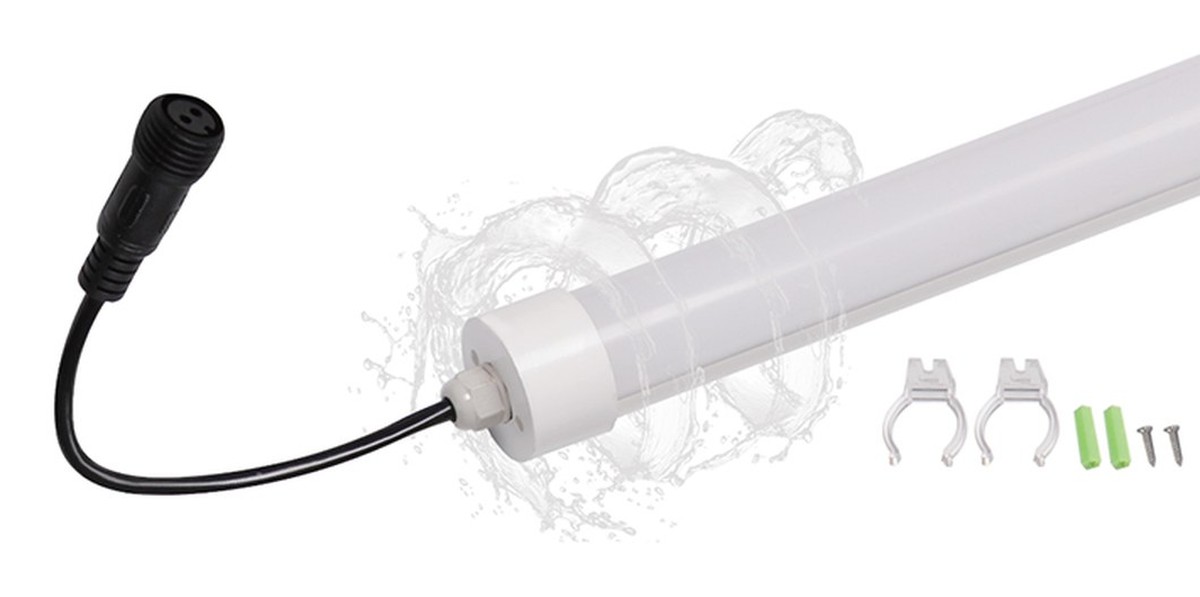
Il guida alla manutenzione dell'illuminazione e ai ricambi aiuta a strutturare ispezioni ricorrenti, identità di sostituzione approvate e registrazioni dei guasti.
Problema 5: Infiltrazione d'acqua e condensa
IP65 does not mean immersion protection. Check end caps, connector joints, cable entries, cracks, mounting orientation and evidence of trapped water. Photograph the tube before disassembly and keep the failed configuration for supplier review.
Il rapporto IP completo dovrebbe identificare il modello testato, i connettori, i cappucci, i cavi e l'orientamento. Se le lampade sono interconnesse, verificare che il giunto collegato rientrasse nell'ambito della prova.
Condensation can occur even without an obvious external leak because temperature and humidity change. IP65 alone does not establish condensation performance.
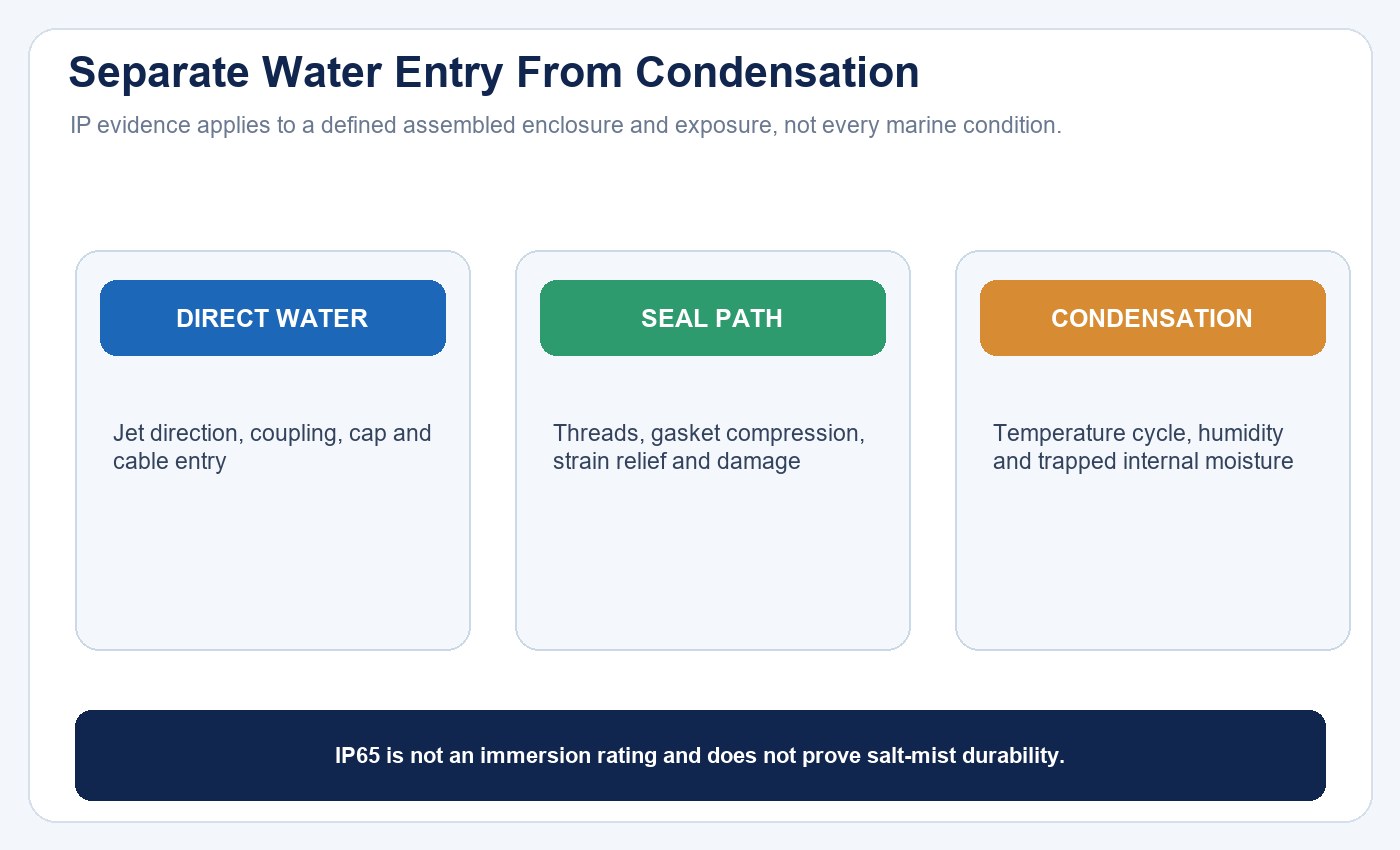
L'ingresso esterno di acqua e la condensa interna sono meccanismi diversi. Ispezionare l'intero percorso assemblato e il ciclo di temperatura dell'imbarcazione.
| Evidenza di umidità | Meccanismo possibile | Risposta richiesta |
|---|---|---|
| Acqua vicino a un connettore | Accoppiamento allentato, guarnizione danneggiata, trazione del cavo o cappuccio errato | Isolare, documentare e sostituire i componenti di tenuta approvati |
| Goccioline distribuite all'interno | Condensa o cicli di pressione | Esaminare il ciclo di temperatura e umidità e la costruzione del prodotto completo |
| Guasto ripetuto dopo la pulizia | Direzione del getto, attacco chimico o guarnizioni alterate | Verificare il metodo di pulizia e la compatibilità dei materiali |
| Evento di immersione | Exposure outside the IP65 boundary | Rimuovere dal servizio e seguire la procedura di ispezione responsabile |
Per una spiegazione più ampia dei gradi di protezione degli involucri, utilizzare la guida ai gradi di protezione IP e il IP65 fixture selection guide.
Problema 6: Vibrazioni e danni di montaggio
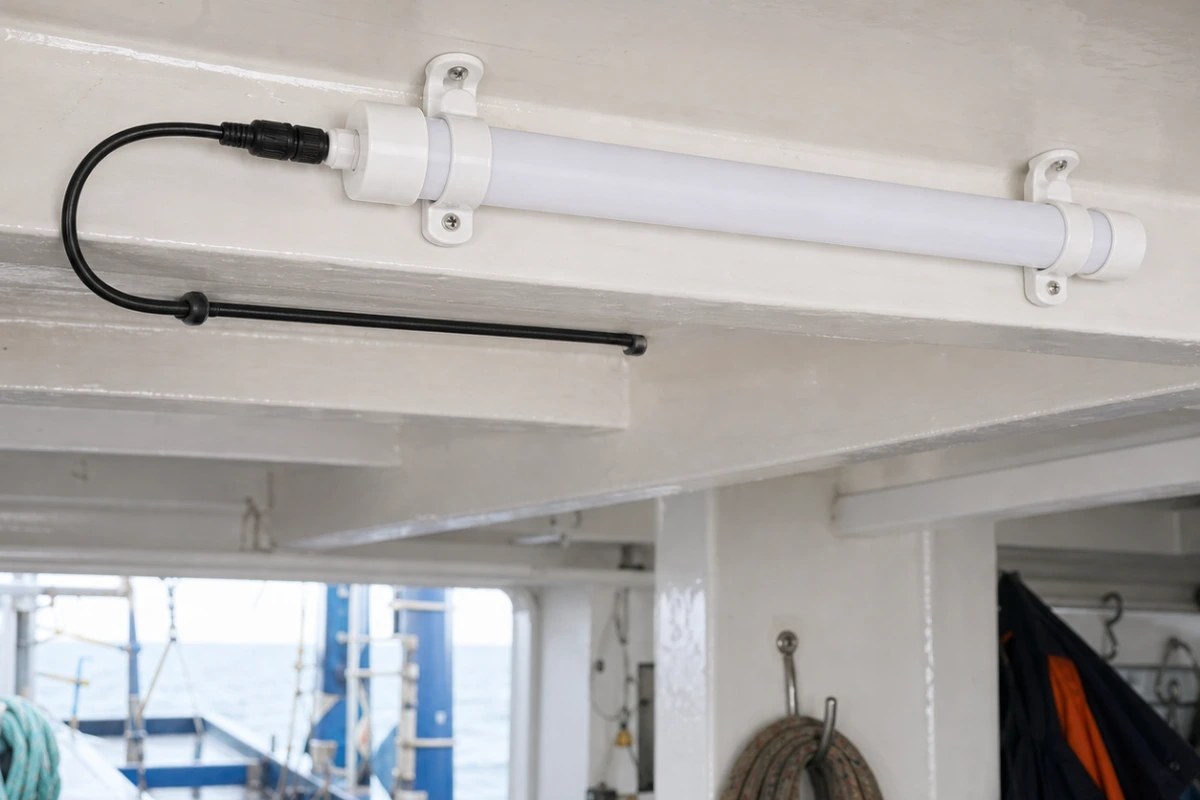
Boat motion can loosen brackets, fatigue cables or load connectors. Over-tightening may also crack plastic parts or distort seals. Use the approved supports, spacing and fastener limits.
Ispezionate movimenti, abrasioni, clip incrinate e tensione del cavo. Il connettore non deve sostenere il carico meccanico del tubo, salvo che sia progettato specificamente a tale scopo.
No vibration or shock report was retrieved for this family, so do not describe it as vibration-resistant without evidence. A rough-service installation may need additional validated retention or a different product.
Problema 7: Riduzione della luce o variazione del colore
Reduced output can result from low voltage, dirt, lens aging, high temperature, driver behavior or LED aging. Color change can involve optical materials, LEDs or heat exposure.
Clean only with materials compatible with the tube and seals. Aggressive solvents can haze or crack plastics. Request approved cleaning instructions for fish oils, salt deposits or other site contaminants.
The published table does not provide a reliable efficacy value: the column labelled “Lumen Efficacy” contains interconnection text. Obtain total lumens, efficacy and photometry for the exact model before evaluating performance loss.
Problema 8: Accumulo di calore
Low-voltage LEDs still produce heat. An enclosed compartment, nearby engine equipment, direct sun or restricted airflow can raise the tube and driver temperature.
Request permitted ambient and case-temperature limits. Test the installed tube after stabilization under representative operation. Do not infer high-temperature capability from a low-voltage input or tube shape.
La temperatura può influire anche sulle guarnizioni dei cavi e sui materiali dei connettori. Durante la manutenzione, ispezionare indurimento, scolorimento e perdita di elasticità.
Mantenere separate le funzioni di sicurezza
Auxiliary tube lighting should not be used as a navigation, collision-avoidance, life-saving, emergency or hazardous-location light unless the exact product carries the required approval and performance evidence.
Color, intensity, distribution, redundancy, power source and placement requirements for regulated vessel lights are not established by a general T10 product page. Maintain required safety lighting independently.
The U.S. Coast Guard warns that unapproved LED, rope, underwater or decorative lighting may violate navigation-light provisions. Treat this tube as auxiliary work lighting unless the exact installation has the approvals and photometric performance required by the vessel’s jurisdiction.
Checklist di ispezione preventiva
A intervalli adatti all'imbarcazione e all'esposizione, ispezionare:
- Modello del tubo e identità ST/MT.
- Supply, protection and shared loads.
- Abrasione, trazione e supporti del cavo.
- Inserimento e corrosione del connettore M10.
- Tappi terminali, guarnizioni, crepe ed evidenze di acqua.
- Clip di montaggio e usura da vibrazione.
- Output stability at different operating states.
- Quantità collegata e comportamento della lampada finale.
- Danni da pulizia, UV e calore.
- Ripetere i guasti per posizione e lotto.
After service, verify function and the restored protection boundary. A tube that illuminates on a bench may still have a damaged seal or connector.
Il LED lighting sample evaluation checklist può essere adattato a una prova rappresentativa su imbarcazione. Includere le posizioni di montaggio più esposte, il percorso cavo approvato più lungo e ogni stato operativo previsto.
Evidenze da richiedere prima dell'acquisto
Richiedere documentazione a livello di modello per:
- input range, polarity and protection;
- cablaggio e valori nominali del connettore M10;
- combinazioni collegabili consentite e limiti dei cavi;
- lumen totali, efficienza e fotometria;
- IP65 complete-test configuration;
- nebbia salina, corrosione, UV, vibrazioni e impatti, ove richiesto;
- limiti di temperatura ambiente e dell'involucro;
- compatibilità con materiali e pulizia;
- applicable marine or market compliance;
- service parts and warranty.
| Pacchetto di evidenze | Domanda minima di progetto |
|---|---|
| Disegno elettrico | What input, polarity, protection, connector and linked combination are approved? |
| Rapporto di prova IP | Quali lampada, cavo, tappo, connettore, orientamento e condizionamento sono stati testati? |
| Evidenze ambientali | Nebbia salina, UV, vibrazioni, impatti e prodotti chimici per la pulizia rientrano nell'ambito? |
| Rapporto fotometrico | Does the work area receive the required output and distribution? |
| Controlli di produzione | Come verranno mantenuti coerenti i materiali approvati, le parti di tenuta e il cablaggio? |
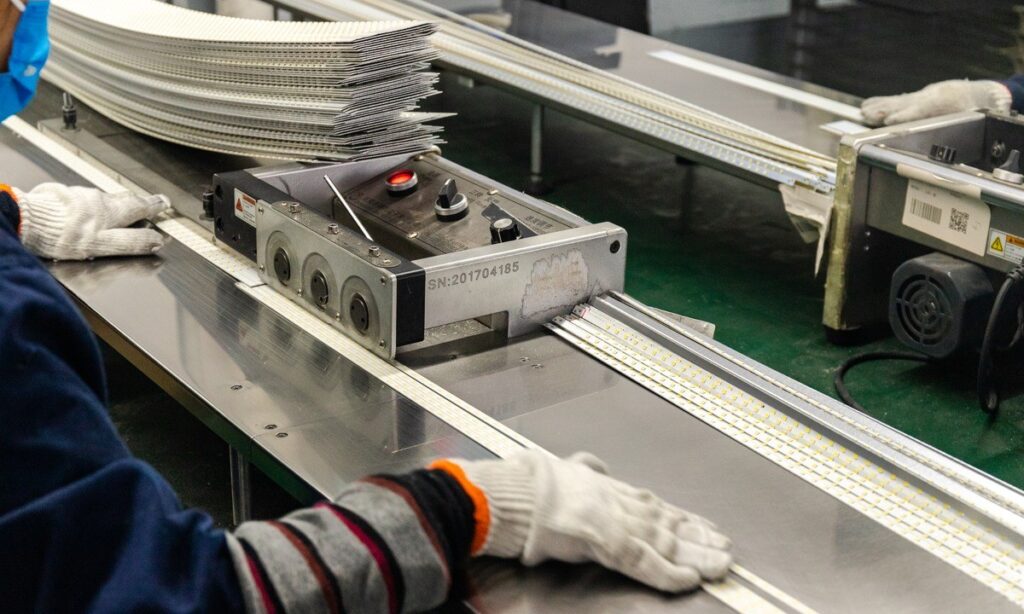
Utilizzare il LED product compliance checklist per associare le evidenze al mercato di destinazione, e la guida alla valutazione dei fornitori per controllare le modifiche dal campione alla produzione. La pagina dello stabilimento New Lights fornisce un contesto produttivo senza sostituire le evidenze a livello di modello.
Conclusione
Common T10 boat-tube problems are best handled by tracing the complete low-voltage system. Identify the ST or MT model, verify supply and voltage drop, inspect M10 connectors and seals, check mounting and environmental exposure, and preserve evidence before replacing parts.
New Lights publishes a six-model 12–24V family. For a bounded review, contatta New Lights con il modello, l'alimentazione, la quantità collegata, la lunghezza del cavo, il sintomo e le foto dell'installazione.
FAQ
Can an IP65 T10 tube be submerged?
No. IP65 is not an immersion rating. Keep the product within its verified installation scope.
Tutti e sei i modelli possono essere interconnessi?
No. La pagina indica che i modelli MT sono interconnettibili e i modelli ST non sono interconnettibili.
Why does the last linked lamp flicker?
Possible causes include voltage drop, connector resistance, source limits or an overloaded chain. Verify the approved circuit and measurements.
Does 12–24V mean polarity does not matter?
Non necessariamente. Seguire le istruzioni esatte di cablaggio e polarità del modello; non erano riportate nella tabella recuperata.
Il tubo è resistente alla corrosione in ambienti con acqua salata?
That is not proven by IP65. Request salt-mist, material and connector evidence for the intended exposure.
Può essere utilizzato come luce di navigazione?
Non in base alla pagina prodotto recuperata. L'illuminazione di navigazione regolamentata richiede approvazioni specifiche e prestazioni fotometriche.
Fonti editoriali
- New Lights, “IP65 T10 Fishing Boat LED Tubes”: https://www.new-lights.com/products/led-tube-lights/t8-led-tubes/ip65-t10-led-fishing-boat-tube/
- IEC, “IEC 60529 — Degrees of protection provided by enclosures”: https://webstore.iec.ch/en/publication/2452
- U.S. Coast Guard, “Marine Safety Alert issued for Navigational Lights”: https://www.uscgboating.org/multimedia/news-detail.php?id=512
- UK Maritime and Coastguard Agency, “Marine engineering safety requirements”: https://www.gov.uk/guidance/marine-engineering-safety-requirements