

Choosing an LED tube supplier is a configuration-control decision, not a catalogue comparison. A credible offer connects the exact lamp architecture and model to the intended fixture, current technical evidence, controlled components, production checks and shipment records.
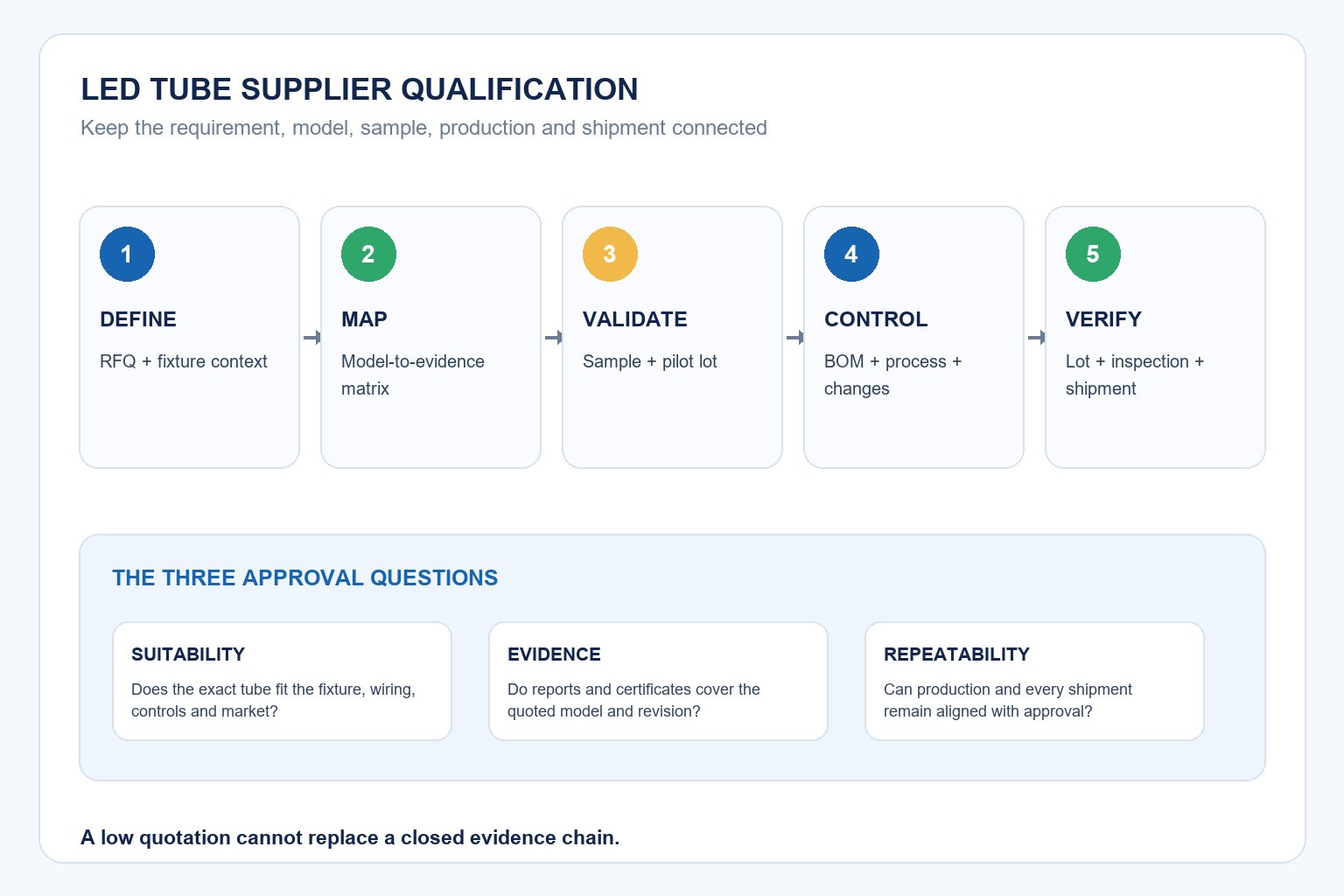
For an importer, distributor, private-label buyer or retrofit contractor, the practical objective is to answer three questions: Is the offered tube suitable for this application? Does the evidence cover the quoted model and production configuration? Can future production remain aligned with the approved sample?
Use the process below before price becomes the deciding factor.
Start with an exact purchase definition
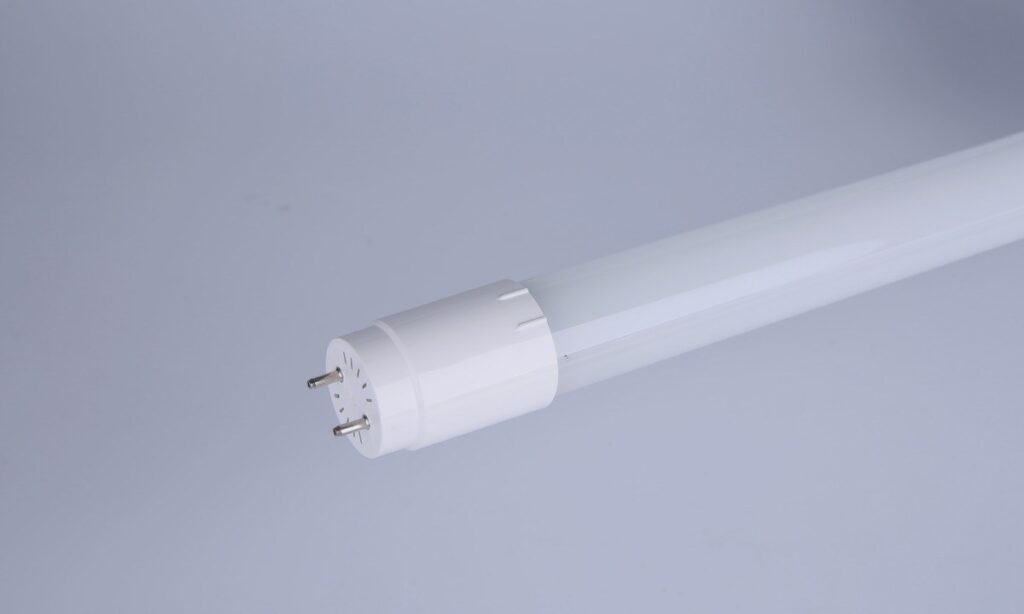
“T8 LED tube” is not a complete specification. Before comparing suppliers, define the tube length and diameter, base, electrical architecture, input, output target, color requirements, control method, fixture conditions, destination market, quantity, packaging and delivery schedule.
This follows the same principle used in NIST’s supplier-scouting framework: dimensions, tolerances, performance, materials, certifications, regulations, volume, price, delivery and packaging all belong in the requirement definition. When those inputs are vague, quotations can look comparable while describing different products.
At minimum, the RFQ should identify:
- tube length, diameter and base;
- Type A, Type B, Type C or another defined electrical architecture;
- input voltage and frequency;
- wattage, lamp output and distribution requirement;
- CCT, CRI and color-consistency requirement;
- fixture, ballast and lampholder conditions;
- dimming, sensor, emergency or control requirements;
- ambient, enclosure and installation limits;
- target market and required documents;
- labeling, packaging, quantity and delivery schedule.
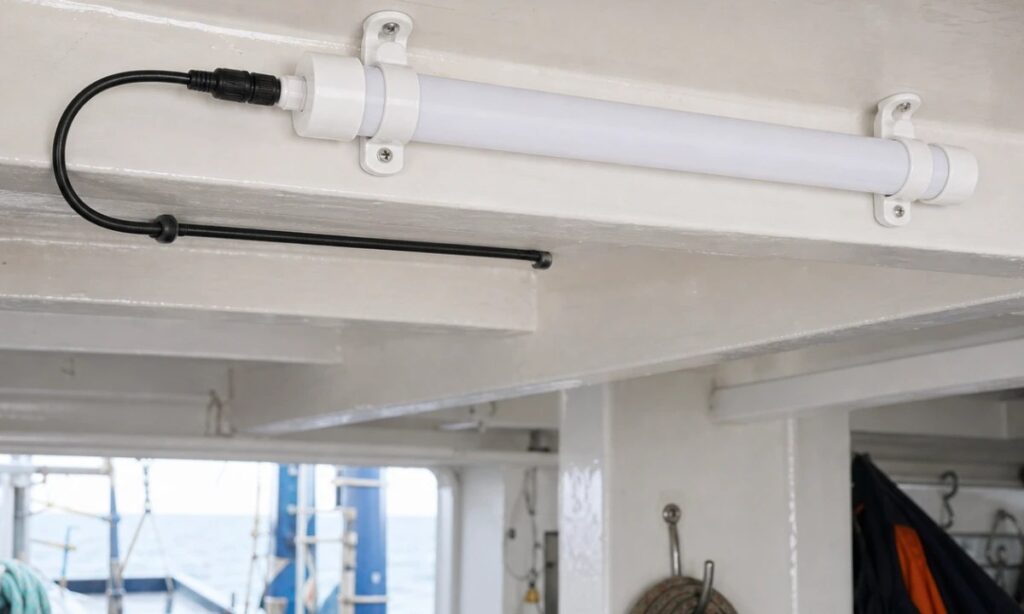
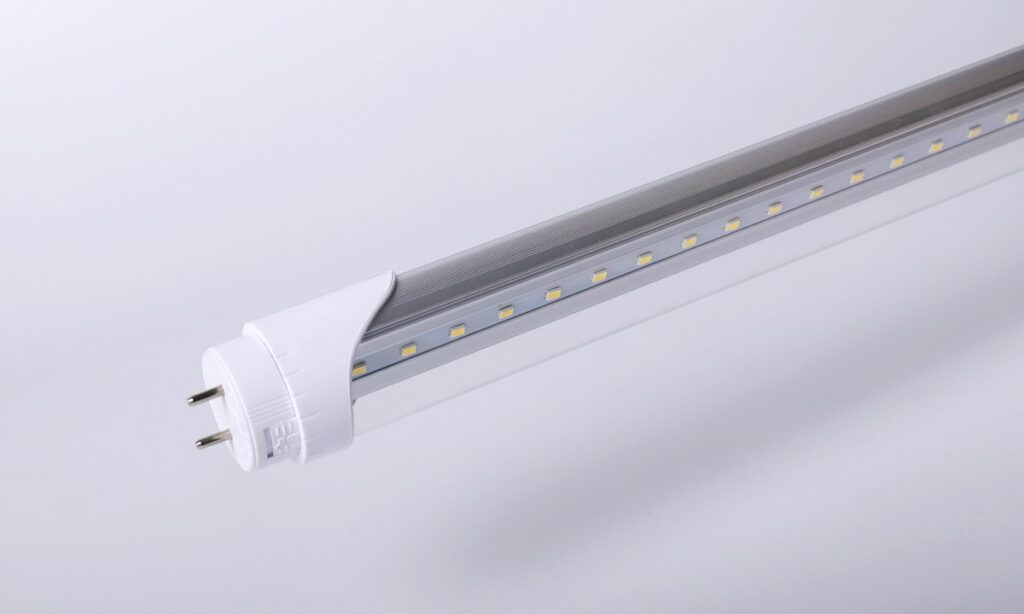
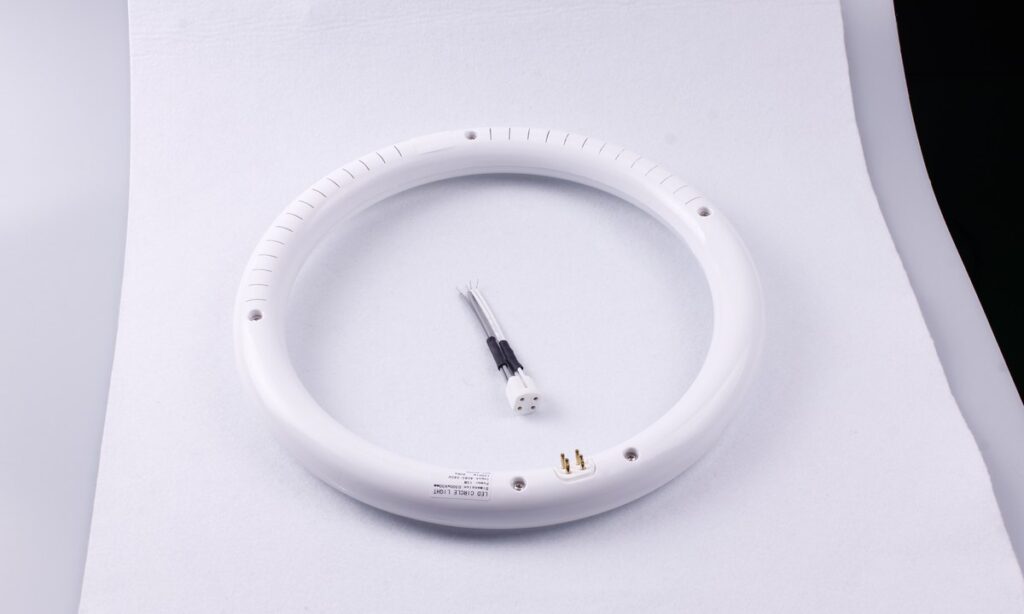
The New Lights LED tube range shows how many configurations can sit under one product family. The RFQ must narrow that family to one auditable offer.
Confirm the retrofit architecture before comparing models
Electrical architecture changes installation, compatibility, maintenance and safety. It should be resolved before samples are ordered.
- Type A operates through an existing compatible fluorescent ballast and therefore requires a model-level ballast review.
- Type B operates from line voltage after the fixture is converted according to the product instructions.
- Type C uses an external LED driver after the fluorescent ballast is disconnected.
DOE’s TLED application guidance warns that ballast compatibility cannot be assumed. Two visually similar fixtures may contain different ballast models, so a supplier’s Type A offer should include a current compatibility list with ballast manufacturer, model identifiers, tested lamp configuration, exclusions and document revision.
If the existing estate contains mixed fixtures or uncertain wiring, use the LED retrofit options guide to decide whether lamps, retrofit kits or new luminaires should enter the comparison. A tube supplier cannot correct a retrofit route that was never defined.
Build a model-to-evidence matrix
Create one row for every quoted model and variant. A report for a similar length, wattage or housing is not automatically evidence for the purchased configuration.
| Evidence item | What must match | What the check prevents |
|---|---|---|
| Datasheet and drawing | Model code, length, base, input, wiring and revision | Buying a configuration different from the quotation |
| Photometric file or report | Exact lamp or complete tested system, operating condition and date | Treating a family-level lumen claim as model evidence |
| Electrical test data | Voltage, power, current, power factor, harmonics and test condition | Comparing headline wattage without electrical behavior |
| Compatibility list | Lamp model, ballast model, fixture conditions and revision | Assuming Type A compatibility from appearance |
| Certificate or listing | Applicant, manufacturer, factory, model family, construction and current status | Applying one document to an uncovered variant |
| Label and instructions | Model, wiring, warnings, market markings and language | Discovering installation or marking conflicts after production |
| Approved BOM or configuration record | Critical components and revision | Silent substitution between sample and order |
| Packaging specification | Unit protection, carton, labels, quantity and accessories | Shipping a correct lamp in an unapproved pack |
Check codes, wattages, lengths, inputs, wiring variants and dates across the complete file set. A useful matrix exposes gaps immediately: each blank cell becomes a question before approval rather than a dispute after delivery.
Review performance evidence as a complete system
Bare-lamp lumens do not predict every result inside an existing luminaire. Distribution interacts with the reflector, lens, louver, lamp position and room geometry. Ask for the complete photometric file or report, angular distribution, color data, electrical data and the conditions used for each measurement.
DOE created CALiPER to compare claimed and measured solid-state-lighting performance using qualified laboratory procedures. Its historical linear-product testing found differences between some claimed and measured output, power, efficacy or beam data. The procurement lesson is straightforward: critical values should be traceable to the exact tested configuration.
For a retrofit project, test representative tubes in the actual fixture type. Record illuminance at agreed points, uniformity, glare, visible striping, startup behavior, color appearance and fixture temperature under the intended operating condition. Where waveform quality matters, the flicker, power factor and THD buyer checklist provides a focused evidence set.
Verify certification scope, not only the logo
First identify which rules, standards, listings or certifications apply to the exact product, market and importer role. Then compare the document with the quoted model:
- issuing or testing organization;
- certificate or report number;
- exact model family and variants covered;
- applicant and manufacturer identities;
- factory location where the scheme requires it;
- standard edition and issue date;
- critical construction or component references;
- current database status where public verification is available.
A certificate answers a defined compliance question; it does not replace photometric, compatibility or production evidence. The LED product compliance document checklist explains how to separate certificate scope, report scope, model identity and market responsibility.
Follow the product through the production process
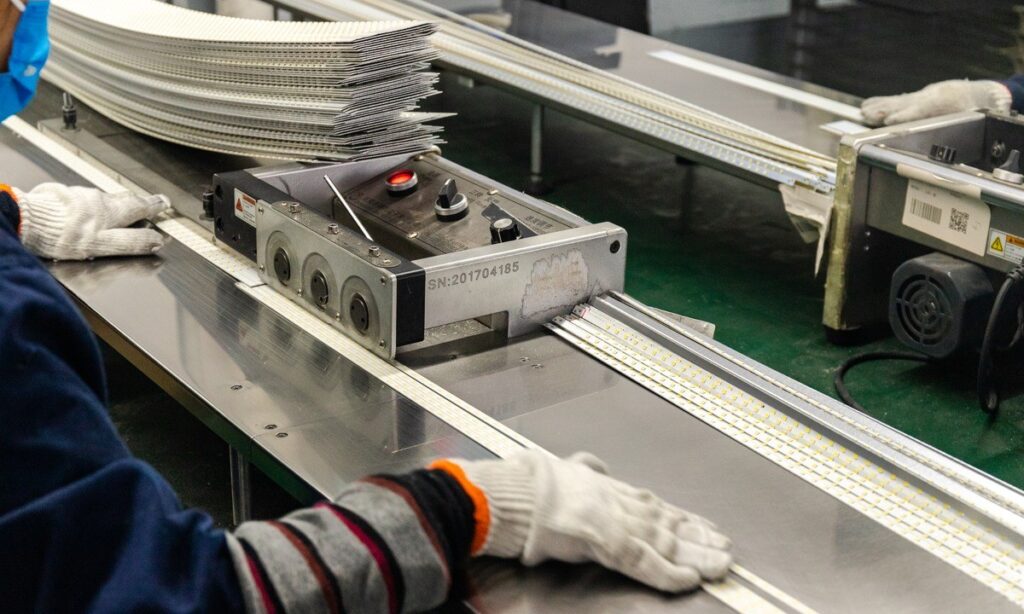
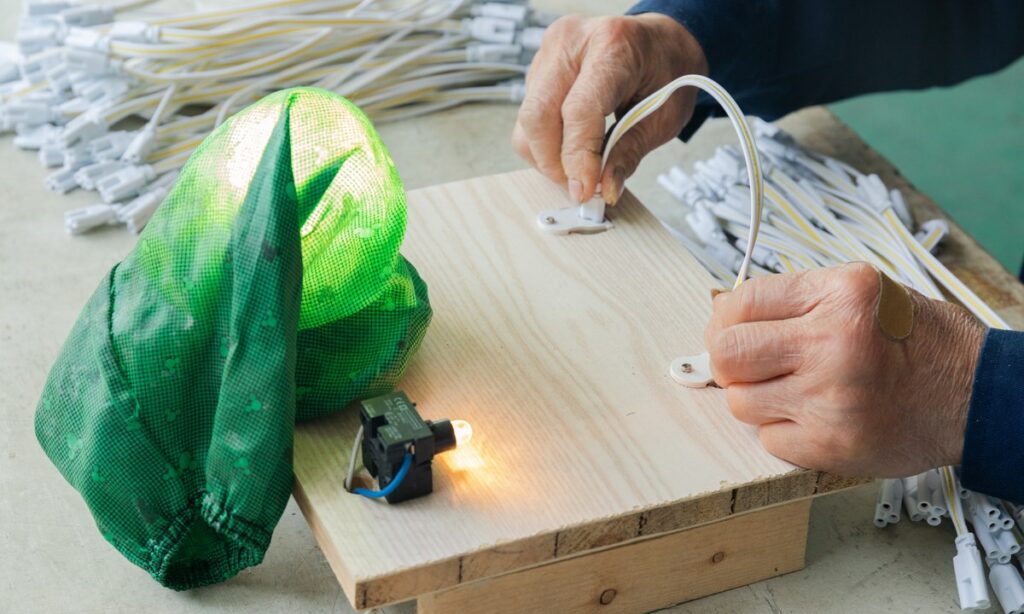
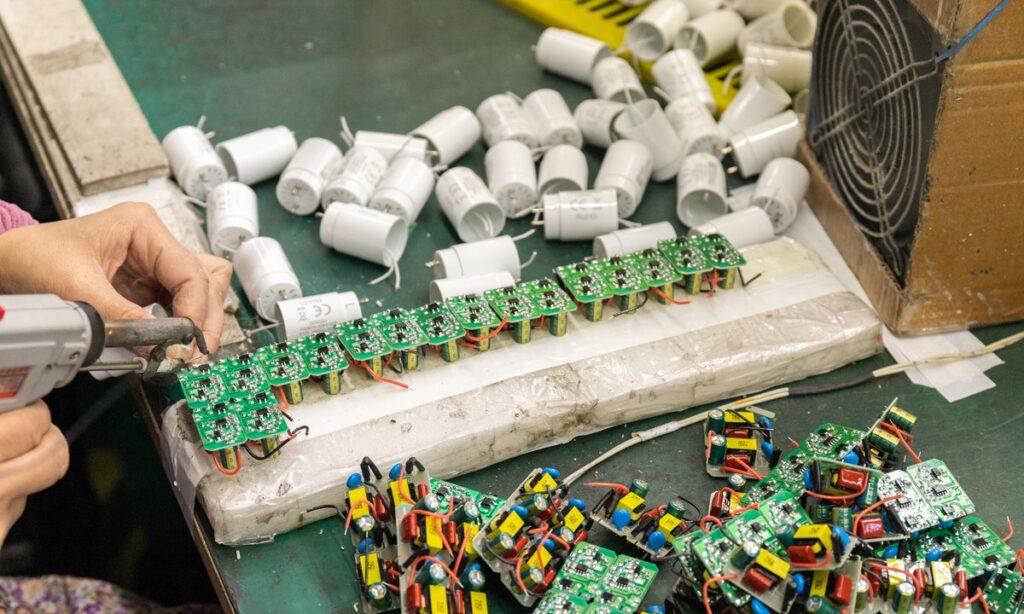
A useful factory review follows material and product flow. It should connect incoming parts, assembly instructions, in-process checks, final inspection, nonconforming-product control and retained records.
Look for controls covering:
- approved suppliers and incoming components;
- LED packages, drivers, PCBs, housings, pins and insulation;
- component identity and lot traceability;
- work instructions and operator training;
- process settings, fixtures and test equipment;
- in-process electrical and mechanical checks;
- specified burn-in or aging steps;
- final function, safety and appearance inspection;
- calibration and equipment maintenance;
- nonconforming-product segregation and corrective action;
- production and shipment record retention.
CPSC manufacturing guidance highlights the risk of uncontrolled component substitution and the importance of production controls. For a buyer, the practical test is traceability: select a finished unit and ask how its critical components, configuration revision and inspection record are identified.

Approve a controlled sample sequence
One engineering sample shows that one unit can be assembled. It does not establish production consistency. Use staged approval:
- Close document and model-mapping gaps.
- Test engineering samples against written acceptance criteria.
- Freeze the approved configuration and revision.
- Identify and retain a controlled golden sample.
- Run a pilot lot with production materials, tools and processes.
- Compare pilot units with the approved sample and specification.
- Release mass production only after deviations are closed.
The LED lighting sample evaluation checklist can be used to record appearance, dimensions, electrical behavior, installation fit, packaging and document consistency. Define who signs the approval, what evidence is retained and which changes require a new sample.
Require component and engineering change control
LED packages, drivers, capacitors, PCBs, plastics, metal parts and packaging can change during a product’s commercial life. The purchase agreement should identify controlled parts and attributes, advance-notice requirements, revalidation, certification-impact review, buyer approval and lot identification for old and new configurations.
An outwardly identical tube can behave differently after a component substitution. Output, color, flicker, thermal behavior, ballast compatibility, lifetime assumptions or certification scope may change even when the housing and label look the same.
Ask the supplier to show how an engineering change is requested, reviewed, approved, implemented and traced to production lots. The answer should connect people, records and product identity—not only a policy document.
Compare commercial controls with the technical offer
Price, lead time and warranty matter, but each should be compared on the same scope. A lower quotation may exclude required testing, packaging, accessories, inspections or change-control commitments.
| Decision area | Strong evidence | Warning sign |
|---|---|---|
| Product definition | Exact model, architecture and revision | Generic family description |
| Compatibility | Model-level list with exclusions | “Universal” claim without a list |
| Testing | Reports traceable to the quoted configuration | Cropped pages or mismatched model codes |
| Certification | Verifiable scope and current status | Logo presented without model coverage |
| Production control | Demonstrated material and record traceability | Procedure slides without a product trail |
| Samples | Golden sample and pilot comparison | One hand-built sample treated as final approval |
| Changes | Prior notice, review and revalidation | Supplier may substitute without approval |
| Warranty | Defined claim, containment and corrective-action process | Warranty years without responsibilities or exclusions |
| Shipment | Lot identity, inspection record and approved packaging | Final inspection disconnected from the purchase order |
Review warranty start date, covered party, operating exclusions, claim evidence, replacement or credit terms, freight and labor responsibility, response time and corrective-action process. For recurring orders, trend deviations and claims by model and lot rather than treating each shipment as unrelated.
Verify every shipment against the approved state
Before shipment, connect the purchase order to the approved product and BOM revision, production lot, inspection results, product and carton labels, certification markings, packaging configuration, quantity, accessories and retained samples.
Incoming inspection should confirm product identity and the attributes most likely to change the buyer’s risk. The sampling level and tests depend on project value, product history and consequence of failure; a repeat order can use accumulated evidence, but it should not become evidence-free.
For a model-specific discussion, contact New Lights with the target market, fixture and ballast inventory, required architecture, technical evidence, quantity, packaging and delivery brief.
Frequently asked questions
Is a certificate enough to approve an LED tube supplier?
No. Verify the certificate’s exact model and construction scope, then separately review performance, compatibility, production controls, samples, change management and shipment evidence.
Does a factory audit prove product quality?
It shows how selected processes and records operate at a point in time. Product approval still needs exact-model evidence, controlled samples, shipment checks and ongoing monitoring.
Why is ballast compatibility important for Type A tubes?
Type A operation depends on the actual ballast. Visually similar fixtures may contain different ballast models, so compatibility must be checked against the current lamp and ballast combination.
Can one sample represent mass production?
No. Use written acceptance criteria, a controlled golden sample and a pilot lot made with intended production materials and processes before mass release.
What should be controlled in an LED tube BOM?
Control parts and attributes that can affect safety, performance, compatibility, appearance or compliance, including the LED, driver, PCB, insulation, housing, pins and optical components as applicable.
How should private-label buyers handle labels and packaging?
Define market and certification responsibilities, then approve exact product, package, markings, warnings, instructions and artwork before production.
What is the most important change-control rule?
Require advance disclosure and buyer approval for any change that can affect performance, compatibility, safety, certification, appearance or service.
How can buyers compare supplier prices fairly?
Compare the same configuration, evidence, inspection, packaging, warranty and delivery scope. Normalize exclusions before comparing unit price.
Editorial sources
- U.S. Department of Energy, “CALiPER”: https://www.energy.gov/cmei/ssl/caliper
- U.S. Department of Energy, “LED Retrofit Kits, TLEDs, and Lighting Controls: An Application Guide”: https://betterbuildingssolutioncenter.energy.gov/sites/default/files/attachments/led_troffer_retrofit_guide.pdf
- National Institute of Standards and Technology, “MEPNN Supplier Scouting Request”: https://meis.nist.gov/SupplierScouting/Submit
- U.S. Consumer Product Safety Commission, “Manufacturing Best Practices”: https://www.cpsc.gov/business–manufacturing/business-education/business-guidance/BestPractices
- U.S. Consumer Product Safety Commission, “Component Part Testing”: https://www.cpsc.gov/FAQ/Component-Part-Testing