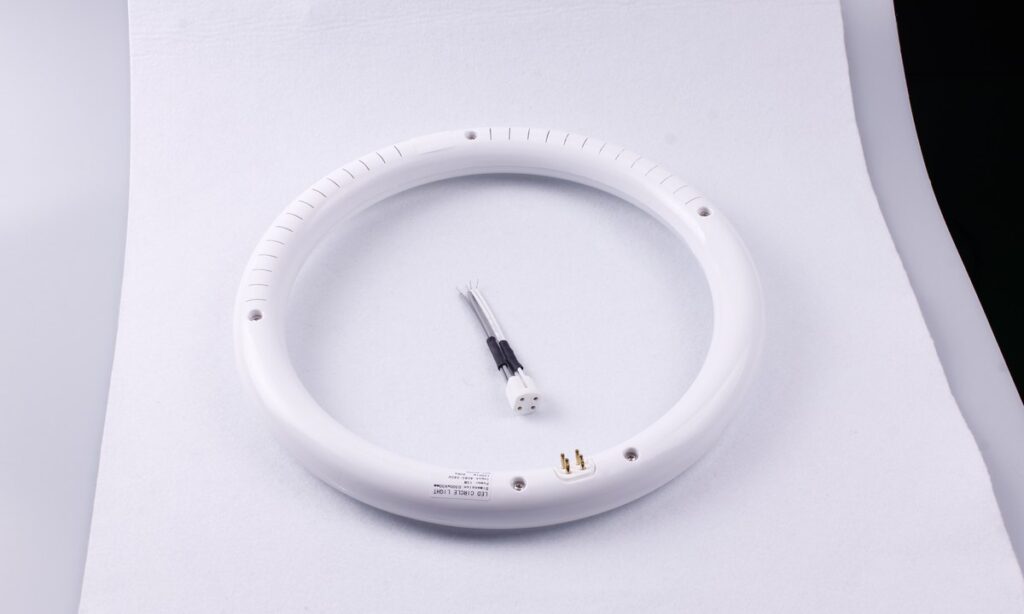


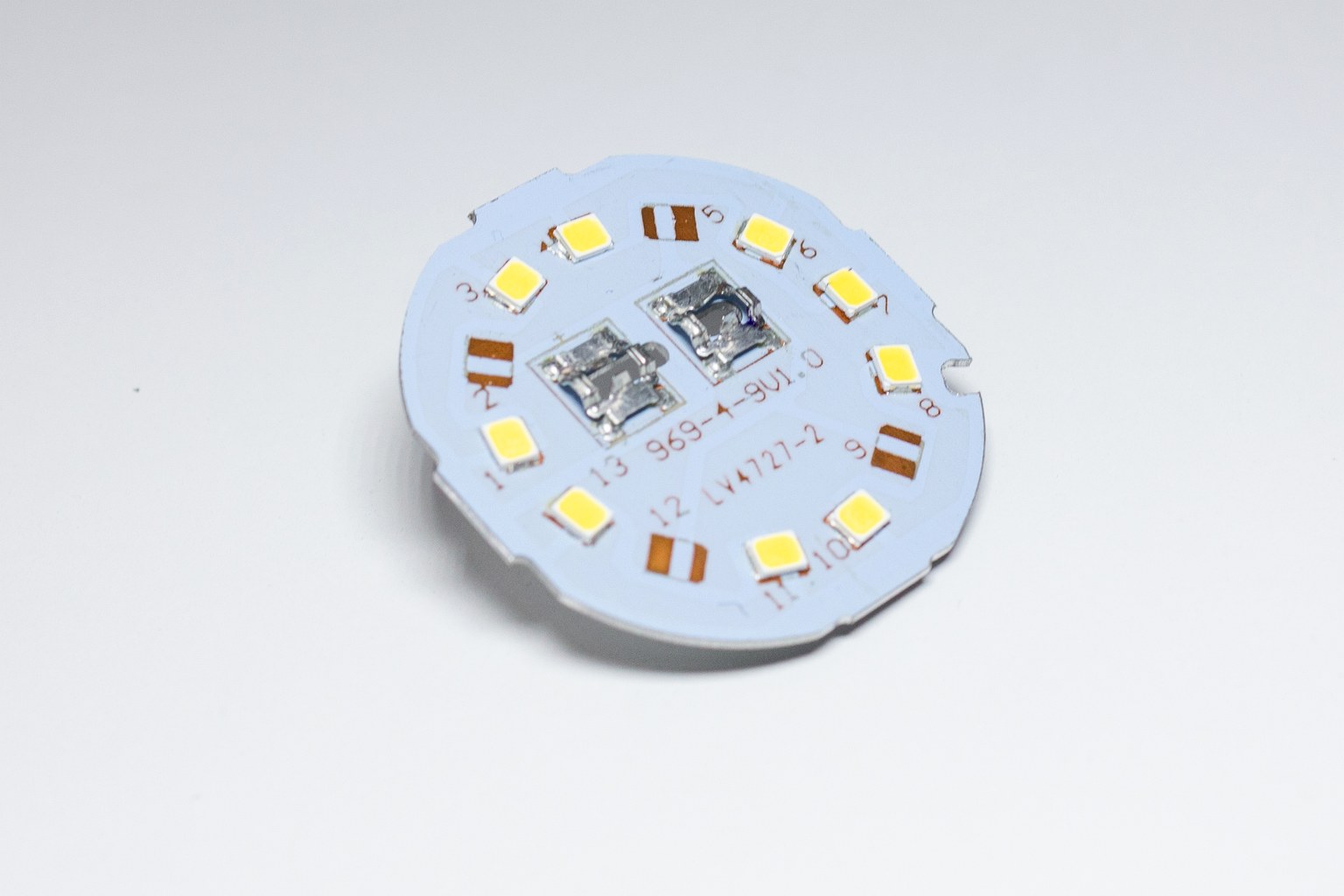
An “SMD LED bulb” label describes how LED packages are mounted inside the lamp. It does not identify the socket, physical fit, brightness, light distribution, color, dimming behavior or conditions in which the complete bulb may be used.
Choose the replacement in this order: match the base and supply, confirm the bulb fits the fixture, select lumens and distribution for the task, choose color characteristics, and then verify controls and operating restrictions. Use SMD as a construction detail—not as a quality grade.
Start With the Fixture and Existing Lamp
Switch off power and let the old lamp cool before handling it. Record the markings on the lamp and fixture, then photograph the socket, enclosure and any control. If the marking is unreadable, measure the base and bulb beside a ruler rather than selecting from a marketplace photo.
Capture these details before comparing replacements:
- Base or cap designation and contact arrangement.
- Supply voltage and frequency.
- Bulb shape, maximum diameter and overall length.
- Available clearance inside the shade, globe, reflector or cover.
- Mounting orientation and whether the fixture is open or enclosed.
- Dimmer, sensor, timer, illuminated switch or smart control.
- Dry, damp or outdoor location markings.
- Desired brightness, color appearance and distribution.
For a single table lamp, this inventory may take only a few minutes. For a property, retail program or repeated order, record several representative fixtures because the easiest fitting may not show the constraints found elsewhere.
Use a Fixture-First Decision Table
The order below separates hard compatibility checks from appearance choices. A bulb that fails the first three rows should not be rescued by attractive marketing claims.
| Decision | What to verify | Why it matters |
|---|---|---|
| Electrical interface | Exact base, contact arrangement, voltage and frequency | Prevents a physical or electrical mismatch |
| Physical fit | Shape, diameter, length, clearance and retaining hardware | Confirms the bulb installs without touching the cover or clips |
| Operating conditions | Enclosure, orientation, ambient and location rating | Defines the thermal and environmental conditions allowed by the lamp maker |
| Light quantity | Declared lumens | Compares brightness without treating watts as light output |
| Distribution | Broad or directional output, beam information and emitting position | Determines where the light goes after the bulb is installed |
| Color | CCT and relevant color-rendering information | Affects the appearance of the room and objects |
| Controls | Dimmable marking and exact control compatibility | Reduces flicker, noise, unstable low-end behavior and shutoff problems |
| Product identity | Model marking, label, instructions and supporting data | Keeps the selected specification connected to the delivered bulb |
Match the Base and Electrical Contact
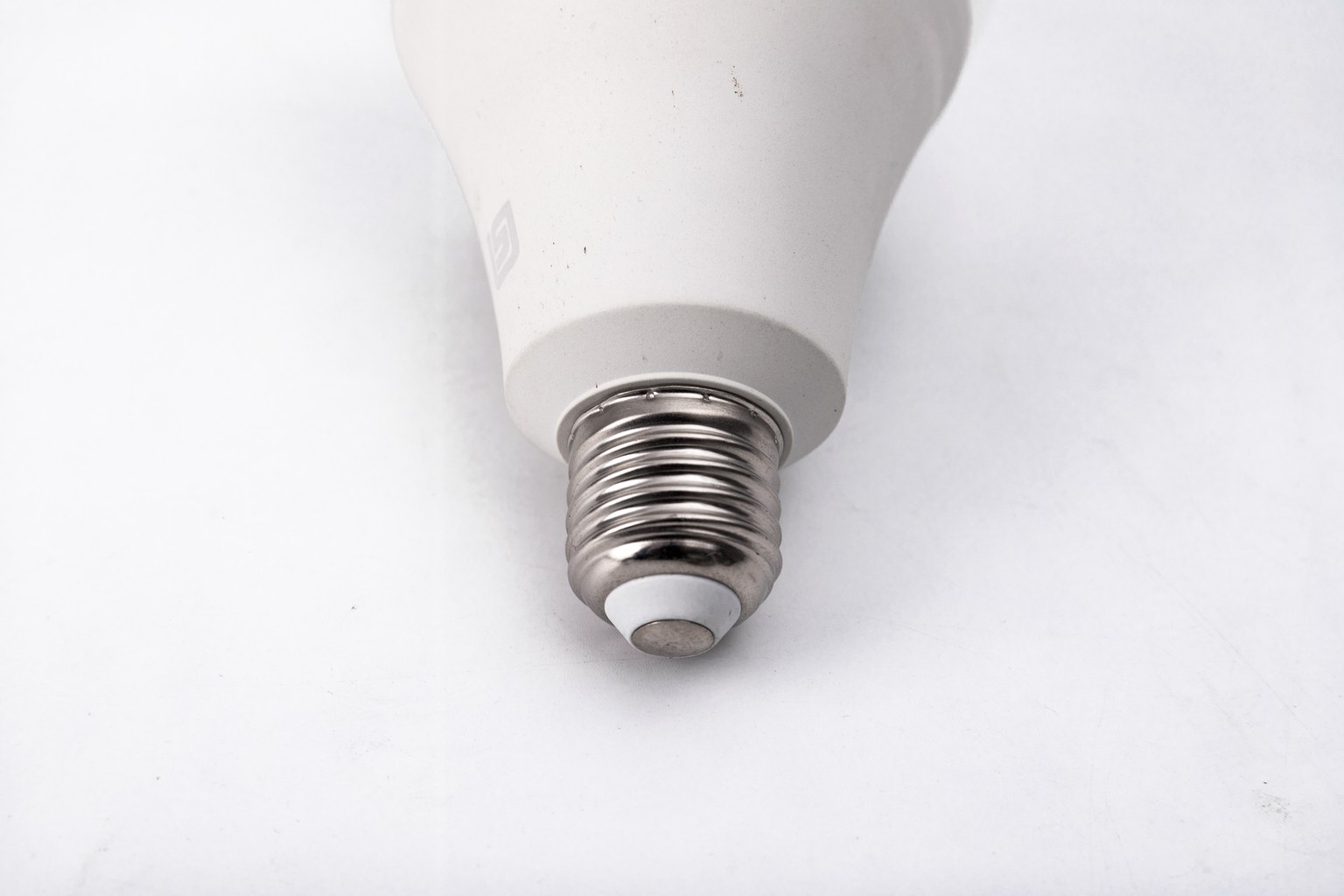
A familiar-looking lamp can still have the wrong screw diameter, pin spacing, locking feature or contact arrangement. Terms such as “standard base” are not precise enough for a replacement decision. Compare the exact base code when it is available.
Screw, bayonet, bi-pin and twist-lock formats are used in different fixtures and markets. Some look similar from a distance but are not interchangeable. A matching base also does not establish the correct supply voltage or frequency, so read both the lamp and fixture markings.
When an existing lamp cannot be identified, provide a clear photo of the complete lamp, a close view of the base, measurements and the fixture model. Commercial buyers can use the New Lights LED bulb range to identify relevant product families before moving to an exact-model review.
Check Shape, Dimensions and Fixture Clearance
The base may fit while the envelope or body does not. LED lamps contain a driver, thermal path and optical system, and those parts can change the diameter, neck shape or overall length compared with the lamp being replaced.
Measure maximum diameter, overall length and usable clearance. Check clips, retaining rings, shades and diffusers. The bulb should not press against a cover, and the emitting area should sit where the reflector or shade can use it. A mechanically installed lamp can still deliver an unwanted result when its light-emitting area is too high, too low or hidden behind the fixture structure.
Fixture compatibility also depends on enclosure, orientation, controls and location—not only dimensions.
Choose Brightness by Lumens
Watts describe electrical power use; lumens describe light output. The U.S. Federal Trade Commission advises shoppers to compare bulb brightness in lumens. Different LED lamps can deliver different lumen outputs at similar wattages, so a watt value or “replacement wattage” should not be the final brightness decision.
Start from the useful light level in the existing room rather than assuming that more lumens are always better. A visible decorative lamp can become uncomfortable when the source is too bright or concentrated. A shaded floor lamp may need more output because the shade absorbs and redirects light. Room finishes, mounting position, daylight and other luminaires also affect the result.
For a larger replacement program, install samples in representative rooms and compare the same locations under the same conditions.
Compare Distribution as Well as Total Output
Two bulbs with the same lumen rating can create different visual results. One may distribute light broadly around the lamp; another may send more light forward or leave a darker zone near the base.
Broad distribution often matters in transparent pendants, table lamps and multi-arm fittings. Directional output is usually more important in reflector lamps and recessed fixtures. If a fitting uses a reflector, check whether the LED bulb places its emitting surface where the reflector can capture and redirect the light.
Beam information, product drawings and sample installation are more useful than lumen output alone when the appearance of the fixture matters. The LED filament bulb selection guide covers visible-envelope and decorative applications in more detail; this page retains the broader household replacement task.
Choose Color Appearance and Color Quality
Correlated color temperature, expressed in kelvins, describes the appearance of white light from warmer to cooler. It is a comparison coordinate, not a universal room prescription. Record the color of the lamps that will remain in the same visual zone before replacing only part of an installation.
Color fidelity concerns how the source affects the appearance of objects. CRI is a common general indicator, while the U.S. Department of Energy notes that CCT and CRI simplify more complex aspects of color appearance and fidelity. For ordinary household replacement, use the declared values as comparison points and assess a sample in the actual room when food, skin tones, artwork, textiles or finishes are important.
Treat Dimming as a System Question
Do not assume that an SMD lamp is dimmable. The finished lamp must be identified for dimming, and its driver must work with the installed control and circuit arrangement.
Compatibility can affect minimum light level, flicker, audible noise, delayed start, unstable operation and whether the lamps turn fully off. The number of lamps on the circuit and the dimmer’s load range may also matter. Sensors, timers, illuminated switches and smart controls should be recorded before selection.
| Observed behavior | Check before blaming the LED package |
|---|---|
| Flicker or pulsing | Lamp dimmable marking, dimmer compatibility, wiring and supply stability |
| Limited dimming range | Control type, minimum load and number of connected lamps |
| Buzzing | Lamp-control pairing, driver behavior and fixture vibration |
| Delayed or erratic start | Dimmer, sensor, illuminated switch and circuit conditions |
| Faint glow when off | Control leakage, illuminated switch or wiring arrangement |
Use the LED dimming compatibility guide for a fuller test sequence. Although that guide focuses on filament-style lamps, its lamp-driver-control logic also explains why an internal package label cannot establish dimming performance.
Confirm Enclosure, Orientation and Location
LED packages still produce heat, which the complete lamp must move through its board, housing and surrounding air. Fully enclosed fixtures can raise the temperature around the lamp. U.S. Department of Energy FEMP procurement guidance advises checking the packaging or technical specification when a lamp will operate in a fully enclosed fixture.
Use the exact product instructions to confirm enclosure, mounting orientation, ambient range and dry, damp or wet-location conditions. An indoor open-fixture lamp should not be assumed suitable for a sealed cover or outdoor fitting. These restrictions belong to the complete lamp and application; SMD construction does not answer them.
Read the Label as a Model Record
For U.S. covered lamps, the FTC Lighting Facts label presents fields such as brightness, estimated energy cost, life, light appearance and energy use. Other markets use different label and documentation formats, but the selection principle is similar: compare traceable model information instead of relying on a front-of-box technology phrase.
For a retail or private-label program, connect the model number on the lamp, package, data sheet, instructions and order. Review any market evidence at the exact model and variant scope. A mark on another product or a broad family document does not identify the configuration being purchased.
What Does SMD Actually Tell You?
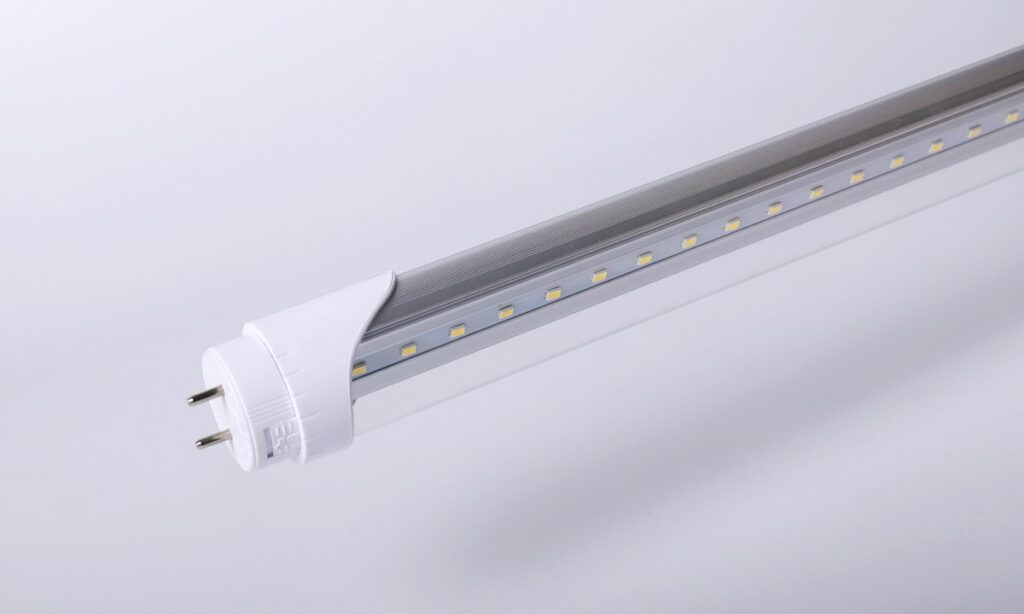
SMD means surface-mount device. In many LED bulbs, it refers to LED packages mounted on a circuit board. It is one part of the light source and assembly architecture.
COB, or chip on board, describes a different integration approach. Neither acronym is a finished-product performance grade. Package selection can influence optical layout and thermal engineering, but brightness, efficacy, distribution, color, driver behavior and reliability depend on the complete lamp and its operating conditions.
The SMD vs COB LED guide explains the architecture boundary. For a household purchase, the declared lamp performance and fixture compatibility remain the decisive information.
Home LED Bulb Replacement Checklist
Before ordering, confirm:
- Exact base or cap and supply rating.
- Bulb shape, diameter, length and fixture clearance.
- Open or enclosed fixture and mounting orientation.
- Dry, damp or outdoor location requirement.
- Lumen output and intended light distribution.
- CCT and relevant color-rendering information.
- Dimmable marking and exact control compatibility.
- Model identity across lamp, package and documentation.
- Sample result in the actual fitting when fit, appearance or controls are uncertain.
For a model-matching request, contact New Lights with photos of the old lamp and fixture, readable markings, base, dimensions, supply, controls, enclosure, quantity and desired light appearance.
Frequently Asked Questions
Is an SMD LED bulb automatically better than another LED bulb?
No. SMD describes a package and assembly approach, not a complete performance or quality level. Compare the finished lamp, its declared specifications, application restrictions and sample behavior.
Does SMD tell me how bright the bulb is?
No. Compare the declared lumen output. Watts describe energy use, while SMD does not provide a lumen value.
Can every SMD bulb be used with a dimmer?
No. Verify that the exact lamp is marked for dimming and that it is compatible with the installed control and circuit arrangement.
Can I use an LED bulb in a fully enclosed fixture?
Only when the product instructions permit the intended enclosure and operating conditions. Enclosures can retain heat around the lamp.
Is a matching screw base enough to confirm compatibility?
No. Also check voltage, dimensions, fixture clearance, distribution, enclosure, orientation, controls and location requirements.
What should I send when requesting a replacement match?
Send photos of the complete lamp, base and fixture; all readable markings; dimensions; supply; controls; enclosure; mounting orientation; desired brightness and color; quantity; and destination market.
Editorial Sources
- U.S. Federal Trade Commission, “Shopping for Light Bulbs”: https://consumer.ftc.gov/articles/shopping-light-bulbs
- U.S. Federal Trade Commission, “The FTC ‘Lighting Facts’ Label: Questions and Answers for Manufacturers”: https://www.ftc.gov/business-guidance/resources/ftc-lighting-facts-label-questions-answers-manufacturers
- U.S. Department of Energy, “LED Basics”: https://www.energy.gov/cmei/ssl/led-basics
- U.S. Department of Energy FEMP, “Purchasing Energy-Efficient Light Bulbs”: https://www.energy.gov/cmei/femp/purchasing-energy-efficient-light-bulbs