

Clear and frosted LED filament bulbs can use a similar shape and base while creating very different visual effects. Clear glass makes the filament structure part of the design. Frosted glass softens the view of the source and presents a more uniform luminous envelope. Buyers can first review the wider LED filament bulb range and then compare finishes within the required shape and base.
Neither finish is automatically brighter, more efficient or higher quality. Choose the appearance first, then compare the exact bulb’s lumens, distribution, color, dimming, dimensions and permitted fixture conditions. The guide to choosing an LED filament bulb covers those wider model decisions.
The Short Answer
Choose a clear filament bulb when the bulb is meant to be seen and the fixture benefits from sparkle, visible filament geometry or a vintage decorative character.
Choose a frosted filament bulb when you want a softer source appearance, less visible filament detail or a more uniform glowing envelope—especially where the bulb sits in a direct line of sight.
That is a design starting point, not a universal performance conclusion. The fixture, viewing position and exact model can reverse an expectation.
| Decision factor | Clear envelope | Frosted envelope | What to verify |
|---|---|---|---|
| Source appearance | Filaments and supports remain visible | Envelope becomes the dominant luminous form | View the lamp on and off |
| Direct view | Stronger points or lines of brightness may be visible | Filament detail is softened | Check seated and standing sight lines |
| Fixture interaction | Reflections and filament images may remain distinct | Shade or globe may appear more evenly luminous | Test inside the actual fixture |
| Model comparison | Finish name gives no lumen or watt value | Finish name gives no lumen or watt value | Compare matched datasheets and measurements |
| Maintenance appearance | Dust and fingerprints are often easier to see | Surface dirt may appear differently by coating | Review cleaning instructions and samples |
What the Finish Changes
The outer envelope is part of the optical system. A clear envelope allows a direct view of the filament elements and their supporting structure. A frosted treatment scatters light at the envelope, reducing the visible definition of those elements.
This can affect:
- Filament visibility.
- Apparent sparkle.
- Brightness of the source seen directly.
- Shadow sharpness.
- Light distribution.
- Appearance inside a shade or diffuser.
- Visibility of dust and fingerprints.
The magnitude of each effect depends on the glass treatment, filament arrangement, bulb shape and complete fixture. “Frosted” is not one standardized optical transmission value, and “clear” does not mean every product has the same distribution.
Clear Filament Bulbs: Visual Strengths and Tradeoffs
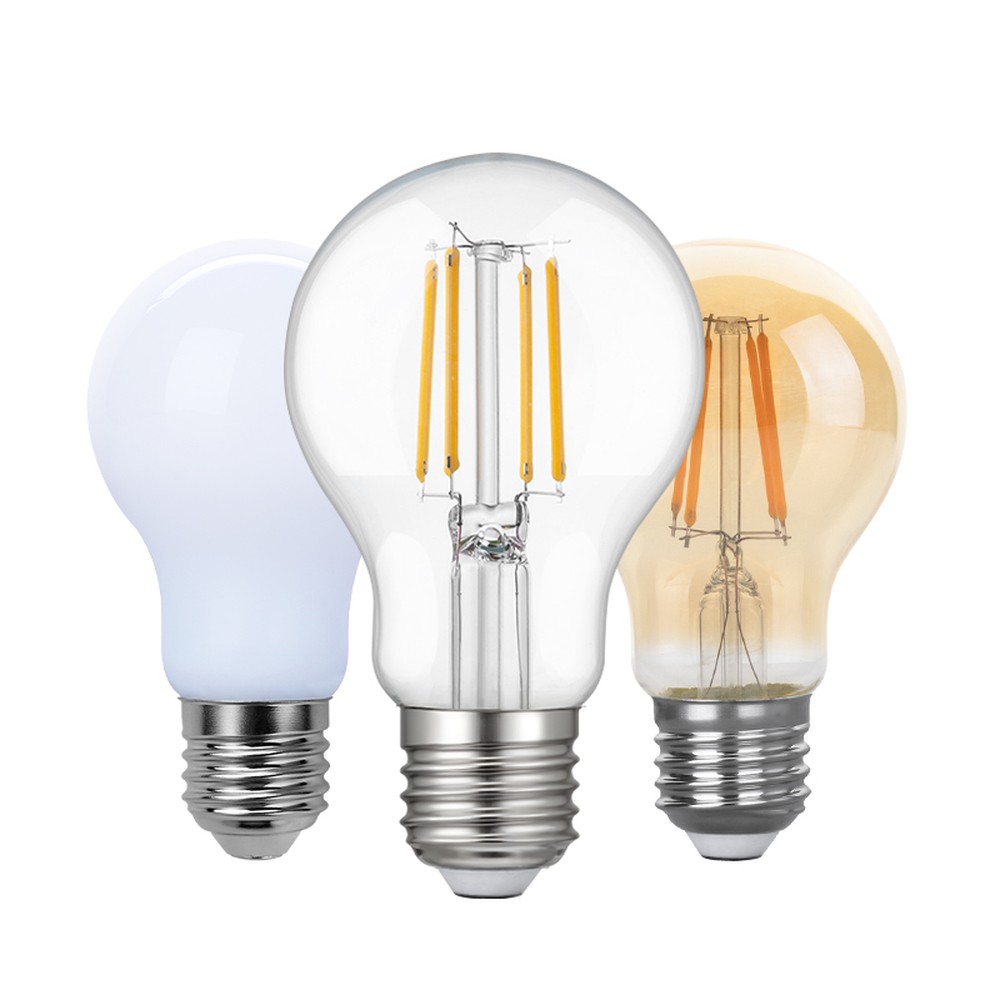
Clear bulbs reveal the internal filament layout. In exposed sockets, open chandeliers and transparent pendants, this can be the primary decorative feature. The visible points or lines of light create sparkle and a stronger association with traditional decorative lamps.
Potential advantages include:
- Defined filament pattern.
- Crisp decorative appearance.
- Strong visual contrast in exposed fixtures.
- Better fit for transparent or cage-style designs where the bulb is intended to be noticed.
The same visibility can be a disadvantage. When a high-luminance filament is close to eye level or reflected in glass, mirrors or polished surfaces, it may feel visually harsh. Multiple clear bulbs in a chandelier can create many bright images at once.
Clear glass also exposes internal construction quality. Misaligned filaments, visible adhesive, uneven support structures or color mismatch between bulbs are easier to notice. For hospitality or retail projects, evaluate several production samples together rather than approving only one bulb.
Frosted Filament Bulbs: Visual Strengths and Tradeoffs
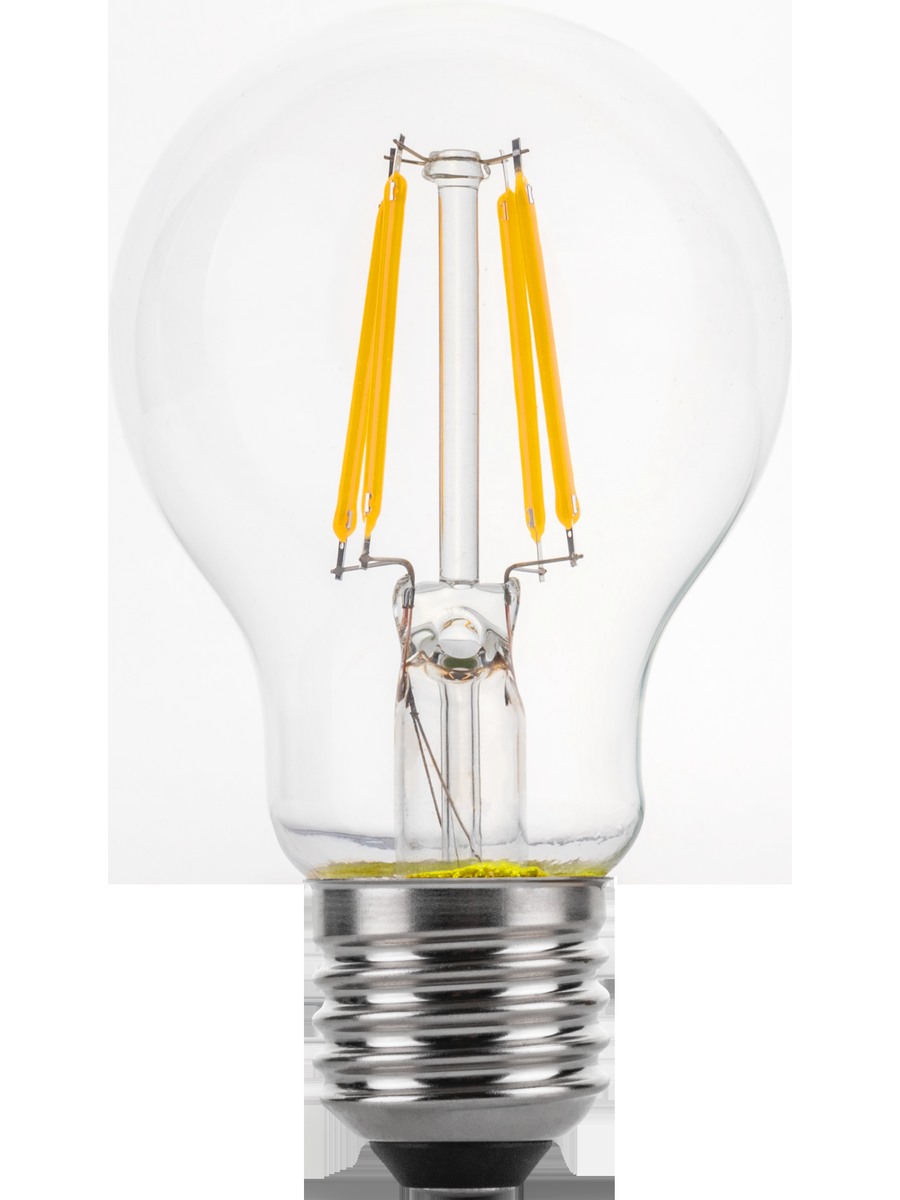
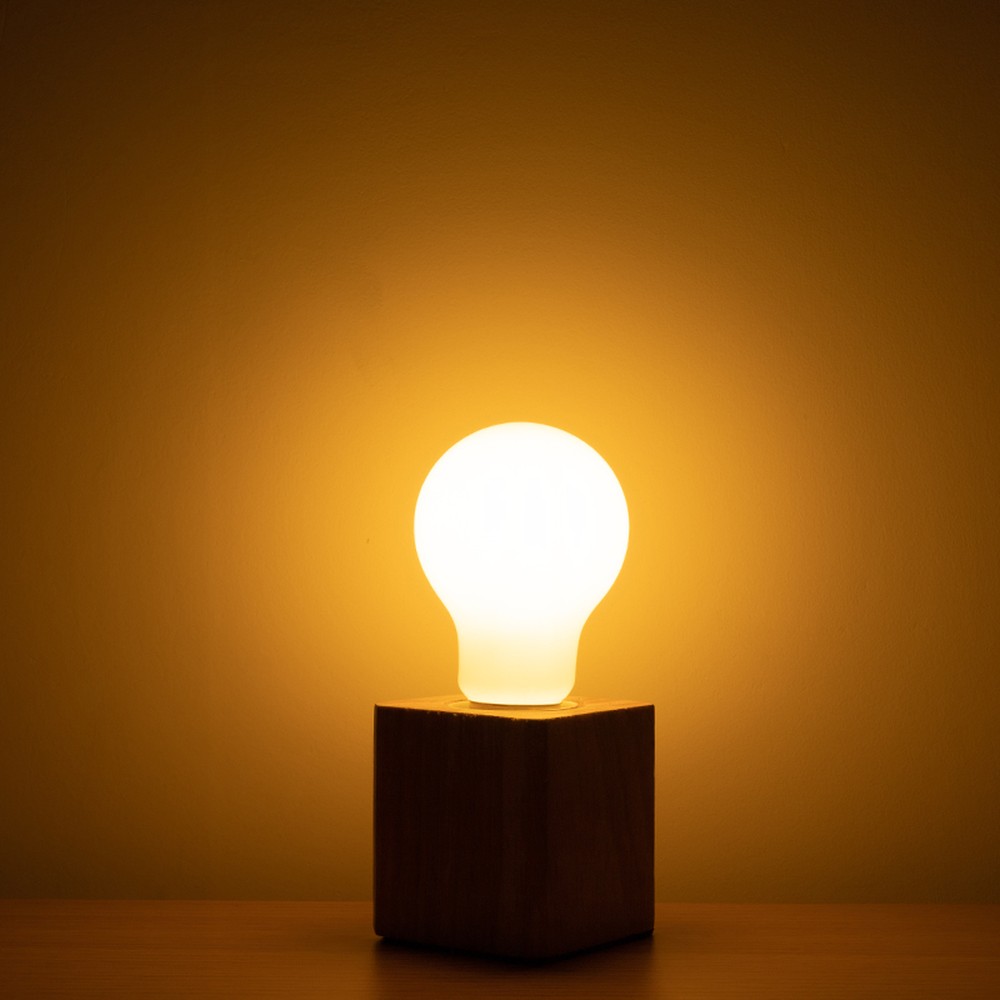
Frosted glass diffuses the view of the filament. The bulb appears more like a continuous luminous form and can reduce the prominence of individual bright elements.
Potential advantages include:
- Softer source appearance.
- Less visible internal structure.
- Reduced filament-image sharpness.
- More consistent visual appearance when bulbs are seen from different angles.
- Better integration with some opaque or translucent shades.
Frosted does not mean glare-free. If the envelope is small, bright and directly visible, its luminance can still be uncomfortable. A diffuser changes the source appearance but does not eliminate the need to consider output, viewing angle and shielding.
The frosted finish also hides the filament design. If a buyer is paying for a decorative filament pattern, that feature may no longer contribute much to the fixture’s identity.
Which Finish Looks Brighter?
Perceived brightness is not the same as measured total light output. A clear bulb can look more intense because the eye sees bright filaments against a darker background. A frosted bulb may look softer while delivering a similar declared lumen output.
Use lumens to compare the total rated light output of exact models. The U.S. Federal Trade Commission advises buyers to use lumens for brightness and watts for energy use. For covered lamps, FTC Lighting Facts guidance also identifies brightness, estimated energy cost, life, light appearance and energy use as comparison fields. Do not infer these values from the finish.
If a clear and frosted bulb are built differently, their measured outputs may differ. If they use the same internal platform, the frosted envelope may alter transmission and distribution. The actual difference must come from matched product tests rather than a universal percentage copied across products. The comparison of filament LED and standard LED bulbs explains why construction labels alone are insufficient for model selection.
How Distribution Can Change
Diffusion can widen or smooth a distribution, but the result depends on the complete optical design. DOE CALiPER testing of a historical group of linear T8 LED lamps found that frosted lenses tended toward wider distribution than clear lenses in that tested set. The result shows that an optical finish can influence distribution, while the T8 sample set does not establish a fixed rule for filament bulbs.
For decorative bulbs, examine a distribution diagram or photometric data when the fixture depends on light reaching a reflector, shade or ceiling. A bulb can have the right lumen rating while sending light to different zones.
Test the bulb in the actual fixture. Compare wall and ceiling patterns, brightness under the shade and dark zones near the base. Use the same camera exposure if documenting the comparison; automatic exposure can make one option look falsely brighter.
Fixture-by-Fixture Recommendations
| Fixture type | Start with clear when | Start with frosted when | Sample check |
|---|---|---|---|
| Open pendant or cage | Filament geometry is part of the design | The source sits near eye level | View from normal approach directions |
| Chandelier | Candle-like sparkle is desired | A quieter luminous group is preferred | Test the full lamp count |
| Transparent shade | Filament and glass reflections support the concept | Reflections become distracting | Review shade tint and mirrored surfaces |
| Fabric or opaque shade | The bulb remains mostly hidden and output is suitable | Concentrated bright patterns need softening | Check shade luminance and dark zones |
| Wall sconce | Shielding keeps filaments outside direct view | The exposed source dominates the view | Check seated and standing positions |
Open Pendants and Cage Fixtures
Clear glass usually emphasizes the decorative filament and works with the open architecture. Choose frosted when the pendant sits near eye level, source softness is more important than filament detail, or repeated bright reflections are distracting.
Chandeliers
Clear bulbs can reinforce a candle-style or vintage appearance. Consider the number of lamps and normal viewing angle. A large cluster of visible filaments may create more visual intensity than one sample suggests. Frosted bulbs create a quieter and more uniform group.
Transparent Glass Shades
A clear bulb allows both the filament and shade to remain visually distinct, but reflections can multiply the filament image. Frosted glass reduces internal detail and may make the shade appear more evenly illuminated. Test clear, seeded, tinted or mirrored shades separately.
Fabric or Opaque Shades
The bulb itself may be largely hidden. The priority becomes light on and through the shade, vertical placement, lumen output and heat or enclosure conditions. A frosted finish may reduce concentrated bright patterns, but the shade is already doing substantial diffusion.
Wall Sconces at Eye Level
Direct view is critical. If the bulb is exposed, frosted glass can soften its appearance. Clear glass may still be suitable when output is deliberately low, the filament is the design feature and the fixture shields normal sight lines.
Table and Floor Lamps
Consider both seated and standing views. A bulb hidden deep inside a shade may show little finish difference from outside, while a shallow or transparent shade makes the choice more visible.
Color Appearance and Rendering
Clear versus frosted does not by itself specify correlated color temperature or color rendering. Compare the exact CCT, CRI and, where relevant, more detailed spectral or color-rendering data.
An amber-tinted clear envelope is another variable, not simply “clear.” Tint can change appearance and measured performance. Do not group transparent amber, smoke and neutral clear bulbs as one optical finish.
For multiple-lamp fixtures, color consistency is important. Compare bulbs together at full output and relevant dimming levels. Small differences that are difficult to notice in separate rooms can become obvious side by side.
Dimming and Controls
Finish does not determine whether a bulb is dimmable. Check the exact model and its compatibility with the dimmer, supply and number of lamps on the circuit.
Dimming can change the visual tradeoff. A clear filament bulb may become comfortable and attractive at a lower level but harsh at full output. A frosted bulb may maintain a softer appearance while still showing driver instability if the lamp-dimmer combination is unsuitable.
Test minimum stable output, startup, noise, flicker and synchronized behavior across all bulbs in the fixture. Compatibility depends on the exact lamp, dimmer, circuit and connected load. The dedicated guide to dimming filament LED bulbs covers these checks in more detail.
Fit, Heat and Enclosed Fixtures
Match the base, bulb shape, maximum diameter and overall length. Decorative fixtures often have limited clearance or shades held by rings and clips. A small dimensional difference can prevent installation or change the position of the luminous area.
Check whether the bulb is permitted in the actual fixture, including fully or partially enclosed conditions. The glass finish does not establish thermal suitability. LED drivers and filament structures still operate within temperature limits, and enclosure heat can affect performance.
Also verify voltage, mounting orientation and any wet- or damp-location conditions. Do not infer these from a vintage appearance.
Cleaning and Long-Term Appearance
Clear glass makes dust, fingerprints and residue more visible, especially when the bulb is off. Frosted surfaces can hide some fingerprints but may retain visible dirt or be harder to wipe uniformly depending on the finish.
Follow the product’s cleaning instructions and isolate power before handling. Avoid cleaners that may damage coatings or markings. In restaurants, retail spaces or coastal environments, include decorative bulbs in the routine appearance inspection.
Replacement consistency matters. If a fixture uses many bulbs, retain the exact model, CCT, finish and production reference where possible. Replacing one lamp with a visually similar but different product can create mismatched color, filament geometry or dimming behavior.
Rated life also belongs to the exact model and stated operating conditions, not to the glass finish. For maintenance planning, use the filament LED rated-life guide together with the project’s switching, dimming, enclosure and ambient conditions.
A Practical Selection Checklist
Before choosing clear or frosted, confirm:
- Is the bulb intentionally visible?
- Is the normal view seated, standing or both?
- Does the fixture use clear, tinted, fabric or opaque material?
- Is filament detail part of the design?
- Are reflections or direct-source glare likely?
- What base, shape and dimensions fit?
- What measured lumens and distribution are needed?
- What CCT and color-rendering characteristics are required?
- Will the bulb be dimmed, and with which control?
- Is the fixture enclosed or exposed to moisture?
- Can matched replacements be supplied later?
For a multi-lamp project, install both finishes in a representative fixture and review them from normal positions. Use matched model data and consistent settings.
Frequently Asked Questions
Are clear LED filament bulbs brighter than frosted bulbs?
Not necessarily. Clear filaments may look more intense when viewed directly, but compare measured lumens and distribution for the exact models.
Do frosted filament bulbs eliminate glare?
No. They soften filament visibility, but a bright exposed envelope can still create discomfort. Fixture shielding, viewing position and output remain important.
Are frosted bulbs less efficient?
Finish alone does not establish efficiency. Compare measured lumens and watts for matched models and do not apply a universal transmission penalty.
Which finish is better for a chandelier?
Clear bulbs emphasize candle-like filament detail and sparkle. Frosted bulbs create a softer, more uniform group. Review the lamp count, eye level, fixture materials and dimmed appearance.
Can both finishes use the same dimmer?
Only if the exact bulb models are compatible with that dimmer and circuit. Finish is not the determining factor; driver and system compatibility are.
What information is needed for a matched recommendation?
Provide the fixture photo, shade material, viewing position, base, dimensions, desired lumens and CCT, lamp count, dimmer and enclosure condition. Buyers can contact New Lights with these inputs for a paired model review. The factory and manufacturing overview provides additional context for sample and project coordination.