

Smart LED filament lamps can be safe in the applications covered by their exact ratings and instructions. The practical answer is conditional: the lamp, lampholder, fixture, ambient temperature and control method must work as one system. “LED,” “smart” and “filament” describe technology and appearance; none of those words independently establishes suitability for a closed globe, a hot ceiling pocket or an existing wall dimmer.
LED lamps also produce heat. They normally use much less input power than incandescent lamps for comparable useful light, yet their LED filaments, driver and wireless electronics still need a controlled path for heat to leave the lamp. Poor ventilation, a damaged socket or an incompatible control can turn an otherwise suitable lamp into an unreliable installation.
The useful buying question is therefore not “Is this type of bulb heatproof?” It is: Does this exact lamp have the markings, test evidence and operating limits required by this fixture and market? The checks below turn that question into a repeatable selection process.
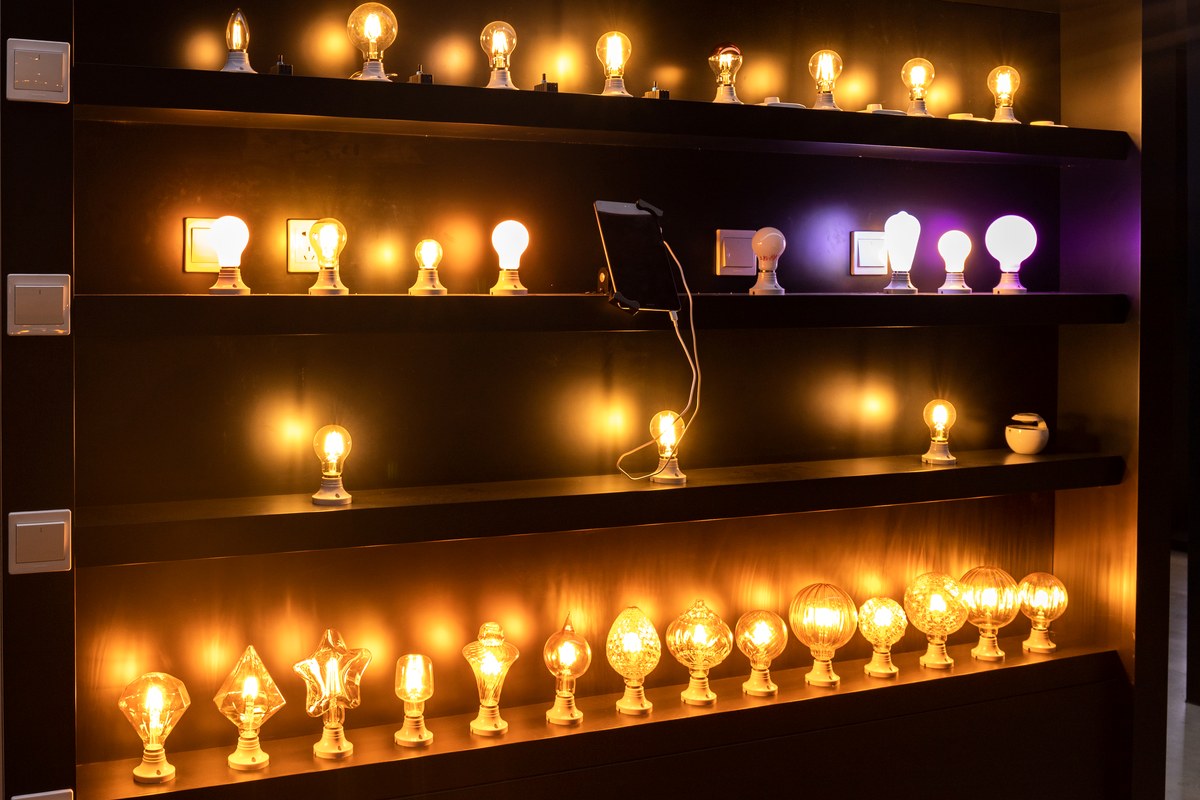
Start With the Complete Lamp System
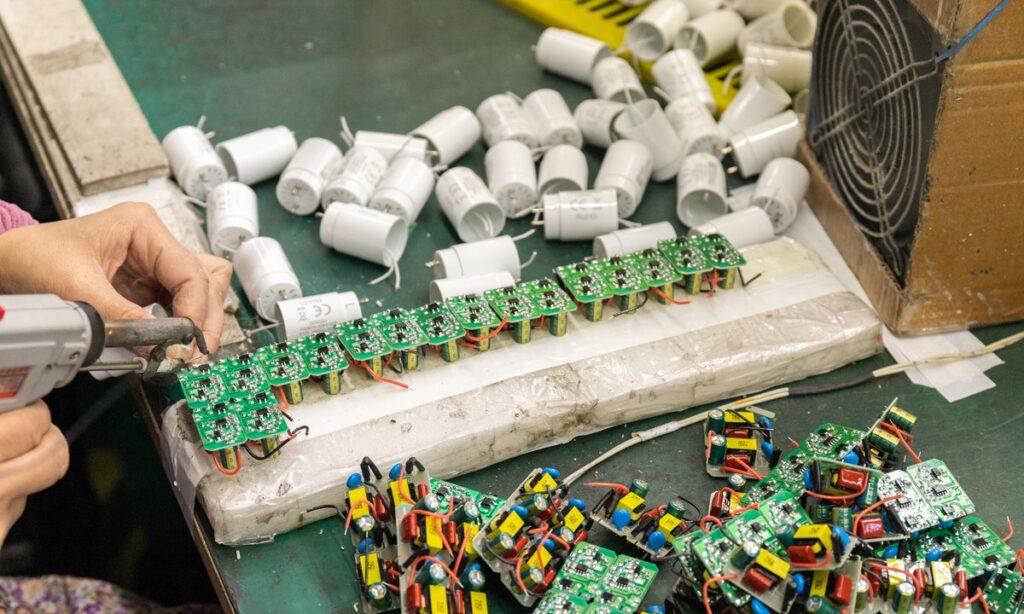
A filament lamp uses narrow light-emitting strips arranged inside a clear, frosted or decorative envelope. The visible strips are only one part of the product. A mains-voltage smart version can also include a driver, control circuitry, radio components, internal conductors, insulation, a lamp cap and firmware that manages switching or dimming.
Those elements share a compact thermal and electrical environment. Two lamps with the same A60, ST64 or globe shape can behave differently because their driver design, component ratings, cap construction, radio platform and application markings differ. The article on what an LED filament is made of explains the light-emitting structure in more detail; safety approval still applies to the complete lamp rather than the filament alone.
For a purchasing or project file, record the full model code, rated voltage and frequency, wattage, cap, envelope, wireless protocol and software ecosystem. A family photograph or a generic certificate name is not enough to match the delivered variant.
What “Safe” Needs to Cover
Safety is a set of defined requirements, not a single marketing adjective. IEC 62560 addresses safety and interchangeability requirements for self-ballasted LED lamps within its published scope. UL identifies UL 1993 as the standard for self-ballasted lamps and lamp adapters in its North American framework. The relevant route depends on the destination market and the product configuration.
A buyer should connect every document to the exact model being ordered. The review normally includes electric-shock protection, insulation, abnormal operation, temperature, mechanical construction, lamp-cap compatibility and required markings. Smart functions add separate questions about radio authorization, software support and data handling; an electrical safety mark does not answer all of those questions.
| Question | Evidence to review | Common mismatch |
|---|---|---|
| Is the lamp covered? | Exact model, wattage, cap and voltage on certificate or report scope | Certificate belongs to a non-smart or different-cap version |
| Is the fixture allowed? | Open/enclosed marking, orientation and fixture instructions | Decorative shape is treated as proof of enclosed-fixture suitability |
| Is the location allowed? | Dry, damp or wet-location marking required by the project | Indoor approval is extended to humid or exposed locations |
| Are the controls compatible? | Approved dimmer, switch, sensor, hub or platform information | A smart lamp is placed on an unapproved phase-cut dimmer |
| Is the market documentation complete? | Applicable safety, EMC, radio and labeling records | One certificate is assumed to cover every compliance dimension |
LED Filament Lamps Generate Heat
LEDs do not convert all input power into visible light. Heat is generated in the light-emitting junctions, driver and smart-control electronics. In a filament lamp, that heat moves through internal supports or gas, the envelope and the cap before it reaches the surrounding air and fixture.
This thermal route differs from an incandescent filament, which operates at a much higher temperature and transfers a large share of its energy by radiation. The outside of an LED lamp may feel cooler than an incandescent bulb while the driver inside its cap is operating near a meaningful component limit. Touch is therefore a poor acceptance test. Published ambient limits, application markings and controlled measurements are more useful.
IEC 62612 addresses performance requirements and test conditions for self-ballasted LED lamps within its scope. Its published description distinguishes the standard’s test regime from a complete real-life lifetime test. That distinction matters: safety compliance, initial performance, lumen maintenance and a commercial lifetime claim are related but separate evidence questions. For planning replacement intervals, use the exact lamp’s rated-life basis and the approach in the filament LED lifetime guide.
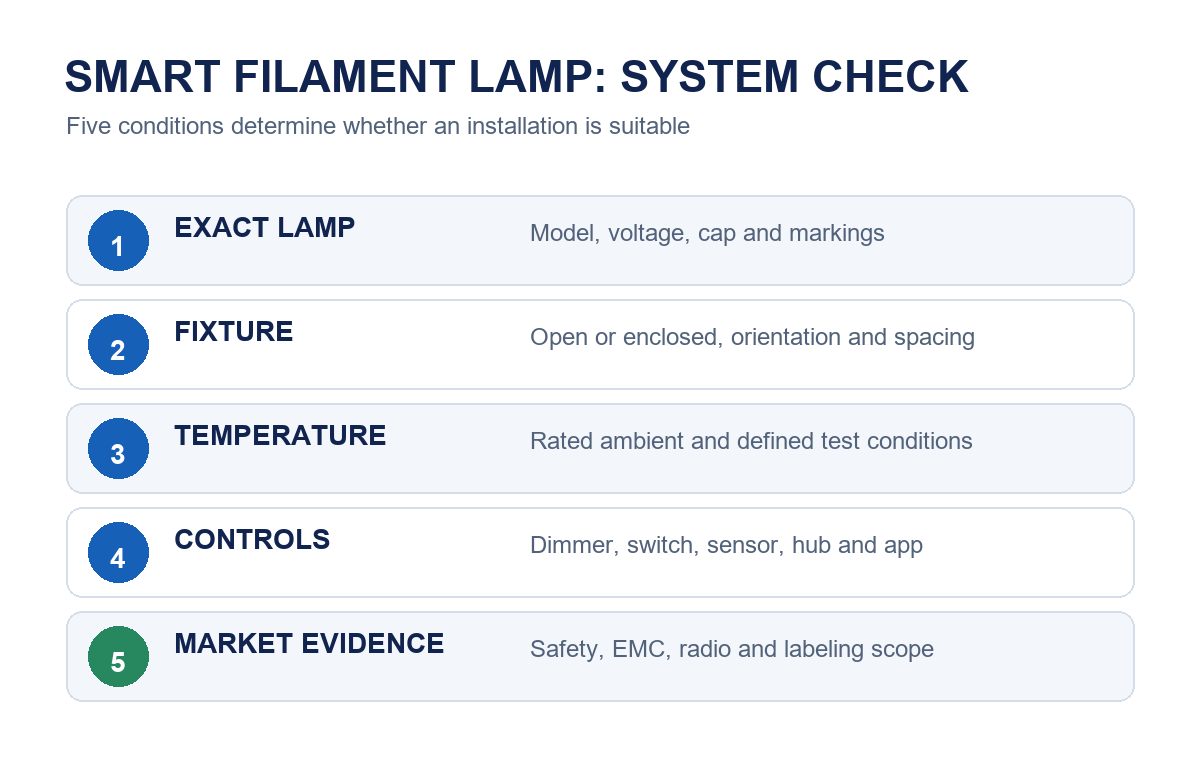
Replace “Heat Resistant” With Measurable Conditions
“Heat resistant” can refer to several different things. A meaningful specification identifies both the temperature and the test condition. Ask whether the supplier is describing ambient air around the lamp, a case or cap measurement point, storage temperature, an internal component limit, an abnormal-operation test or a long-duration operating condition.
These values cannot be substituted for one another. A short material test does not establish years of light output or wireless reliability. A storage range does not define the allowable temperature while energized. A maximum fixture wattage also does not approve every lamp below that wattage, because ventilation, orientation and electronics still affect temperature.
| Condition | What to record | Why it changes the decision |
|---|---|---|
| Ambient temperature | Minimum and maximum air temperature where the lamp operates | Driver, LED and radio components have operating limits |
| Fixture enclosure | Open, semi-enclosed or totally enclosed construction | Trapped air changes the temperature around the envelope and cap |
| Lamp orientation | Base-up, base-down or horizontal | Heat can collect differently around the driver and lampholder |
| Lamp grouping | Quantity, spacing and total fixture load | Nearby lamps can raise the local thermal load |
| Control equipment | Wall dimmer, electronic switch, sensor, relay or constant supply | Leakage current and waveform can affect startup and stability |
| Duty pattern | Hours per start, switching frequency and scheduled scenes | Operating pattern affects thermal cycles and maintenance planning |
Open, Semi-Enclosed and Totally Enclosed Fixtures
An open pendant or table lamp can release warm air into the room. A close-fitting shade, globe or sealed decorative luminaire can retain heat around the lamp and cap. The boundary is not always obvious from a sales photo, so obtain the fixture drawing or inspect the physical sample.
Use a smart filament lamp in a totally enclosed fixture only when the exact lamp’s markings or technical documentation allow that condition. If the lamp says it is not for use in totally enclosed fixtures, follow the restriction. ENERGY STAR luminaire guidance illustrates the same system principle by requiring a lamp supplied with an enclosed luminaire to be suitable for that luminaire type.
Also check lamp orientation, the number of lamps, spacing, fixture wattage limits and nearby heat sources. A compact multi-lamp cluster can create a different environment from a single ventilated pendant. The broader filament bulb fixture-compatibility guide covers socket, size, enclosure and application checks.
Smart Controls Change the Compatibility Check
Many smart lamps are intended to receive continuous full mains power and regulate brightness through an app, hub, remote or compatible control. A conventional phase-cut wall dimmer changes the input waveform. Unless the lamp manufacturer approves that combination, it can cause unstable startup, flicker, buzzing, loss of pairing or repeated resets.
Electronic switches and occupancy sensors can also pass a small current while nominally off. That current may be enough to make a low-power LED lamp glow faintly or cycle. Record the control make and model, load range, number of lamps and any neutral-wire requirement. The filament bulb dimming compatibility guide provides a practical distinction between externally dimmable lamps and smart lamps that dim internally.
The radio system needs its own review. Confirm the protocol, hub requirement, supported app, account dependency, reset procedure, update path and expected support period. For commercial or hospitality projects, decide who owns the account, how devices will be transferred and what happens if the internet or cloud service is unavailable.
Lamp Caps, Lampholders and Physical Condition
The lamp cap must match the lampholder mechanically and electrically. Similar-looking Edison screw or bayonet products can be made for different voltages and markets. Check the cap designation, rated supply and fixture label together.
Inspect the lampholder before fitting a new lamp. Discoloration, loss of spring contact, cracking, corrosion or a loose connection can generate localized heat. A new lamp does not repair a damaged socket. If mains wiring or the lampholder is damaged, isolate the circuit and use a qualified electrician.
Handle decorative glass lamps by the base or according to the manufacturer’s instruction. Do not install a lamp with cracked glass, a loose cap, rattling parts, damaged contacts or visible deformation. Allow an operating lamp to cool before removal.
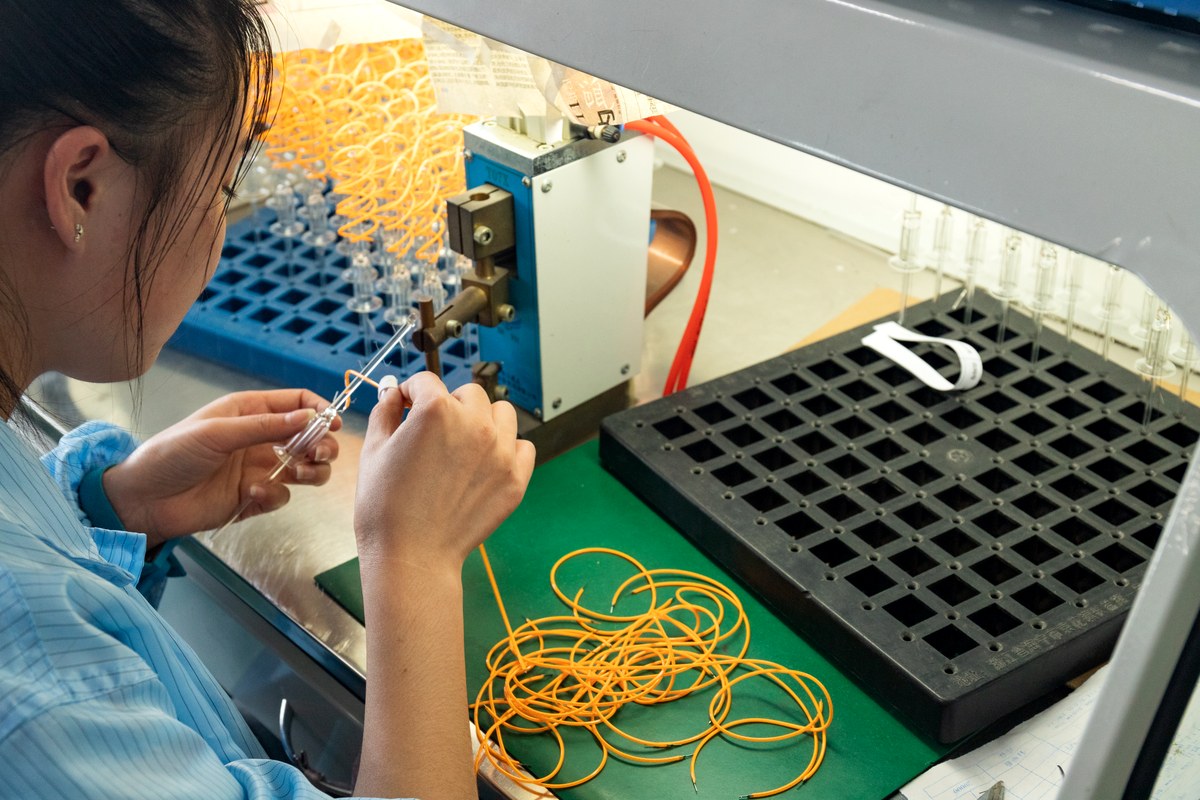
A Seven-Step Buying and Installation Workflow
1. Define the installation
Record the fixture type, enclosure, orientation, lamp quantity, supply voltage, ambient temperature and operating schedule. Photograph labels and note any dimmer, sensor or electronic switch.
2. Identify the exact lamp
Capture the full model code, wattage, cap, envelope, rated supply, smart protocol and app or hub. Use the LED filament bulb range to compare available shapes and finishes only after the application requirements are defined.
3. Match certification to the delivered variant
Check that the certificate, report or listing covers the same model, cap, voltage and smart configuration. Confirm which destination-market requirements the evidence addresses and which require separate records.
4. Confirm thermal and fixture limits
Review the rated ambient range, allowed enclosure type, orientation restrictions and any defined temperature measurement point. Keep storage and operating limits separate.
5. Confirm control behavior
Verify whether external dimming is allowed, which switches or sensors are supported and how the lamp behaves after a power interruption. Document pairing, reset and offline behavior.
6. Evaluate a representative sample
Test the exact configuration rather than a convenient open socket. Observe startup, flicker, audible noise, unintended glow, command response, thermal cycling and radio reliability. The LED lighting sample evaluation checklist helps structure identity, test conditions and acceptance criteria.
7. Preserve the approved configuration
Keep the lamp model, firmware or app version where relevant, fixture identity, control equipment and acceptance record together. Substituting a visually similar lamp later can change the thermal, electrical or software behavior.
Warning Signs That Need Investigation
Turn off the circuit and investigate persistent flicker, repeated restarts, strong odor, smoke, visible arcing, severe cap discoloration, a cracked envelope, a loose base, deformation or a hot and discolored lampholder. Loss of smart control alone may be a network or software issue, but loss of control combined with unusual heat, cycling or odor needs prompt attention.
The cause can be the lamp, socket, wiring, control or fixture. Replacing only the bulb may leave a damaged connection or incompatible dimmer in service. Never bypass a protective device or modify a sealed lamp to solve instability.
Frequently Asked Questions
Can a smart LED filament lamp overheat?
It can operate above its intended thermal condition if it is used in an unsuitable enclosure, near a heat source, on incompatible controls or outside its rated ambient range. Select and test the exact lamp-fixture-control combination.
Is a low-wattage smart bulb automatically safe in a closed globe?
No. Lower wattage reduces one part of the thermal load, but enclosed-fixture suitability still depends on the lamp’s markings, construction, orientation and the fixture environment.
Are LED filament lamps cool to the touch?
Not necessarily. The envelope and cap can become hot during normal use. Let the lamp cool before handling and use published ratings rather than touch as a performance test.
Can I put a smart filament lamp on a wall dimmer?
Only when the lamp manufacturer approves the dimmer and operating method. Many smart lamps expect constant full power and perform dimming through their own electronics.
Does an electrical safety mark prove the app is secure?
No. Electrical safety, radio authorization, interoperability, privacy and software support are distinct review areas. Check the documentation appropriate to each one.
What should an importer request from a supplier?
Request exact model identification, ratings and markings; applicable certificate or report scope; fixture and ambient restrictions; control compatibility; smart-platform documentation; and a representative sample for the intended installation.
Final Answer
A smart LED filament lamp can be a sound choice when its exact ratings match the fixture, temperature, controls and destination market. Treat “heat resistant” as a request for measurable operating conditions, not as a universal product class.
For a project review, contact New Lights with the fixture type, enclosure, orientation, ambient range, supply voltage, control equipment, smart platform and target market. That information allows the right questions to be answered before sampling or ordering.
Editorial Sources
- IEC, IEC 62560: Self-ballasted LED-lamps for general lighting services — Safety specifications: https://webstore.iec.ch/en/publication/7199
- IEC, IEC 62612: Self-ballasted LED lamps — Performance requirements: https://webstore.iec.ch/en/publication/7259
- UL Solutions, Lighting: 2024 Year in Review: https://www.ul.com/resources/lighting-2024-year-review
- UL Solutions, Product Sourcing and Certifications Database: https://www.ul.com/software/product-sourcing-and-certifications-database
- ENERGY STAR, Program Requirements for Integral LED Lamps: https://www.energystar.gov/sites/default/files/specs/private/integral_lamps_v1_final_2009.pdf
- IEC, IEC TR 63037: Electrical interface specifications for phase-cut dimmed lighting systems: https://webstore.iec.ch/en/publication/26150