

A lighting spare-parts plan should begin with the installed asset and required recovery time, not a universal stock percentage.
A warehouse can contain drivers, modules, sensors and complete luminaires yet still fail to support maintenance if technicians cannot match those parts to the installed configuration. The working system is an asset register connected to criticality, known failure modes, approved service units, storage conditions, replacement instructions and change control.
Build the Register Around the Installed Configuration
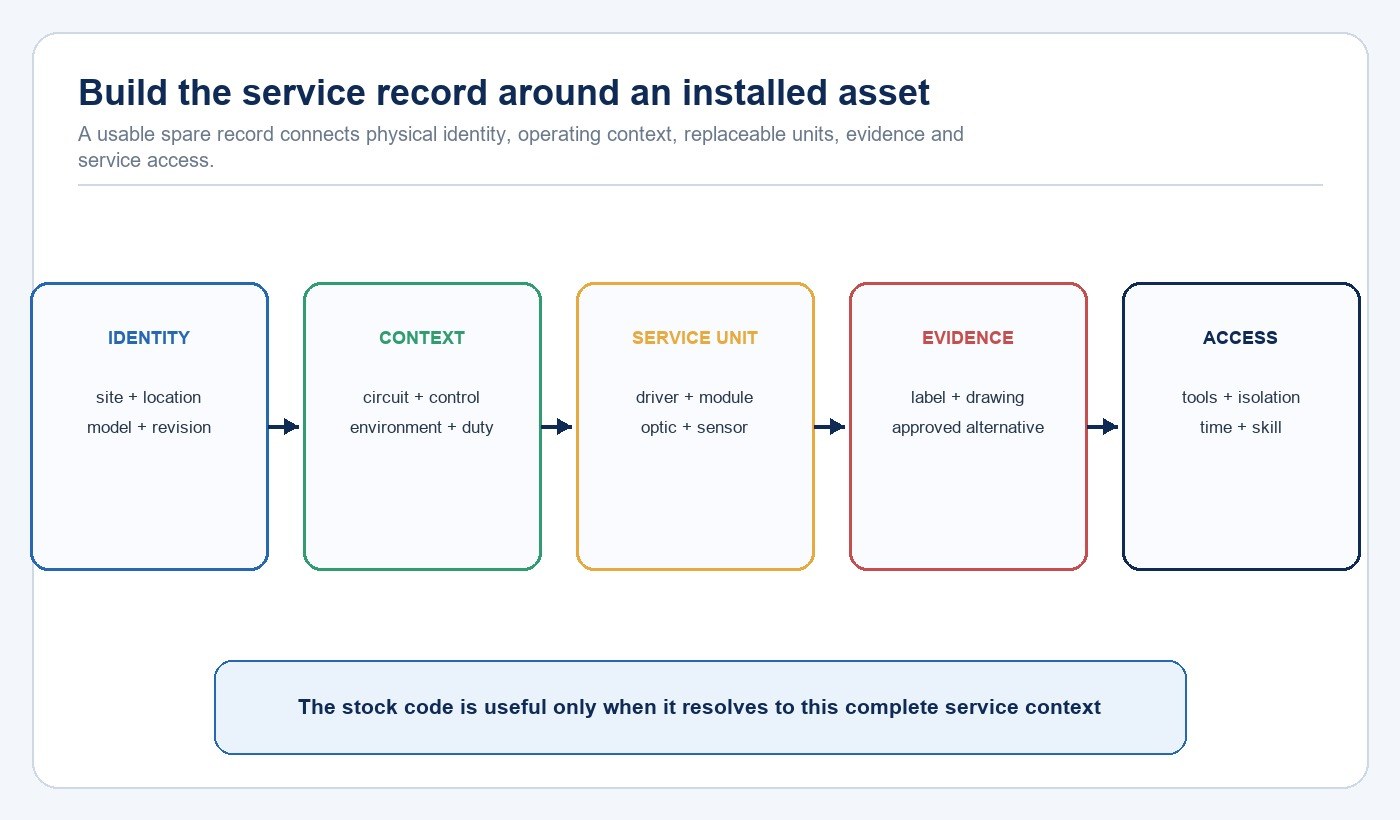
Start with a location and asset identifier that a technician can find in the field. Record the luminaire or system model, revision, installation date, circuit, mounting, environmental condition and control address. Then identify the service units inside that configuration: lamp or LED module, driver, connector, optic, sensor, emergency component, battery, seal, firmware and any programming tool.
Photograph labels and service access when similar-looking products use different components. Store the current drawing, installation instruction, wiring method, commissioning values and approved alternative beside the asset record. The New Lights download center can support document retrieval for published product materials, but the site register should preserve the exact document revision accepted for the installed equipment.
Set Stock Priority From Consequence and Recovery Time
Classify what happens when the asset fails. Separate life-safety or legally required functions, operational shutdown, security, customer-facing appearance, productivity and ordinary convenience. Then define how long that function can remain unavailable and what temporary operating measure is acceptable.
Installed quantity, observed failure history, replenishment lead time, access cost and technician availability refine the decision. They do not justify one percentage across every product family. A low-volume component can merit local stock when a failure stops a critical area, while a common decorative item may be suitable for planned ordering when the visual consequence and lead time are manageable.
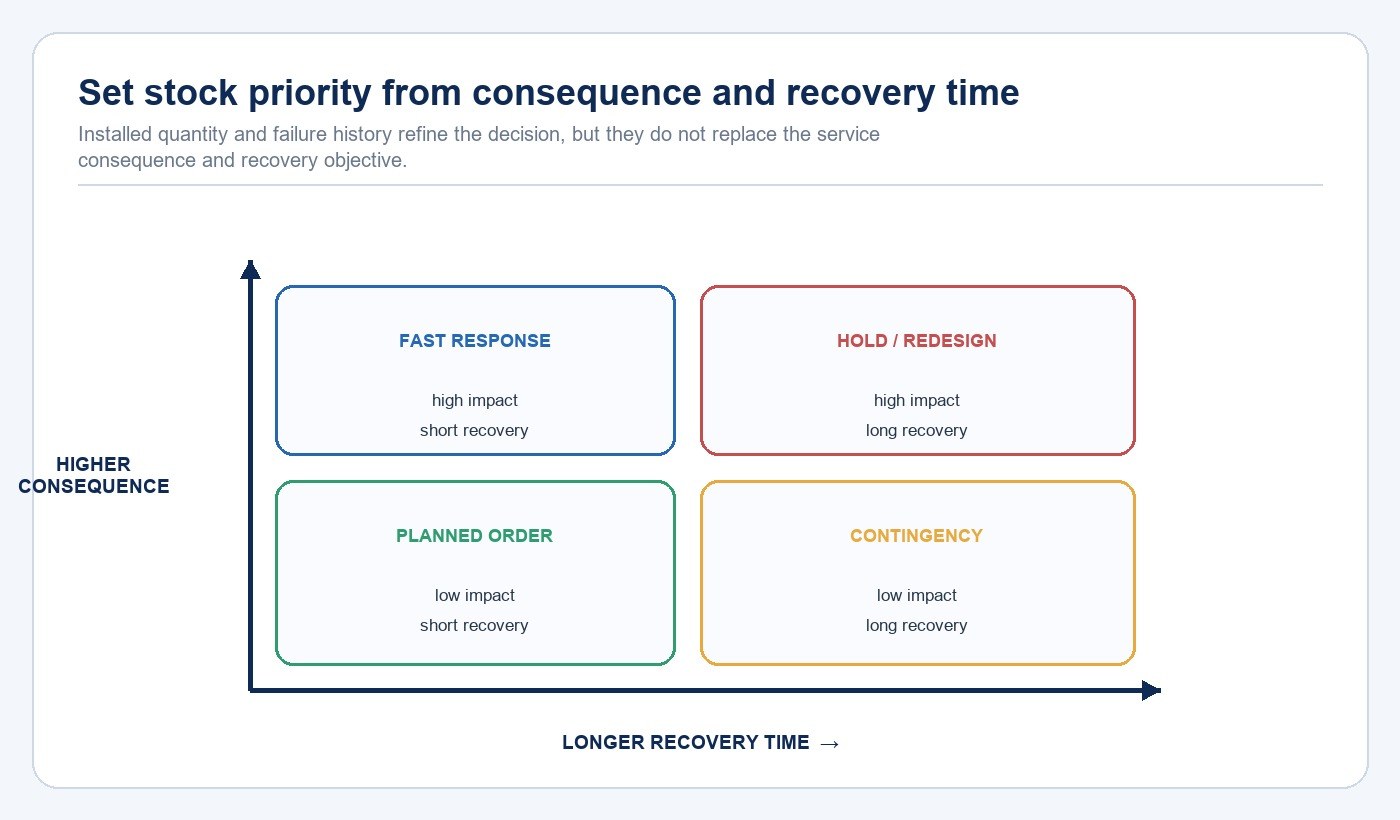
| Input | Question | Effect on the plan |
|---|---|---|
| Consequence | What operation, safety function or customer experience is lost? | Priority and escalation |
| Recovery objective | How long can the function remain unavailable? | Local stock or planned order |
| Installed base | How many identical, verified configurations exist? | Quantity exposure |
| Failure evidence | Which component and condition actually failed? | Part mix and diagnostic method |
| Replenishment | What are approval, production and transport times? | Reorder point and buffer |
| Access | What isolation, lifting, tools and skills are required? | Labor and complete-unit strategy |
Define the Replaceable Unit Before Buying Spares
The maintainable unit may be a lamp, driver, LED board, sensor, battery, seal, complete gear tray or complete luminaire. Decide the boundary from safe access, available instructions, electrical isolation, connector design, calibration needs, sealing and the ability to return the system to its approved condition.
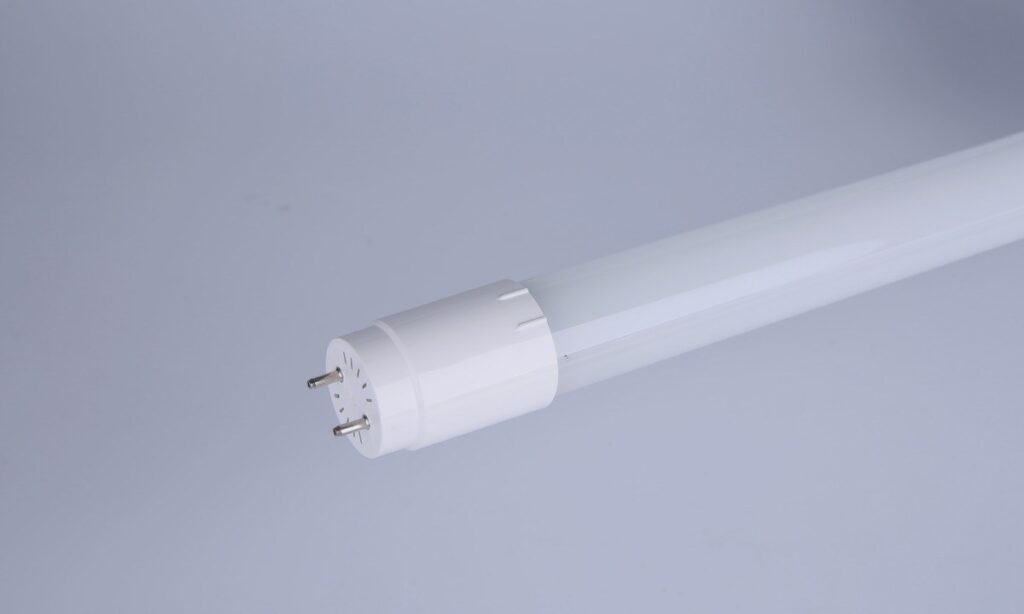
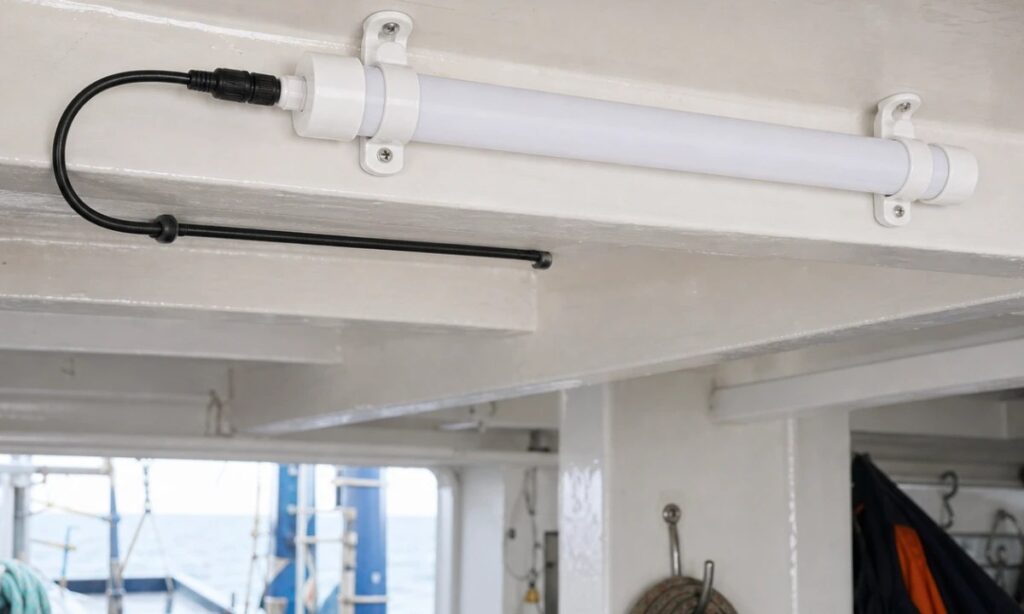
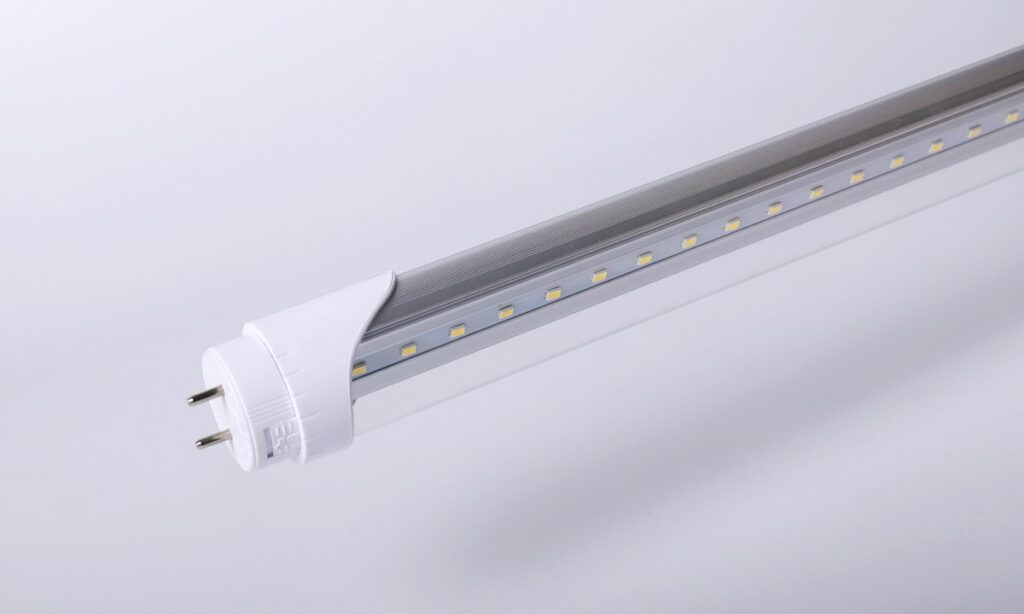
A component-level spare can reduce storage volume but increase diagnosis, handling and commissioning requirements. A complete luminaire can shorten field work but creates finish, optical, control and obsolescence considerations. Serviceable product architecture can also change the strategy: replaceable-tube tri-proof fixture housings separate the lamp from the protected housing, while a CCT and power adjustable T8 LED tube can consolidate defined variants only where its exact electrical and application conditions match the installed system.
Validate Substitutions as a Complete Interface Stack
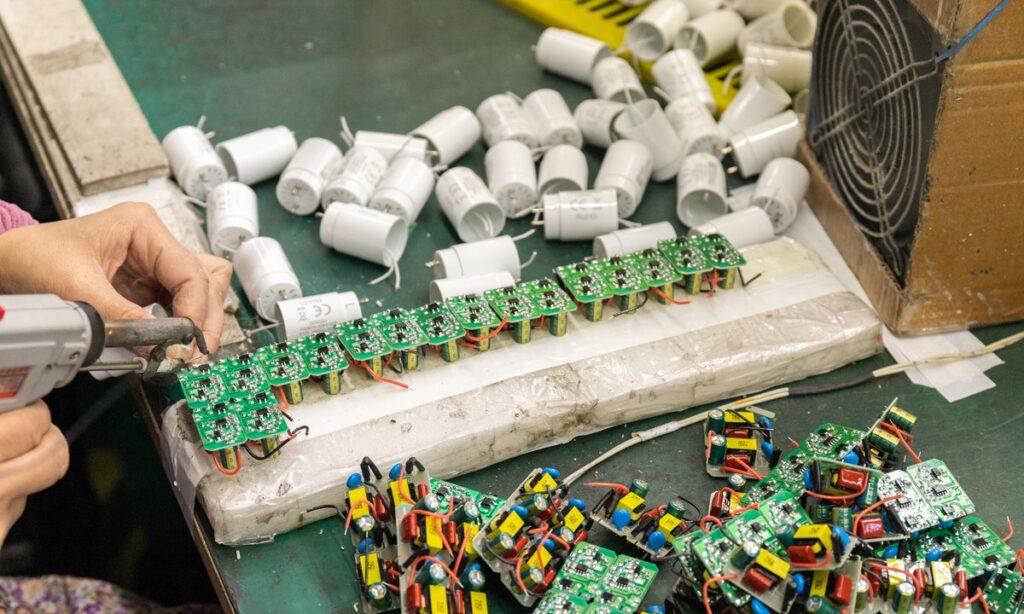
Do not approve a replacement driver because wattage and dimensions appear similar. Check input range, output mode and current or voltage, isolation, protection, dimming protocol, minimum load, connector, mounting, thermal path and enclosure conditions. Then verify the resulting optical output, colour, flicker behavior, control response and recovery after power interruption.
For networked or programmed systems, preserve the control narrative, addresses, software or firmware dependencies, security-controlled credentials, backups, commissioning values and recovery instructions. The U.S. Department of Energy describes lighting-control selection through objectives, capabilities, networking and documentation; those same records are necessary when a service replacement must restore intended operation. Use the LED driver and control compatibility guide to structure the affected interfaces.
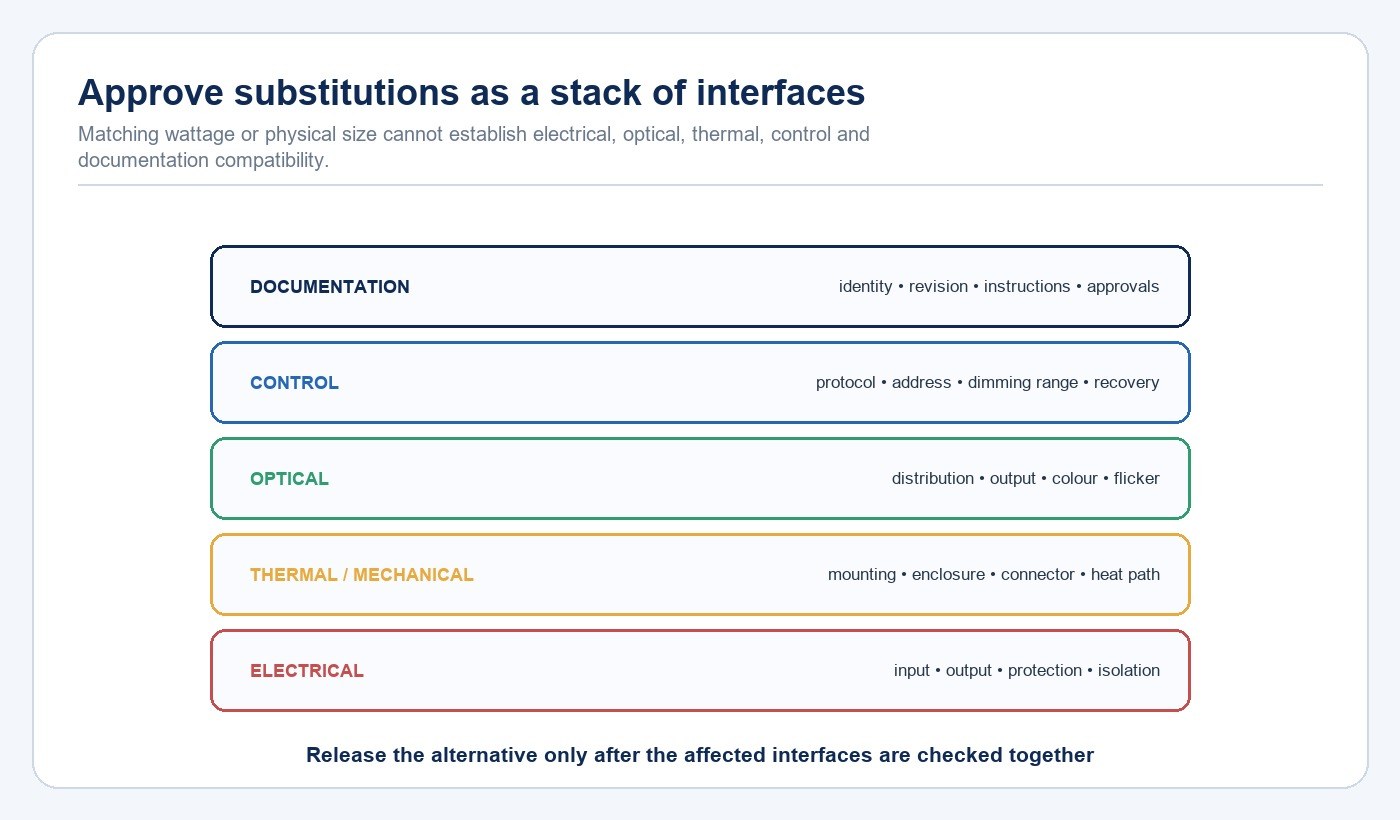
| Interface | Evidence to compare | Field acceptance |
|---|---|---|
| Identity | Model, revision, markings and approved scope | Traceable match |
| Electrical | Input, output, protection and isolation | Stable operation under representative load |
| Mechanical / thermal | Mounting, connector, enclosure and heat path | Secure fit and acceptable operating condition |
| Optical | Output, distribution, colour and flicker | Meets the zone task and visual acceptance |
| Control | Protocol, address, dimming, sensor and recovery | All scenes and failure states function |
| Documentation | Instructions, drawings, settings and change record | Future service remains repeatable |
Store and Inspect Parts as Controlled Inventory
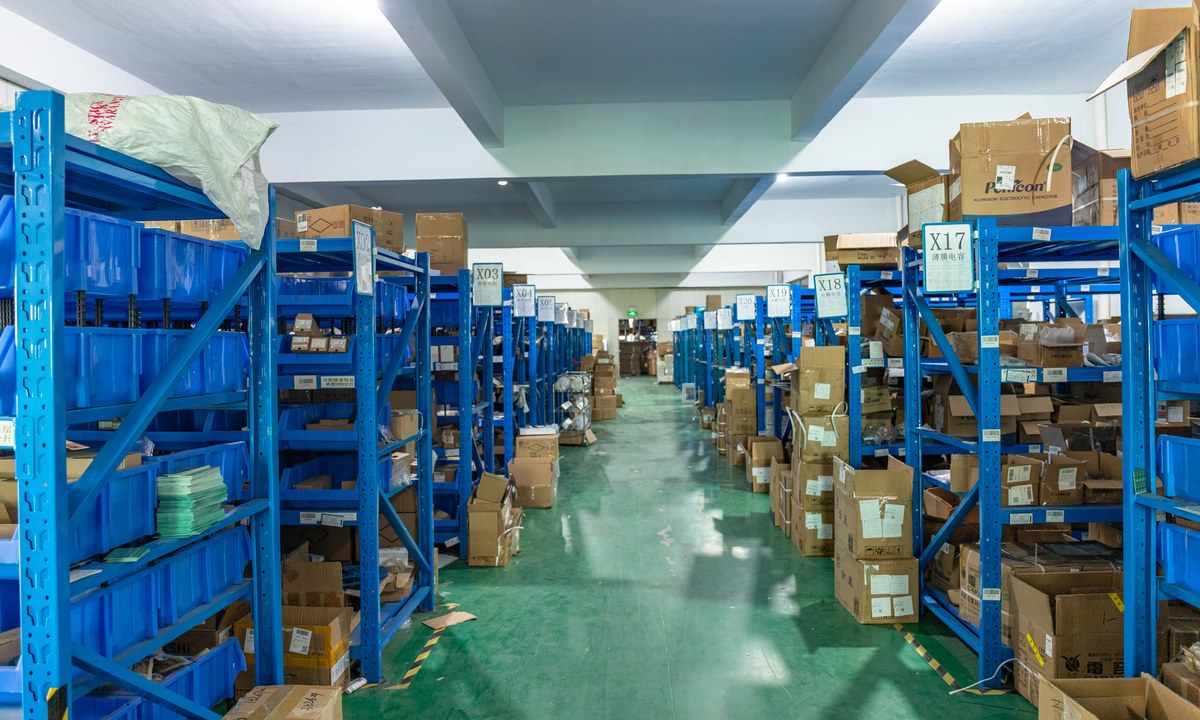
Label each part with its internal stock code, manufacturer identity, model, revision, compatible asset group, receipt date and storage requirements. Separate visually similar but incompatible versions. Apply the documented temperature, humidity, electrostatic-discharge, light, dust and handling conditions for the specific item rather than assuming one warehouse condition suits every component.
Define inspection before issue. Long-stored batteries, seals, adhesives and electronic assemblies may require condition checks or functional verification according to their product documentation. Record damaged packaging, corrosion, contamination, missing labels and revision discrepancies before the part reaches the work area.
Control Obsolescence and Feed Field Evidence Back
Review the spare list after failures, renovations, control updates, supplier discontinuations and approved substitutions. A failed component is not automatically the root cause: record the symptom, operating condition, diagnosis, removed-part identity and corrective action so recurring issues can change the maintenance method or asset priority.
When the original part becomes unavailable, select a representative installed asset and validate the proposed alternative before changing the approved list. Compare the same interface stack used for the original release, document any installation or programming changes, and update the asset register, stock code, drawings and technician instructions. The LED lighting sample evaluation checklist can be adapted for this controlled replacement trial.
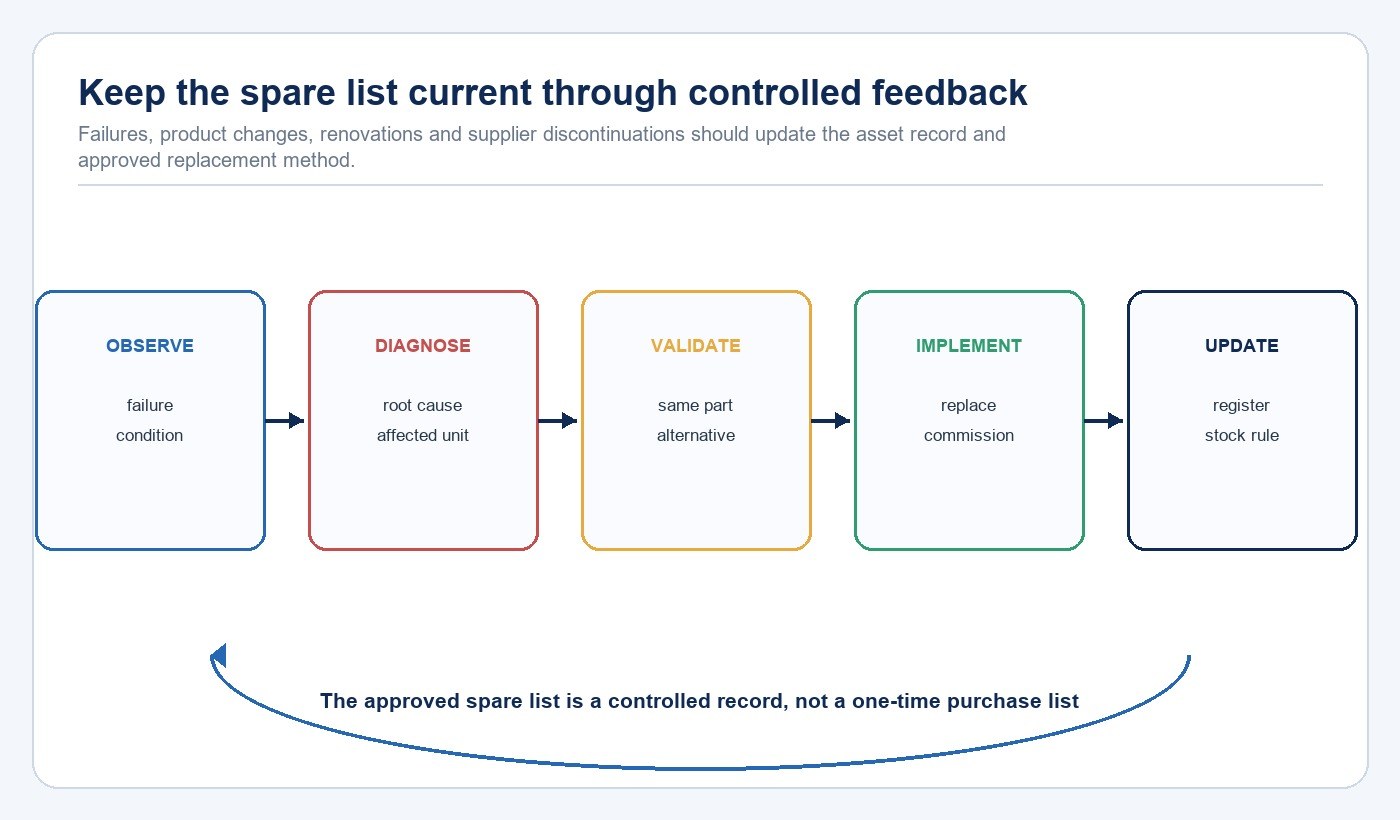
Lighting Maintenance and Spare-Parts Release Checklist
- Every maintained asset has a field-visible location and configuration identifier.
- Critical functions, acceptable downtime and temporary operating measures are agreed.
- Replaceable units are defined from safe access and the approved service method.
- Stock and reorder rules use consequence, recovery time, installed quantity, failure evidence and replenishment time.
- Electrical, mechanical, thermal, optical and control interfaces are documented.
- Storage, inspection, issue and traceability rules are assigned.
- Technicians can retrieve current instructions, drawings and commissioning values.
- Substitutions are validated on a representative asset before the approved list changes.
- Failures and field changes feed back into the register and stock strategy.
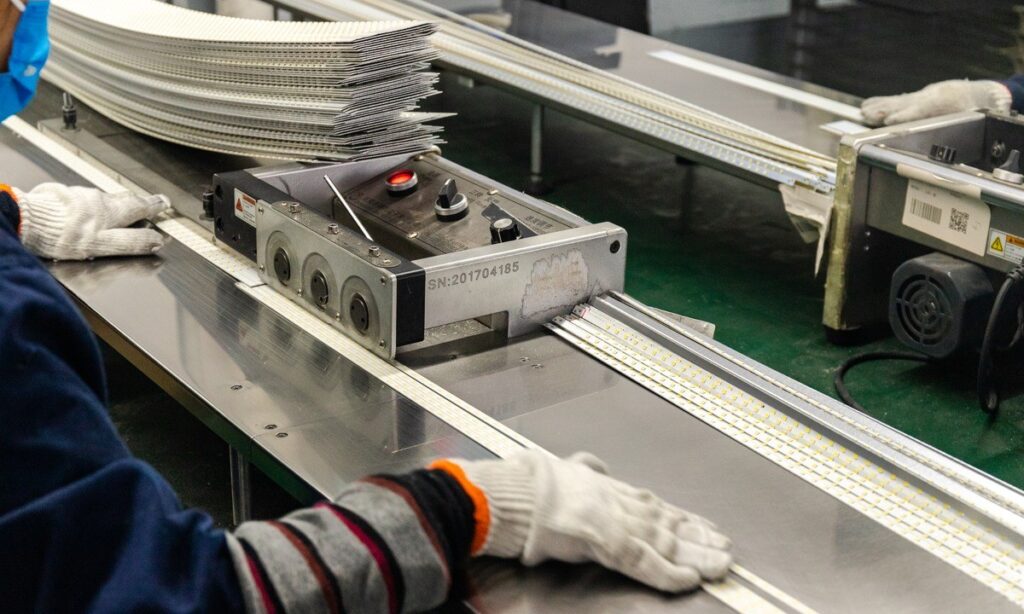
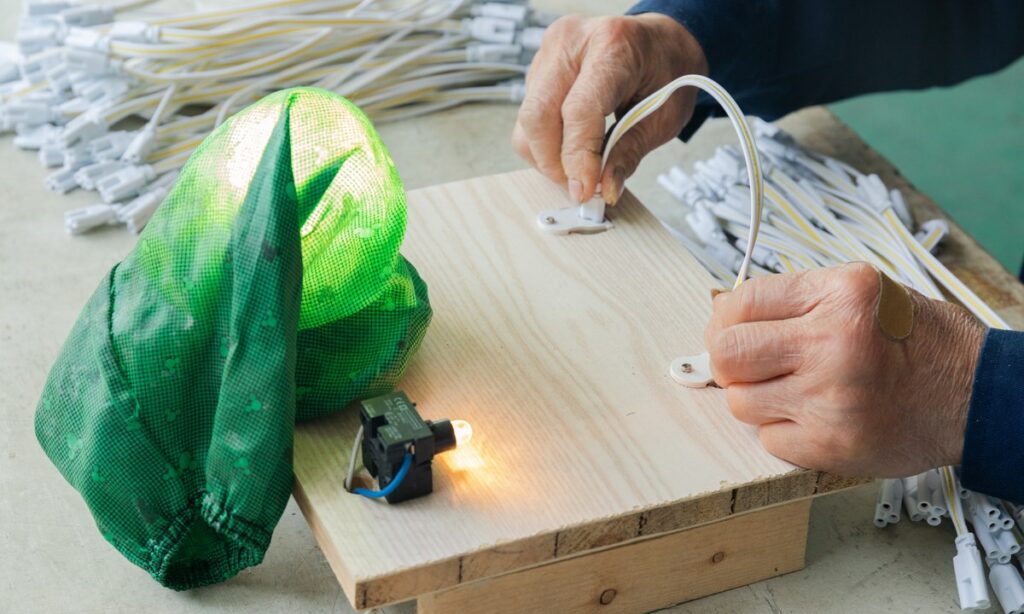
For a supplier-side review of components, assembly, testing and records, see the New Lights factory and manufacturing overview. When the installed schedule and recovery objectives are ready, send them through the New Lights project enquiry form.
Frequently Asked Questions
How many spare LED drivers should a site hold?
There is no universal percentage. Set the quantity from the consequence of failure, acceptable recovery time, installed quantity, observed failures, replenishment time, storage condition and whether a verified temporary measure exists.
Can a driver with the same wattage be substituted?
Not on wattage alone. Compare input, output mode, current or voltage, protection, isolation, dimming, connector, mounting, thermal conditions and the behavior of the complete luminaire and control system.
Should a facility stock components or complete luminaires?
Use the smallest unit that can be safely identified, replaced and recommissioned. Complete luminaires may reduce field time for critical assets; component spares may reduce storage but require stronger diagnosis and compatibility control.
When should the spare-parts plan be reviewed?
Review it after significant failures, approved substitutions, product discontinuations, renovations, control or firmware changes, and changes to operating consequence or recovery objectives.
Editorial Sources
- Illuminating Engineering Society — ANSI/IES/NALMCO RP-36-24, Recommended Practice: Lighting Maintenance: https://store.ies.org/product/recommended-practice-lighting-maintenance/
- Illuminating Engineering Society — Lighting Maintenance Committee: https://www.ies.org/committee/lighting-maintenance/
- U.S. Department of Energy — Lighting Controls Solutions: https://www.energy.gov/cmei/ssl/lighting-controls-solutions