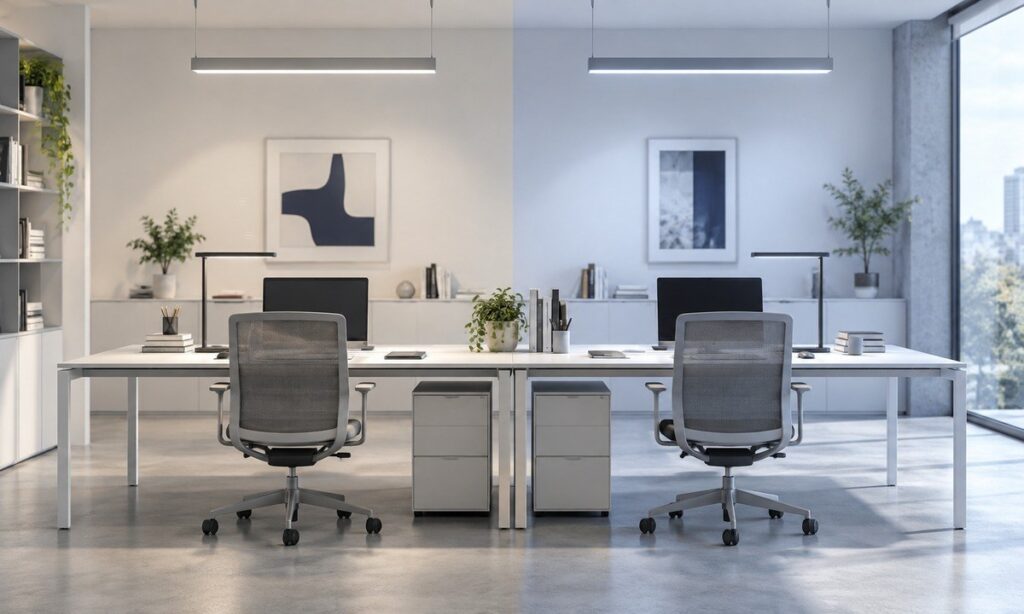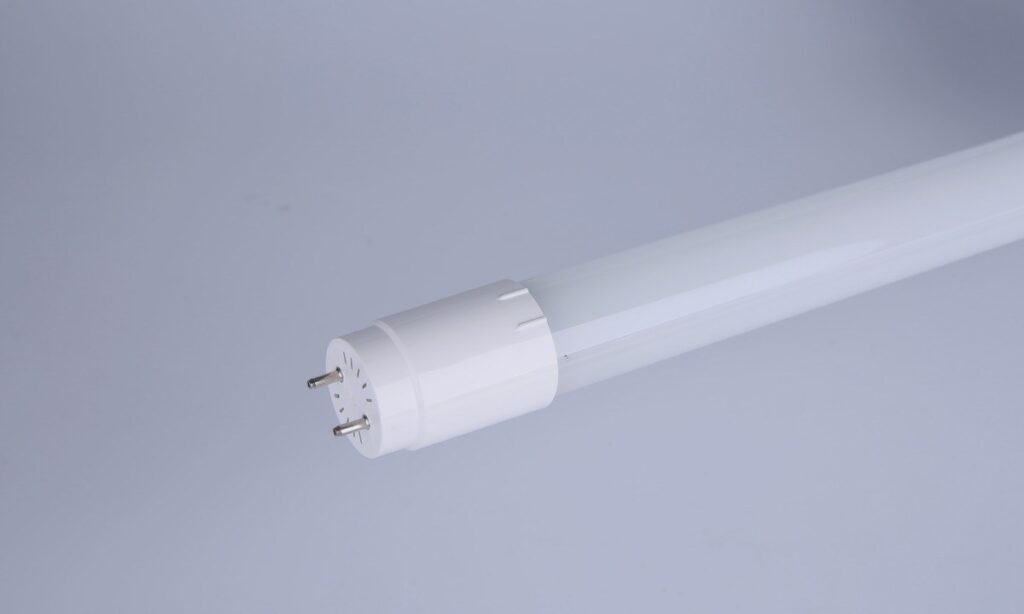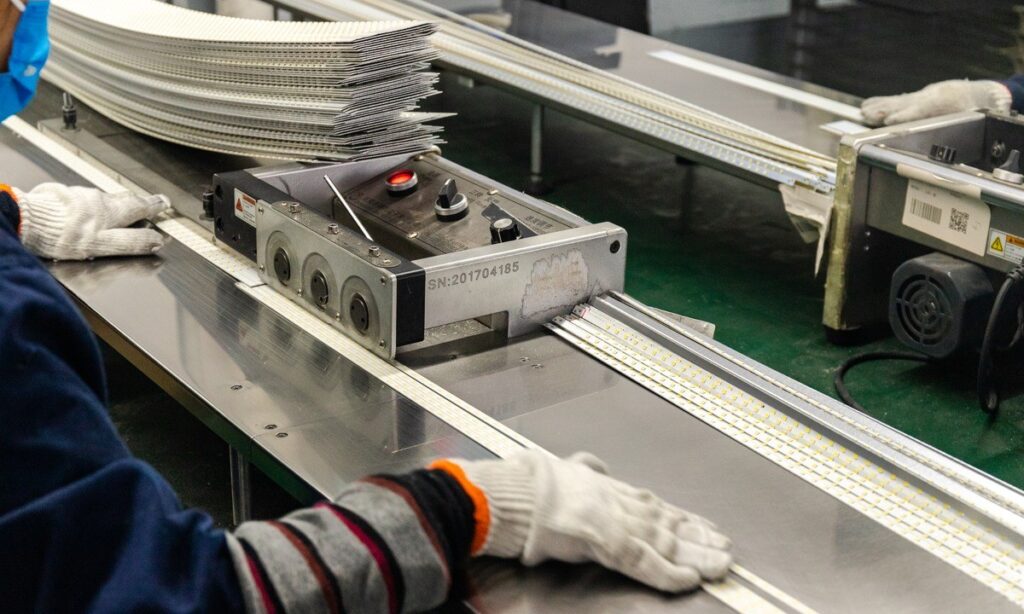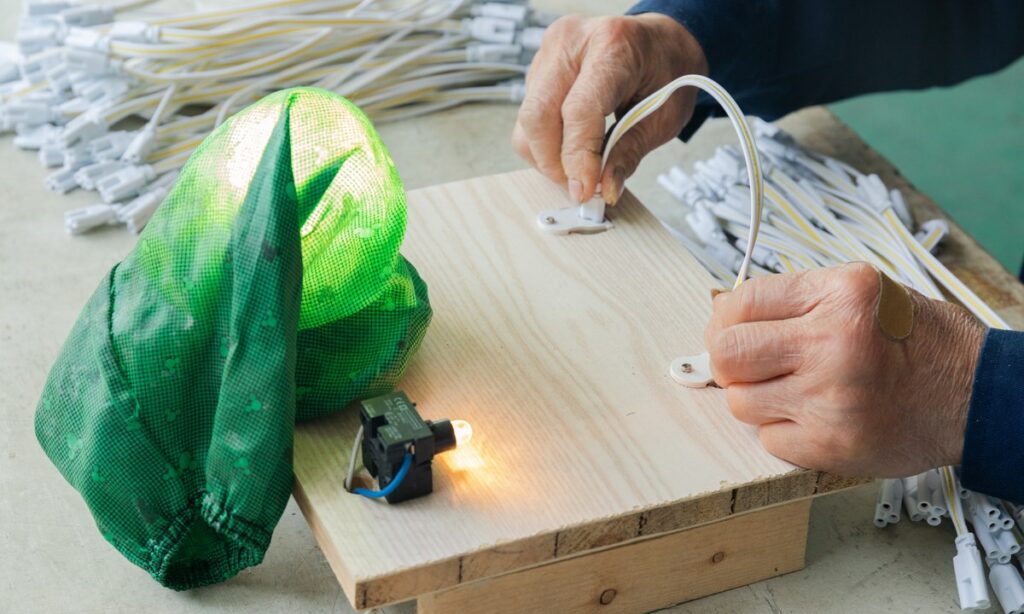













A custom cleanroom luminaire should be specified as part of the room system, not as a standard light with a smooth cover. Begin with the process, cleanliness targets, ceiling and airflow interfaces, cleaning method, maintenance route and lighting criteria. Then connect every requested feature to a controlled drawing, material record, model-specific data, sample check or commissioning result.
The phrase “purification lamp” is easily misunderstood. A luminaire designed for a controlled environment does not automatically purify air, sterilize surfaces or inactivate microorganisms. Those functions require a defined treatment mechanism plus separate efficacy, exposure and safety evidence. This guide therefore focuses on how buyers and project teams can turn a cleanroom brief into a testable luminaire specification.
Defina Primeiro os Limites Ambientais
Start by identifying the industry, process and consequence of contamination. Pharmaceutical aseptic processing, electronics assembly, optics, food production and medical-device manufacturing may all use controlled spaces, but they do not share one approval route. Record the room classification, whether requirements apply at rest or in operation, occupancy, operating hours, pressure relationship, temperature, humidity, cleaning frequency and maintenance restrictions.
ISO 14644-1:2015 classifies air cleanliness by airborne particle concentration within its scope. It describes the room condition; it does not certify every luminaire installed in that room. ISO 14644-14:2026 provides a methodology for assessing equipment suitability with respect to airborne particle cleanliness, while explicitly leaving matters such as biocontamination, cleanability, material selection and process-specific performance outside its scope. The project owner must add the applicable industry regulations, internal standards and acceptance criteria.
Utilize este primeiro limite de decisão:
| Questão | Porque altera a especificação | Evidência ou responsável pela decisão |
|---|---|---|
| Que processo funciona na sala? | Define as consequências de contaminação e as regras aplicáveis | Responsável pela instalação ou pelo processo |
| Que estado da sala é avaliado? | As condições em repouso e em funcionamento podem ser diferentes | Projetista ou validador de sala limpa |
| Que limite de teto e pressão é utilizado? | Determina a compatibilidade, o suporte, a vedação e o acesso para assistência | Empreiteiros do teto e da sala limpa |
| Que agentes e métodos de limpeza estão aprovados? | Determina a compatibilidade de superfícies, juntas, etiquetas e selantes | Equipas de limpeza da instalação e de EHS |
| Que tarefa de iluminação tem de ser executada? | Define as necessidades de iluminância, uniformidade, encandeamento, cor e controlo | Projetista de iluminação e utilizador |
| O que tem de ser demonstrado antes da libertação? | Converte expectativas gerais em pontos de controlo de inspeção e ensaio | Responsável pela qualidade do projeto |
Se faltar qualquer um destes dados, assinale-o como item em aberto. Não permita que uma designação de classe da sala substitua a descrição ambiental completa.
Utilize Linguagem de Produto que Corresponda à Função
Name the luminaire by construction and application: for example, recessed cleanroom luminaire, surface-mounted controlled-environment luminaire or sealed serviceable luminaire. Each term should correspond to an actual mounting method, interface drawing and maintenance route.
Do not use “air-purifying,” “sterilizing,” “antimicrobial” or “germicidal” as synonyms for a cleanroom light. A gasket is not a filtration system, and a smooth housing does not establish microbial efficacy. UV-C and other treatment technologies create separate questions about wavelength, dose, exposure control, materials, maintenance and regulatory scope. If the project needs those functions, specify and validate them as a separate system.
This distinction also prevents keyword overlap. The cleanroom luminaire article owns the specification workflow; a product page such as the surface-mounted LED purification fixture owns the exact available construction and model data. Neither page should imply unsupported room-class certification or disinfection performance.
Defina a Interface do Teto, do Fluxo de Ar e da Assistência
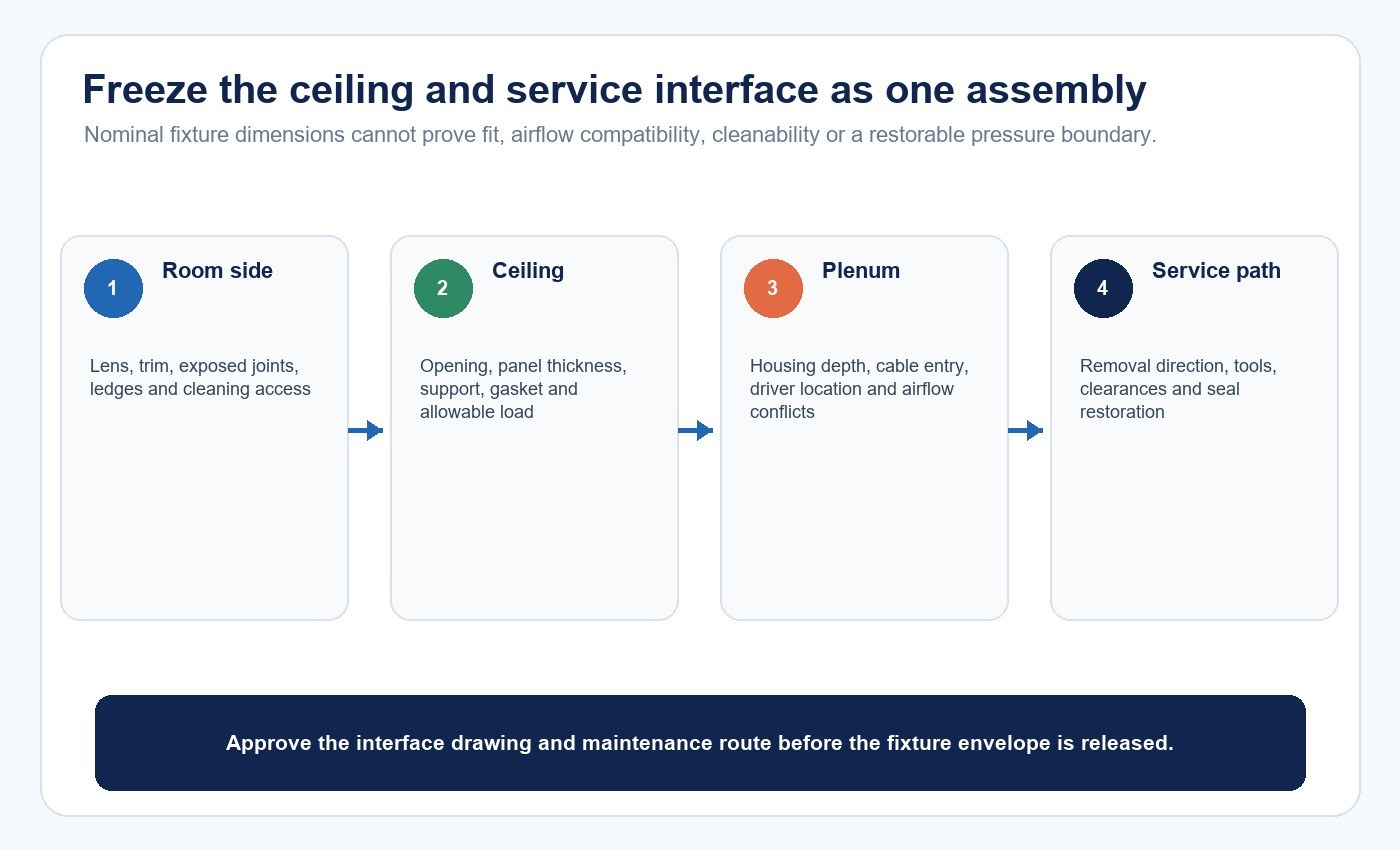
Before approving fixture dimensions, document the ceiling type, module size, panel thickness, opening, support method, allowable load, plenum depth, pressure difference and access direction. Identify whether maintenance takes place from the room side, the plenum or an adjacent panel. A nominal length and width cannot establish fit by themselves.
The reflected ceiling plan should show filters, returns, diffusers, sprinklers, sensors, process tools and access panels. The luminaire may not control airflow, but its depth, projection and service route can still interfere with the designed pattern or create difficult-to-clean zones. Ask the cleanroom designer to approve the layout and relevant sections instead of asking the lighting supplier to infer airflow suitability from a room photograph.
For a custom version, require an interface drawing that shows the ceiling panel, visible trim, room-side face, gasket location, fasteners, housing, cable entry, driver position and removal path. Define which seals are factory-installed and which are completed on site.
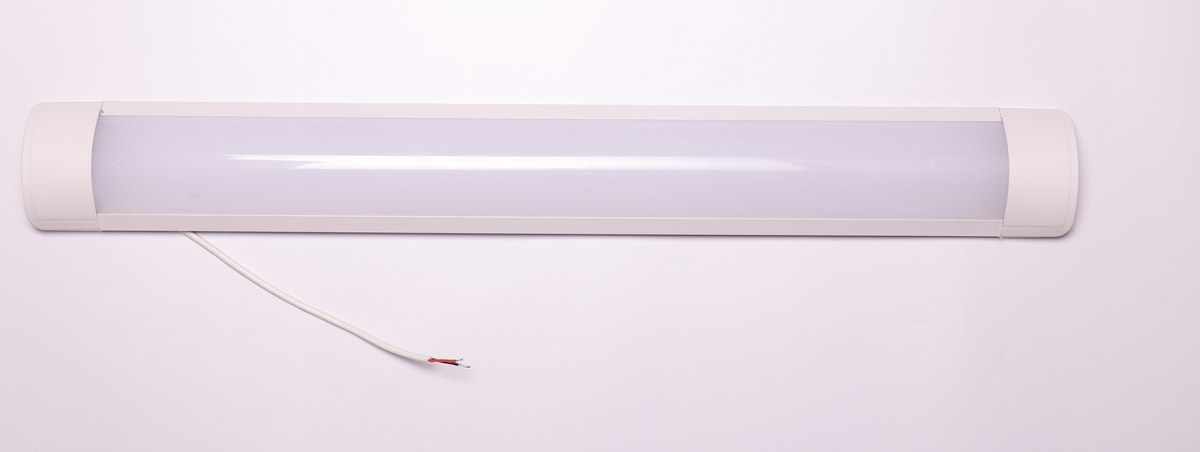
Especifique em Conjunto as Superfícies Expostas e o Método de Limpeza
Review every room-side ledge, recess, joint, fastener head, corner, label and transition. The useful question is not whether a product looks “easy to clean,” but whether the facility can reach, wipe, inspect and restore each exposed area using its approved procedure.
List cleaning agents, concentrations, contact times, temperatures, wiping materials, mechanical action and frequency. Occasional water wiping says little about repeated exposure to alcohol, peroxide, chlorine-based chemicals or another site-specific agent. Require material compatibility data or project testing for the actual exposure schedule.
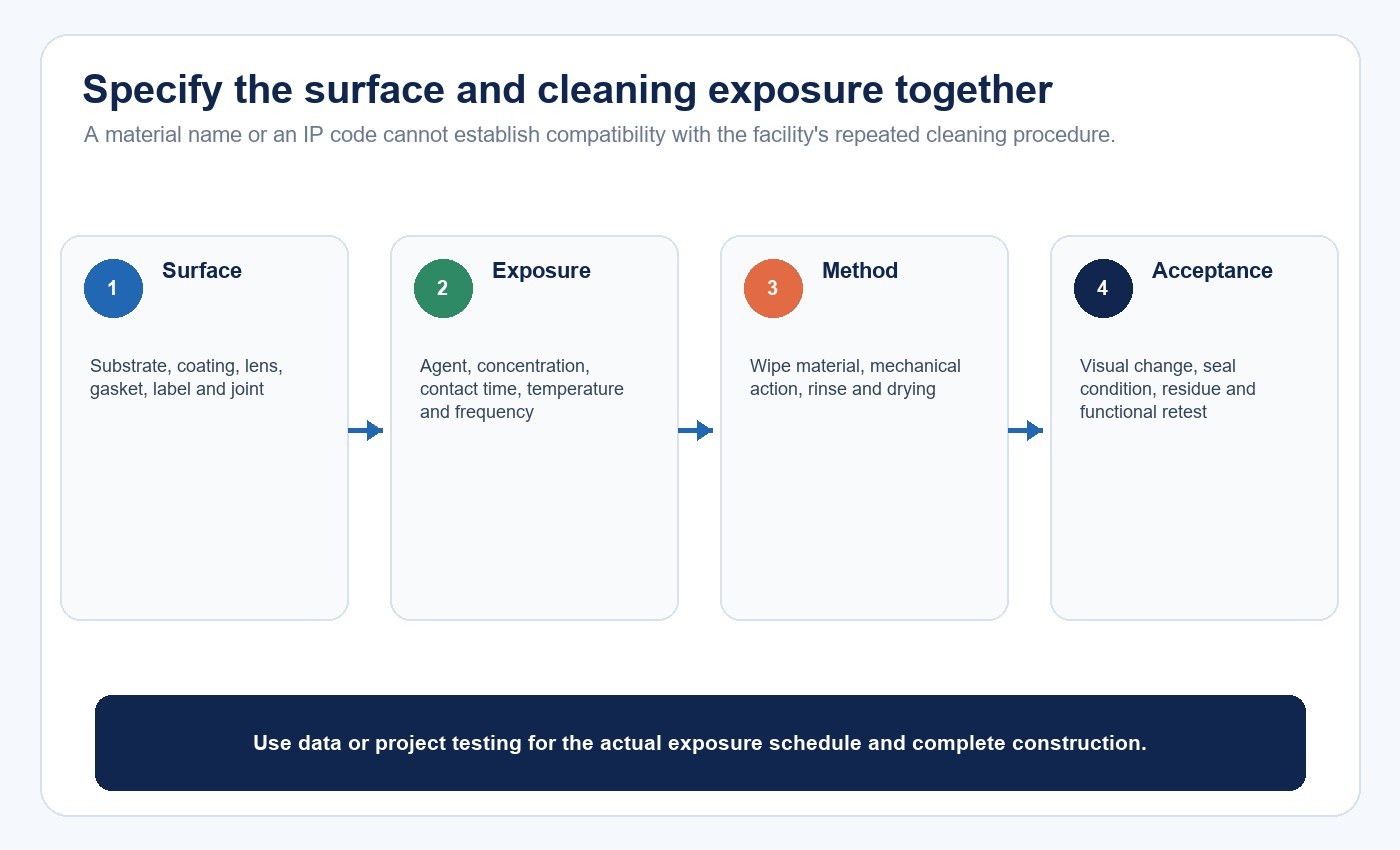
ISO 14644-9:2022 provides a procedure for assessing surface cleanliness by particle concentration. Its scope does not determine process-specific surface suitability, cleaning procedures, material characteristics or microbiological state. Use it only for the question it addresses, then add the project’s chemical, microbial and operational requirements separately.
Controle Juntas, Penetrações e Materiais Aplicados no Local
Create a seam and penetration register for the lens-to-frame joint, frame-to-ceiling joint, housing seams, cable glands, conduit entries, emergency-test devices, sensors, controls and mounting fasteners. For each item, define its closed condition, retention method, inspection point and service consequence.
An ingress-protection rating can answer a defined water and solid-object ingress question when it is backed by a model-specific report. It is not a complete cleanroom-suitability certificate. The project may still need separate evidence for particle behavior, cleanability, chemical compatibility, pressure effects and maintenance. The Guia de seleção do grau IP explica como manter estes âmbitos de evidência separados.
If sealant is applied on site, specify its chemistry, supplier, bead location, surface preparation, cure conditions, inspection criteria and replacement method. A factory test cannot cover an unidentified site sealant applied under uncontrolled conditions.
Crie um Registo de Materiais e Configuração
The controlled bill of materials should identify the room-side panel, lens, frame or housing, finish, gasket, fasteners, cable-entry components, adhesives and labels. Ask for the property that matters to the project rather than accepting a broad material name. “Stainless steel,” “aluminium,” “tempered glass” and “powder coated” do not define grade, finish, thickness, coating system, edge treatment or chemical compatibility.
Customization can change the evidence boundary. A different diffuser may alter output and glare. A new gasket may change chemical compatibility. A larger housing can affect stiffness and thermal behavior. A relocated driver or sensor can add penetrations and maintenance points. Record each change against a drawing revision and decide whether it requires recalculation, resampling, retesting or regulatory review.
A matriz seguinte mantém a personalização sob controlo:
| Campo de configuração | Fixar no registo aprovado | Reverificar quando alterado |
|---|---|---|
| Dimensões e montagem | Dimensão total, abertura, suporte e direção de manutenção | Compatibilidade, carga, vedação e acesso para manutenção |
| Construção do lado da sala | Lente, moldura, acabamento, junta, fixações e etiquetas | Facilidade de limpeza, compatibilidade e juntas visíveis |
| Sistema elétrico | Tensão, driver, cablagem, ligação à terra e entrada de cabo | Âmbito de segurança, EMC, térmico e de certificação |
| Sistema ótico | LED board, output, optics, CCT and CRI | Fotometria, encandeamento, cor e calor |
| Controls and emergency | Protocolo, dispositivos, estado de falha, bateria ou alimentação central | Penetrações, comissionamento e manutenção |
| Embalagem e identificação | Modelo, revisão, etiquetas e superfícies protegidas | Rastreabilidade e condição de instalação |
Classify each requested change as cosmetic, interface, optical, electrical, thermal, contamination-control or regulatory. “Made to order” should mean controlled engineering, not unlimited options without evidence.
Mantenha o Desempenho de Iluminação como uma Vertente de Projeto Autónoma
Cleanliness requirements do not replace lighting design. Define the task plane, target illuminance, uniformity, glare limit, vertical illumination where relevant, colour rendering, colour temperature, flicker expectations, dimming range, zoning and emergency behavior. Include mounting height, room reflectance, equipment obstruction and maintenance factors in the calculation.
Request model-specific photometric data for the proposed lens, output and dimensions. A lumen value cannot show distribution or glare, and a family file may no longer represent a custom optical configuration. If the lens, LED board, power or geometry changes, update the calculation and evidence.
Controls require their own interface record. Define protocol, address method, sensor position, power-loss state, communication-loss state, override, commissioning responsibility and cybersecurity ownership where networked systems are used. A controller that looks convenient on a drawing may create a difficult-to-clean penetration or an inaccessible service point.
Verificar condições térmicas, elétricas e de emergência
A sealed or flush housing changes heat transfer and access. Provide ambient temperature, plenum conditions, insulation-contact restrictions, operating hours, supply voltage, frequency, power-quality conditions, circuit arrangement and driver location. Thermal evidence should represent the actual output, enclosure and control state.
List destination-market standards, marks, reports and the responsible approval body. A certified component does not automatically certify the complete custom luminaire. Changes to the driver, wiring, housing, diffuser, emergency module or control device may alter the evaluated construction.
Emergency lighting also needs a defined architecture. Confirm whether the project uses self-contained batteries, a central emergency supply, a generator-backed circuit or another arrangement. Specify duration, charging conditions, indicators, test access, circuit behavior and maintenance. Do not add a battery module late in the project without reviewing thermal, enclosure and certification effects.
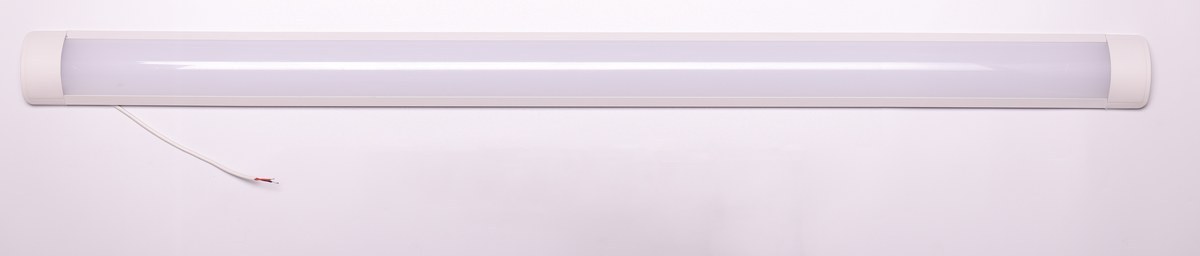
Aprove uma Amostra Representativa, Não uma Aproximação
The sample should match the intended production configuration. Check dimensions, mounting interface, exposed joints, finish, seals, fasteners, cable entry, driver access, controls, output, colour, emergency behavior, labels and cleaning access. If the sample uses different materials or electronics, record the deviation and repeat every affected check before release.
Use a written inspection plan with measured values and pass/fail criteria. Photographs support traceability but cannot replace measurements, drawings or reports. For critical interfaces, assemble a mock-up with the actual ceiling or mounting components and demonstrate the removal path.
O LED lighting sample evaluation checklist can be adapted to the cleanroom configuration. Add project-specific checks for room-side joints, approved cleaners, seal condition, pressure boundary and post-service restoration.
Coloque em Serviço a Configuração Instalada
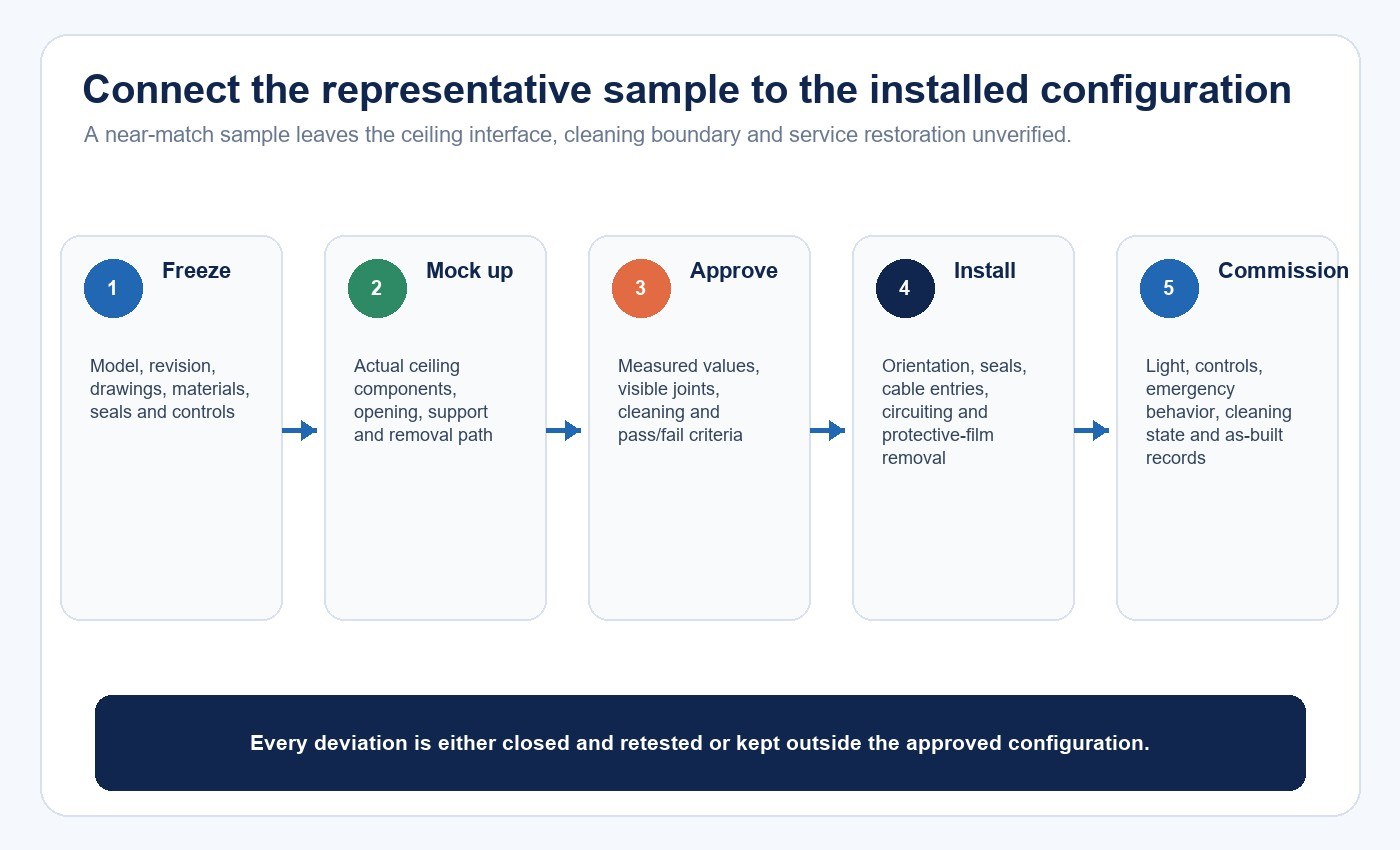
Commissioning must connect the approved sample to the real installation. Confirm model and revision, orientation, support, ceiling seals, cable entries, protective-film removal, cleaning condition, circuiting, controls, emergency operation, measured light levels and any required environmental checks.
Close deviations through change control. A substituted sealant, enlarged opening, relocated driver or unsealed service point can break the connection between the installed condition and the approved evidence. The closeout package should include as-built drawings, configuration records, test results, cleaning instructions, spare-parts information and maintenance procedures.
Maintenance should preserve the boundary over time. Define inspection frequency, permitted cleaners, lens and gasket replacement, closure checks, driver access and post-maintenance verification. The Visão geral da fábrica e do fabrico da New Lights fornece contexto para discutir o controlo da configuração, a análise de amostras e a documentação de produção com a equipa do projeto.
Prepare uma RFQ Baseada em Evidências
Separate buyer inputs from supplier outputs. Buyer inputs should include the process and room state, ceiling and airflow drawings, environmental conditions, cleaning procedure, lighting targets, controls, emergency architecture, destination market and acceptance tests.
Supplier outputs should include the exact model and revision, configuration matrix, dimensional and interface drawings, bill of materials, photometric and electrical data, relevant reports, installation instructions, cleaning limitations, service procedure, sample plan and unresolved-items list. Each report should identify the tested configuration and scope.
Utilize esta sequência de libertação:
- Defina a descrição da interface ambiental e da sala.
- Aprove a matriz de configuração e os desenhos.
- Associe cada requisito a evidências ou a um ensaio planeado.
- Analise uma amostra representativa e uma maqueta do teto, quando necessário.
- Liberte a produção apenas depois de os desvios estarem encerrados.
- Verifique a instalação e preserve o registo conforme construído.
Para falar sobre um projeto de iluminação personalizada para sala limpa, contacte a New Lights with the room brief, ceiling details, cleaning procedure, lighting criteria, control requirements and evidence list. The team can then identify what an existing plataforma de calha linear suporta, o que requer engenharia controlada e o que ainda necessita de validação do projeto.
Perguntas Frequentes
Uma luminária para sala limpa é o mesmo que uma lâmpada de purificação?
No. A cleanroom luminaire provides lighting within a controlled environment. “Purification lamp” can imply air cleaning or disinfection, which requires a defined treatment mechanism and separate efficacy and safety evidence.
Uma classe ISO de sala limpa certifica a luminária?
No. ISO 14644-1 classifies airborne particle cleanliness within its scope. Equipment suitability and project acceptance require separate assessment against the intended environment, operating condition and applicable evidence.
Uma luz vedada é automaticamente adequada para uma sala limpa?
No. Sealing addresses only part of the interface. The project may also need evidence for ceiling fit, particle behavior, surface cleanability, chemical compatibility, maintenance access, thermal performance, electrical safety and photometric performance.
Que informações são necessárias antes de começar a personalização?
Provide the process, room classification and state, ceiling and airflow drawings, cleaning agents and procedure, environmental conditions, lighting targets, controls, emergency architecture, destination market and required acceptance tests.
Can output, CCT and controls be customized independently?
Not always. Changes to the LED board, driver, optics, output or controls can affect photometrics, thermal behavior, electrical evidence and certification scope. Review the combined configuration rather than approving each option in isolation.
Deve UV-C ser incluído na mesma especificação?
Not by default. UV-C introduces exposure, dose, efficacy, material, control, maintenance and regulatory questions. If it is required, specify and validate it as a separate system instead of treating it as an inherent cleanroom-light function.
Fontes editoriais
- ISO, “ISO 14644-1:2015 — Cleanrooms and associated controlled environments — Part 1: Classification of air cleanliness by particle concentration”: https://www.iso.org/standard/53394.html
- ISO, “ISO 14644-14:2026 — Cleanrooms and associated controlled environments — Part 14: Assessment of suitability for use of equipment by airborne particle concentration”: https://www.iso.org/standard/91615.html
- ISO, “ISO 14644-9:2022 — Cleanrooms and associated controlled environments — Part 9: Assessment of surface cleanliness for particle concentration”: https://www.iso.org/standard/76889.html