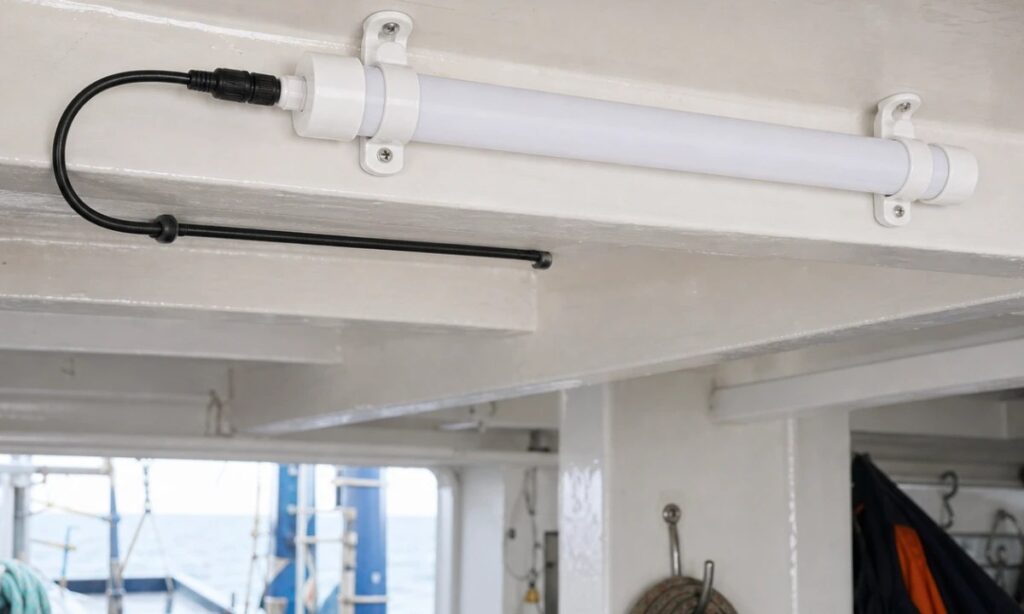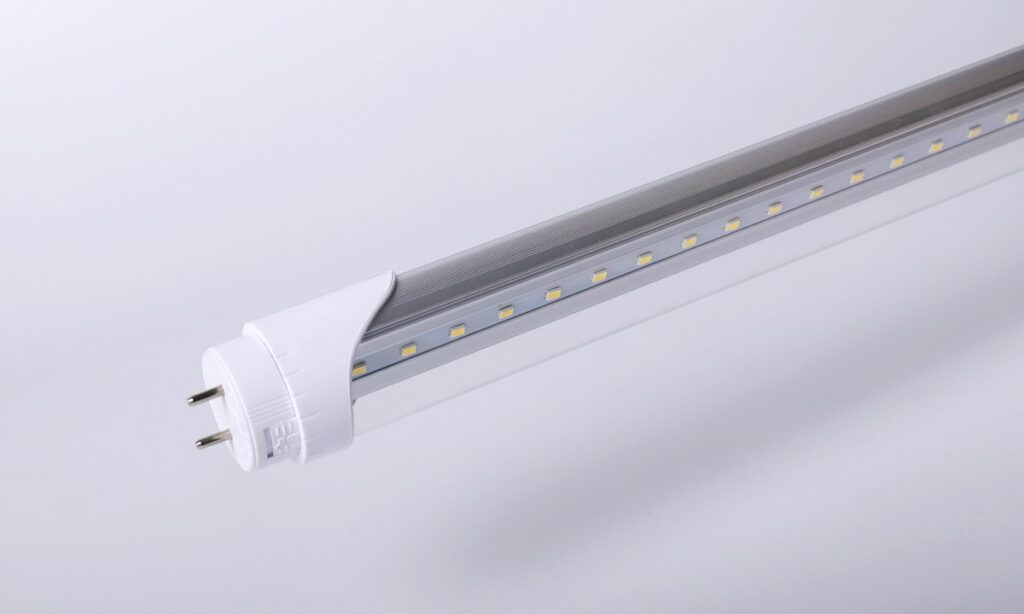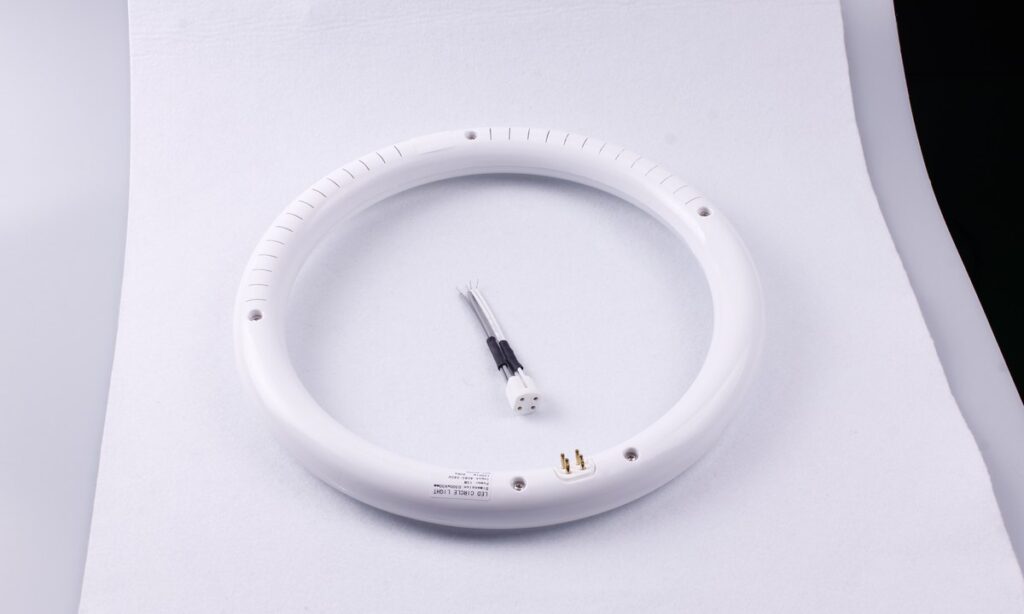


Choosing LED lighting for a project is not a search for the highest lumen figure at the lowest wattage. The selected system must deliver useful light to the task, fit the building and electrical conditions, work with the controls, and remain practical to install and maintain.
Use a fixed decision order: define the task, document the site, compare delivered light, verify the exact model, test a representative sample, and record the approved configuration. This framework applies to commercial, industrial and specialty projects and can be used alongside the project’s lighting design, electrical coordination and destination-market review.
Start With a Project Brief
Describe what people need to see, where they need to see it and how the space operates. General movement through a corridor, reading labels in a warehouse, inspecting a finish and presenting merchandise are different visual tasks. They may require different distributions, vertical and horizontal illumination, glare control and color performance.
Do not start with a fixture category merely because it was used on an earlier project. A high bay, panel, tube, linear luminaire or floodlight is a product format, not a complete design answer. The New Lights solutions overview can help organize the application, while the product range is more useful after the task and site conditions are defined.
| Project input | Questions to close | Working evidence |
|---|---|---|
| Visual task | What must users see, and from which direction? | Task list, photographs and user feedback |
| Geometry | Where are the task plane, mounting points and obstructions? | Dimensioned drawings and site survey |
| Operating pattern | When is light needed, and how does occupancy change? | Schedule, occupancy zones and daylight notes |
| Visual quality | Which surfaces, colors, displays or cameras matter? | Finish samples and acceptance criteria |
| Electrical system | What supply, circuits, emergency functions and controls exist? | Single-line diagram and control narrative |
| Environment | What heat, water, dust, corrosion, impact or vibration is present? | Site classification and maintenance history |
| Service plan | How will products be accessed, cleaned and replaced? | Access plan, spare strategy and responsible owner |
Survey Existing Conditions
For a retrofit, document the existing luminaire, lamp, ballast or driver, mounting, spacing, circuit, controls and measured light levels. Photograph representative installations and note dirt, failed components, changed room layouts and blocked distributions. Record variations instead of treating the easiest location as representative.
For new construction, coordinate architectural, electrical, mechanical and control information. Confirm ceiling height, mounting surfaces, obstructions, equipment positions and access for installation and service. A reflected ceiling plan alone may not show racks, machinery, signs, ducts or cable routes that affect the final result.
The environment belongs in the first survey, not at the end of procurement. Temperature, water, dust, chemicals, corrosion, impact, vibration and washdown conditions can change product suitability. Match the exact model and installation condition to the project requirement; visual resemblance between products is not enough.
Compare Delivered Light, Not Labels
The U.S. Department of Energy distinguishes LED source efficacy from the performance of the complete source and luminaire. Fixture design, power-supply efficiency and optical control all affect how useful light reaches the task. Total lumens and watts therefore cannot establish project performance by themselves.
Review photometric data for the exact configuration. Depending on the application, useful evidence may include total output and input power, intensity distribution, beam spread, zonal lumens, horizontal and vertical calculations, uniformity, glare-related evaluation, spill light and emergency-mode output.
Use the same calculation assumptions for every option. Comparisons become unreliable when mounting height, reflectance, maintenance factors, room geometry or calculation grids change between suppliers.
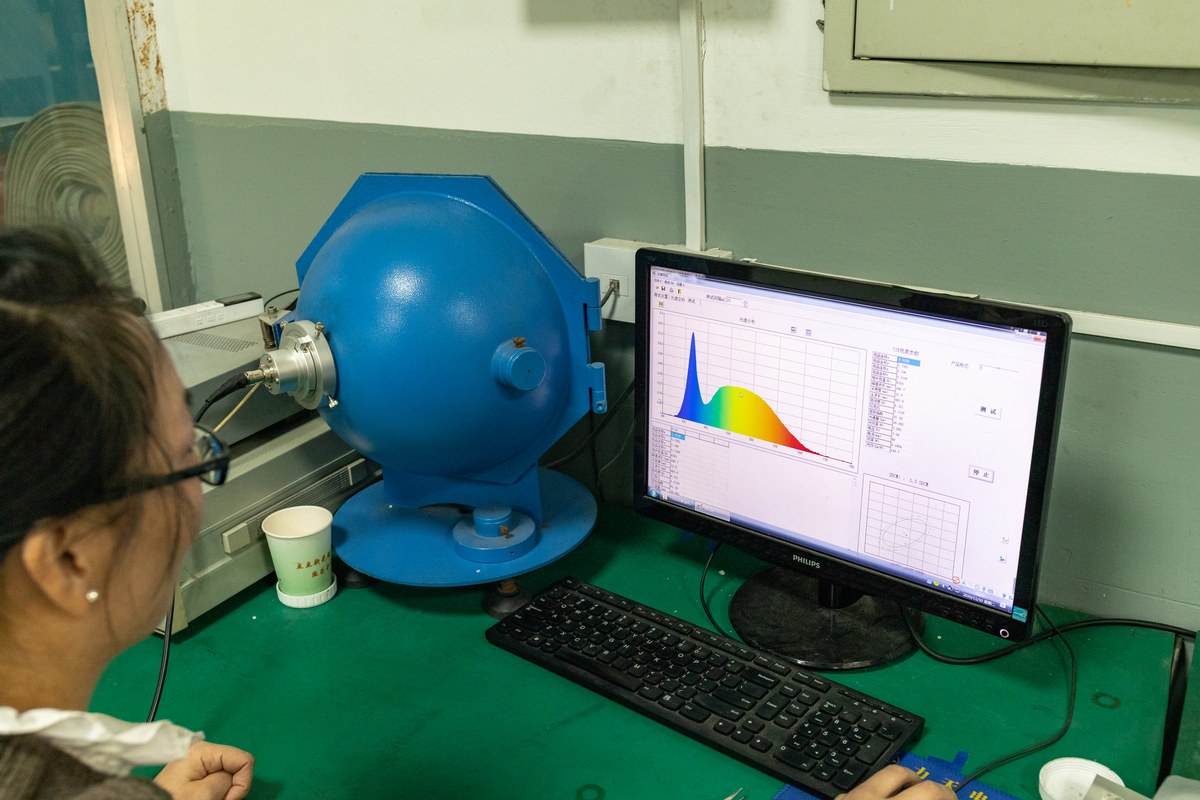
An LM-79 report captures initial optical and electrical performance under specified operating conditions. Lifetime and performance over time require separate product- and system-level evidence. Confirm that the tested model, optic, driver, CCT and operating configuration match the offered product.
Select Distribution Before Fine-Tuning Output
A well-matched optic can place fewer lumens more effectively than a poorly matched high-output luminaire. Start with the shape and orientation of the target area.
Narrow aisles may need an aisle-oriented distribution. Open production areas may need broad spacing with controlled brightness. Retail displays and walls depend on vertical light. Outdoor boundaries require glare and spill-light control. Under-cabinet tasks need coverage across the work surface without exposing a bright source to the user.
Review more than average illuminance. An average can hide dark critical zones, excessive hot spots or poor vertical visibility. Check shadows created by racks, machinery, partitions and people. Use a pilot or mock-up where reflective surfaces, unusual geometry or direct source views make calculations difficult to interpret.
Set Color and Visual-Comfort Criteria
Correlated color temperature describes the appearance of white light from warmer to cooler. Select it for the visual task, materials, atmosphere, surrounding sources and user expectations. There is no single CCT that fits every commercial or industrial space.
CRI is a familiar color-fidelity indicator, but it does not describe every aspect of color appearance. Where color discrimination matters—such as retail, printing, inspection, healthcare or artwork—define the required outcome and evaluate samples on the actual materials. The color temperature and CRI guide explains how to separate color appearance from color fidelity.
Also consider consistency between luminaires and across future replacements. A shared nominal CCT does not guarantee identical appearance. For phased projects, document acceptable variation and how replacement stock or model changes will be managed.
Visual comfort requires distribution, shielding, source brightness and viewing position to work together. A diffuser or low numerical glare claim cannot replace a review of the actual room, mounting height and sight lines.
Confirm Electrical and Control Compatibility
Record supply voltage, frequency, circuit conditions, emergency architecture and the intended control protocol. Verify the driver and control combination rather than assuming every LED luminaire works with every dimmer, sensor or building-control system.
Define normal occupied and unoccupied levels, sensor coverage, delay, minimum stable level, power-restoration behavior, manual override, emergency interaction and future programming access. Controls can reduce energy use when they match actual schedules, occupancy and daylight, but a generic saving percentage is not a project result.
Test the exact luminaire, driver and control combination when flicker, low-level dimming, startup or synchronized response matters. The LED driver, dimming and control compatibility guide provides a system-level checklist for these interfaces.
Check Thermal, Mechanical and Installation Conditions
LED products still create heat. ENERGY STAR explains that heat sinks move heat away from LED components. Thermal design affects the LED source, driver and nearby materials, so check permitted ambient conditions, mounting orientation, clearances and ventilation for the exact model. The thermal management and lifetime guide explains why package-level lumen maintenance is only one part of complete-product reliability.
Confirm dimensions, weight, brackets, suspension points, cutouts, cable entries and service access. For retrofits, retain existing housings, lampholders, wiring or control components only when the selected solution supports that configuration.
Installation labor and disruption can change the preferred option. A lower product price may be offset by extensive rewiring, ceiling repair, access equipment, difficult driver placement or longer shutdowns. Include these conditions before the shortlist is finalized.
Build a Model-Level Evidence Matrix
Connect every important project requirement to the exact product and supporting record. A certificate for a different model, a report for one family member or LED-package data does not automatically cover the offered luminaire.
| Decision area | Evidence to match to the offered model | Approval question |
|---|---|---|
| Identity and configuration | Data sheet, model code, optic, driver and ordering string | Is the tested configuration the one being quoted? |
| Initial performance | Applicable photometric report and matching photometric file | Do output, distribution, color and electrical data align? |
| Controls | Driver data, wiring diagram and compatibility information | Does the complete combination perform as required? |
| Environment and mechanics | Product-specific ratings, test records and installation instructions | Does the evidence cover the real mounting and exposure? |
| Lifetime and reliability | Lumen/color maintenance basis plus driver and system evidence | Which failure modes and operating conditions are included? |
| Compliance | Destination-market certificates or declarations with model scope | Does the named model fall inside the verified scope? |
| Warranty and service | Terms, exclusions, replacement route and spare policy | What is covered, by whom and for how long? |
| Change control | Approved sample, bill of materials or agreed change notice | How will later production remain aligned with approval? |
Resolve naming and configuration gaps before approval. A technically valid report is still the wrong evidence when its product identity does not match the purchase order.
Evaluate Reliability, Serviceability and Warranty
LED lifetime is more complex than a single hour figure. Output can depreciate, color can shift, and drivers, connectors, seals, sensors or other components can fail. DOE luminaire-lifetime guidance advises buyers to examine supporting methods and data, warranty and serviceability rather than relying only on LED-package lumen maintenance.
Ask what the stated life means, which operating and thermal conditions apply, and which failure modes are included. Determine whether the driver, light engine, sensor, battery or surge-protection component can be replaced. Check expected spare availability and how a compatible replacement will be identified.
Read the warranty terms, not only the duration. Review covered components, labor, access costs, operating-hour limits, environmental exclusions, lumen or color thresholds and claim procedures.
Compare Lifecycle Cost
Purchase price is one part of project cost. Include product and installation, controls and commissioning, energy use based on the operating schedule, cleaning and access, replacement components and labor, downtime, disposal and access equipment.
State every assumption and test sensitivity to operating hours, electricity price and service intervals. U.S. Department of Energy FEMP guidance evaluates cost effectiveness using lifetime energy savings rather than initial price alone. Its federal examples and numeric criteria are context-specific, so project calculations should use the site’s own rates and operating conditions.
Compare efficacy only between products that can satisfy the same task. A highly efficient luminaire with the wrong distribution is not an equivalent alternative.
Sample, Pilot and Commission
Shortlist products after the paper evidence is coherent, then inspect representative samples. Confirm markings, dimensions, mounting, light appearance, dimming, controls, noise and thermal behavior. For a complex or high-volume project, use a mock-up or pilot area with actual surfaces and users.
The LED lighting sample evaluation checklist can structure the physical review. Record the approved model, configuration, sample photographs and accepted deviations so incoming inspection has a clear reference.
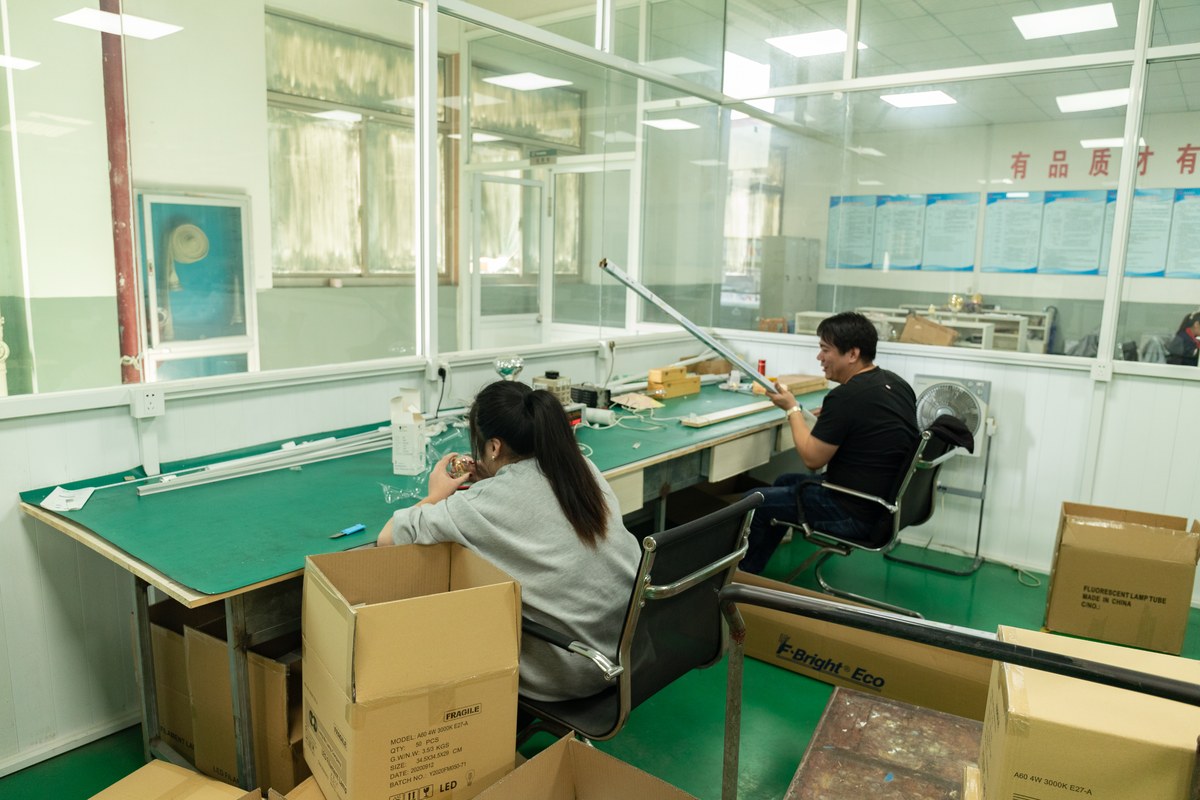
After installation, commission the system against the agreed criteria. Record measured results, final aiming, control settings and accepted deviations. Preserve the evidence package for maintenance, replacement and future change control.
Use a Stage-Gated Selection Workflow
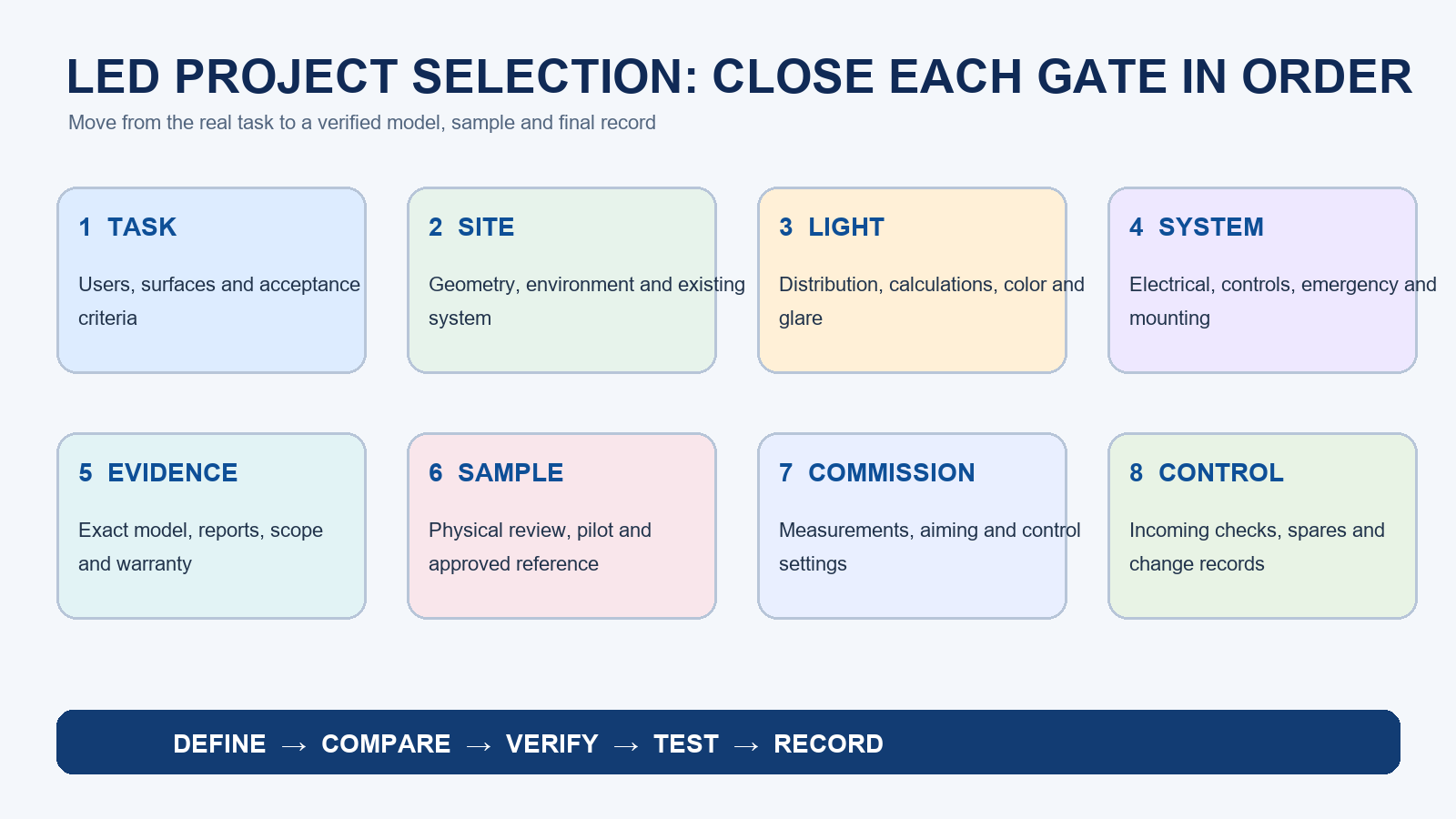
Before issuing a purchase order, close these gates:
- Define visual tasks and acceptance criteria.
- Survey geometry, existing systems and environmental conditions.
- Compare distribution and calculated delivered light.
- Set color, glare, electrical and control requirements.
- Match every claim to the exact model and configuration.
- Compare reliability, serviceability, warranty and lifecycle cost.
- Approve a representative sample or pilot.
- Commission the installed system and preserve the final record.
For an RFQ, organize these inputs before selecting a supplier or product. The OEM and ODM lighting RFQ guide provides the next step for converting the approved brief into a comparable quotation package.
Frequently Asked Questions
Should I choose LED lighting by watts or lumens?
Neither value is sufficient alone. Watts indicate input power and lumens indicate total light output, but the project result also depends on distribution, task geometry, visual quality, controls and environmental suitability.
Does an LM-79 report prove LED lifetime?
No. It records initial optical and electrical performance under specified conditions. Lifetime and reliability require additional product- and system-level evidence.
What CCT is best for commercial lighting?
There is no universal best CCT. Match it to the visual task, materials, surrounding light and user expectations, then evaluate a representative sample.
Are all LED luminaires compatible with occupancy sensors and dimmers?
No. Check the exact driver, control method, connected load and device combination. Test minimum level, startup, flicker, synchronization and power-restoration behavior where these affect the project.
Is the longest advertised lifetime the best choice?
Not necessarily. Review the supporting method, operating conditions, complete-system failure modes, serviceability, warranty coverage and replacement availability.
What should I provide when requesting a model comparison?
Provide drawings, task details, existing system information, mounting conditions, environment, supply, controls, target market, quantity and required evidence. Project buyers can contact New Lights with these inputs for a model-level comparison.
Editorial Sources
- U.S. Department of Energy, “LED Basics.”
- U.S. Department of Energy, “Understanding LM-79 Reports.”
- U.S. Department of Energy, “LED Luminaire Lifetime: Recommendations for Testing and Reporting.”
- ENERGY STAR, “Learn About LED Lighting.”
- U.S. Department of Energy FEMP, “Purchasing Energy-Efficient Commercial and Industrial LED Luminaires.”