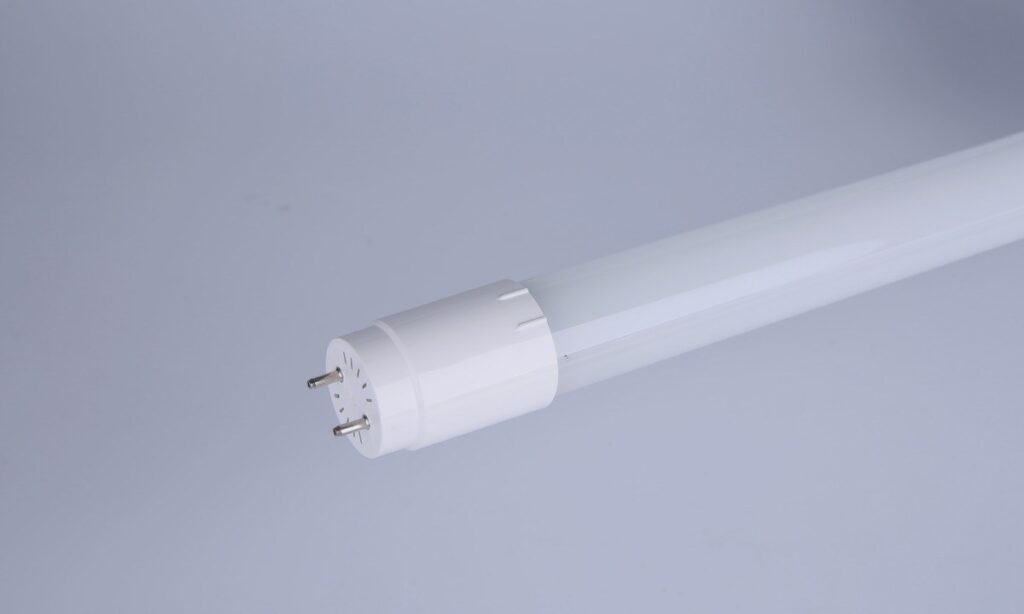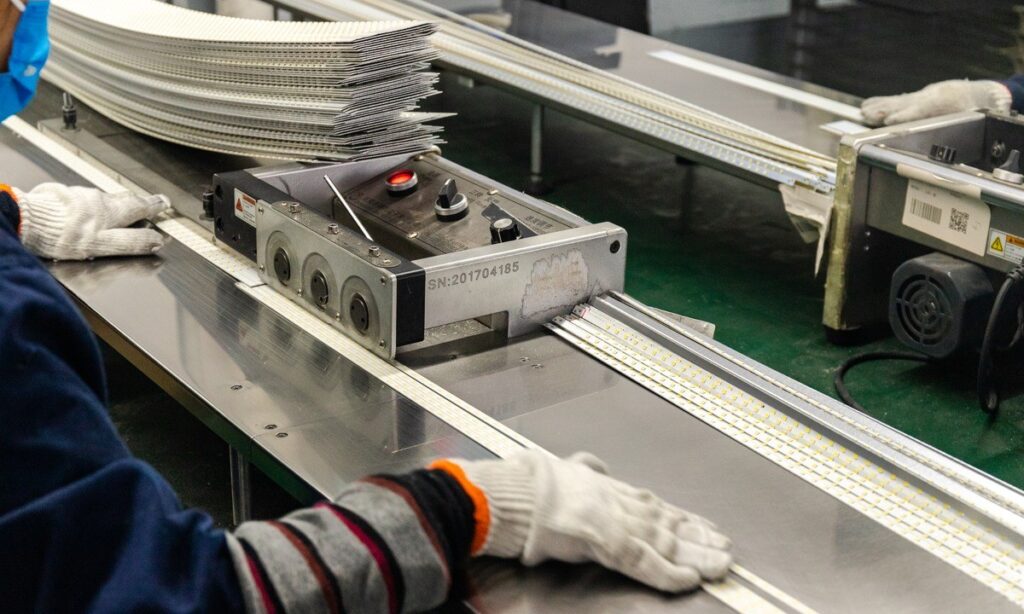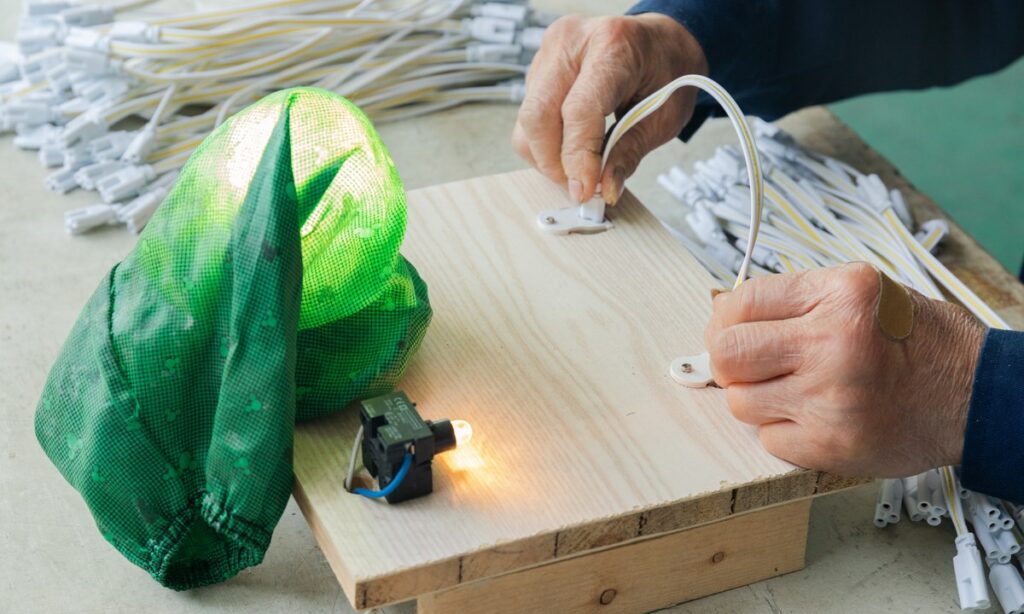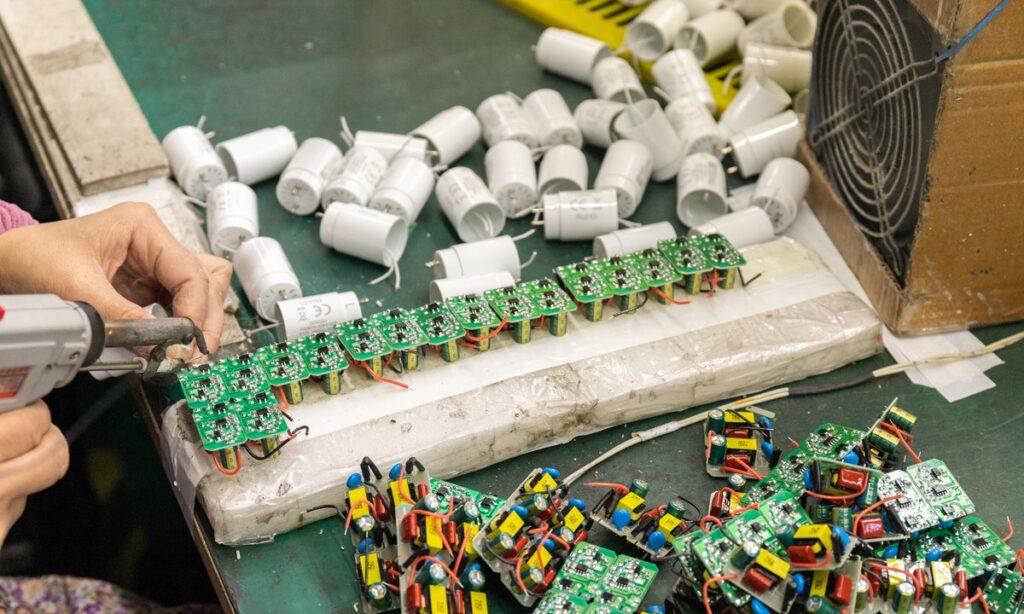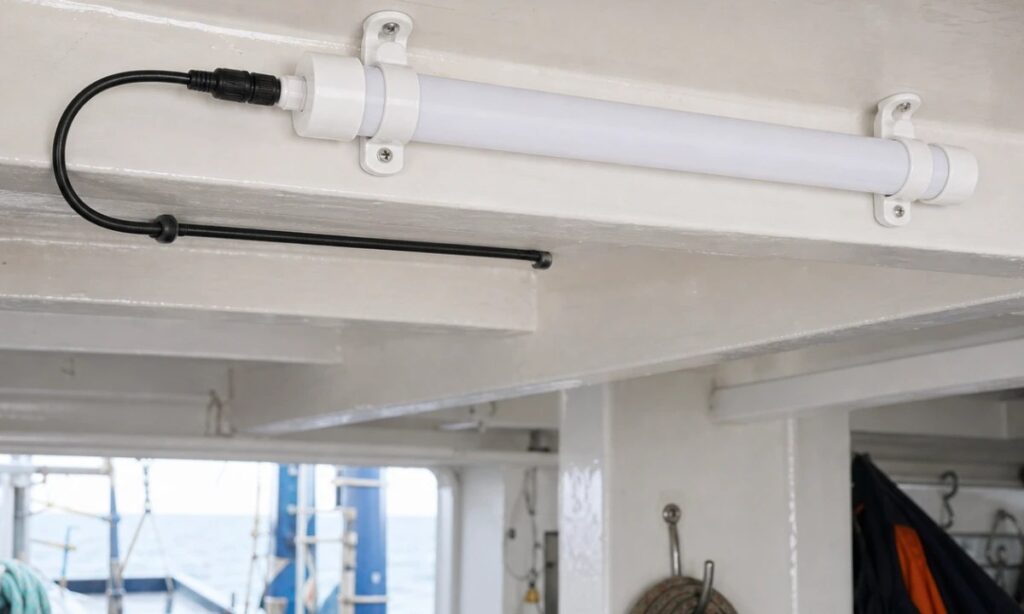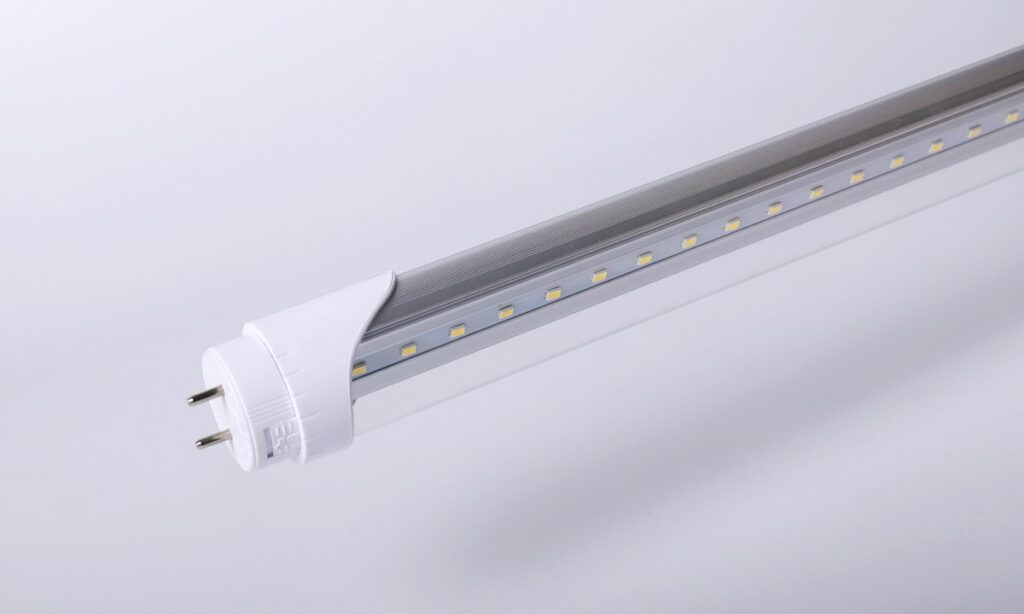


Replacing a T9 circular fluorescent lamp with LED looks simple because both products can have a ring shape and a G10q-style base. In practice, the fixture may contain a magnetic or electronic ballast, a starter, specific wiring, limited internal space and optics designed for the original lamp. A safe retrofit must verify the complete system rather than match appearance alone.
European projects also need a current compliance review. Ecodesign and RoHS rules affect products placed on the market, but they do not turn every existing fixture into an automatic LED conversion. The technical route and economic result remain site-specific.
This guide therefore does not repeat the model-fit and wiring detail owned by the FC12T9 LED replacement guide. It focuses on the European project decision: which fixtures belong in the retrofit scope, what evidence the replacement product needs, who carries responsibility for a modified fixture and whether the measured savings justify the full project cost.
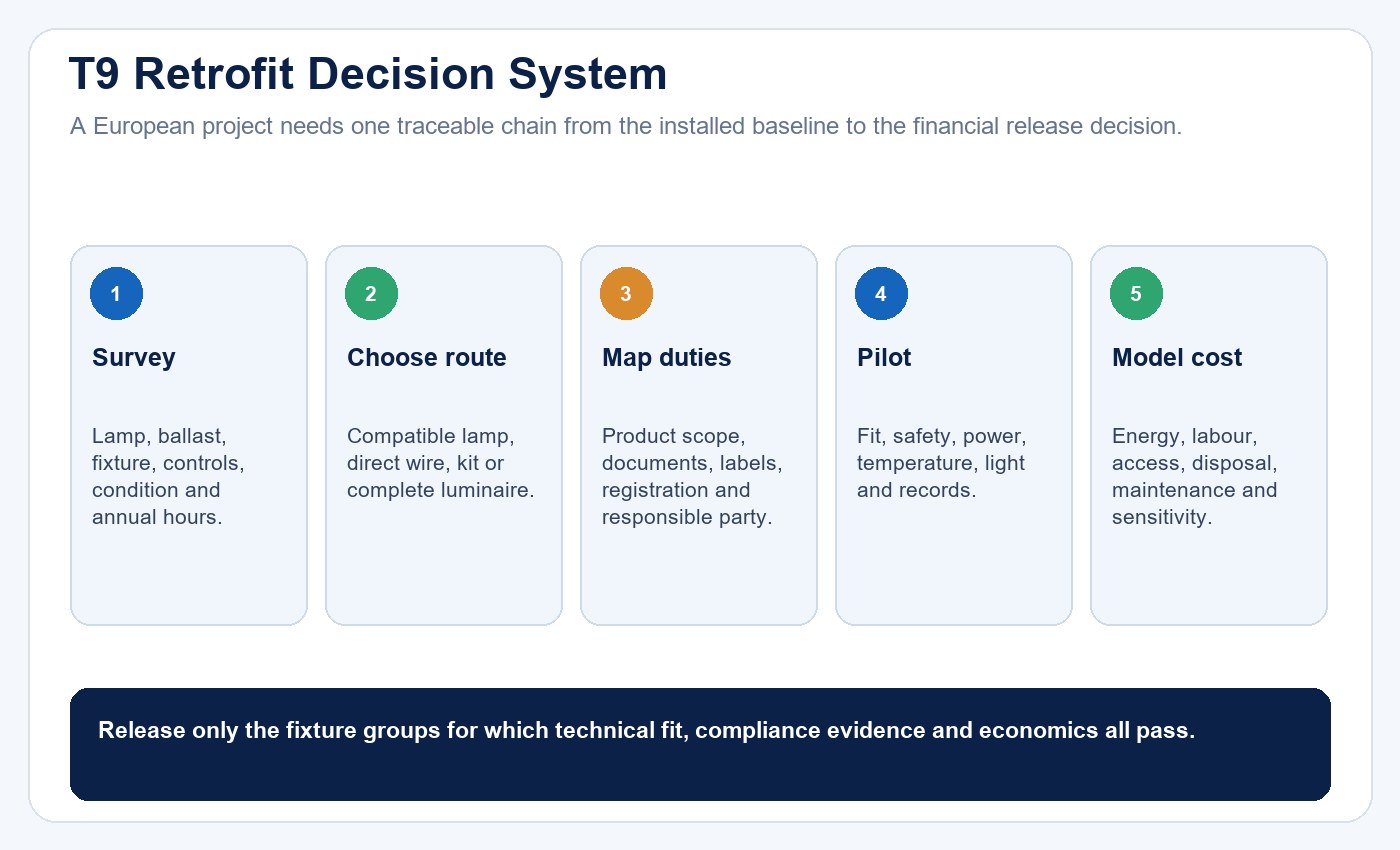
Treat technical fit, regulatory scope and economics as connected gates. A project is not ready because only one of them passes.
Survey the Existing Fixture
Record the old lamp marking, rated watts, ring diameter, tube diameter and base. Photograph the lampholder, ballast, starter, wiring diagram, diffuser and available clearance. Measure system power rather than assuming it equals the fluorescent lamp wattage, because control-gear losses may contribute.
Identify the fixture class, supply, earthing, temperature limitations and condition. Brittle holders, heat-damaged wiring, cracked diffusers or obsolete control gear may make complete luminaire replacement more appropriate than relamping.
Do not open or rewire mains equipment unless qualified and authorised under the applicable national requirements.
| Survey field | Record for each fixture group | Project consequence |
|---|---|---|
| Legacy lamp | Full marking, ring size, base and rated power | Defines the physical and optical baseline |
| Control gear | Ballast make, model, wiring and condition | Determines whether compatibility, bypass or replacement is possible |
| Fixture condition | Holder, wiring, diffuser, reflector and enclosure | Separates reusable assets from end-of-life fixtures |
| Operating profile | Annual hours, switching pattern and controls | Drives energy and maintenance calculations |
| Site variation | Different ballasts, housings, controls and access | Determines pilot coverage and labour assumptions |
Confirm the LED Input Architecture
A circular LED lamp may be designed for a compatible ballast, direct mains, an external driver or another arrangement. The G10q base does not define that architecture.
Require the exact model instruction to state input voltage, pin connections, retained or removed components, compatible control gear and required labels. If the existing ballast remains, obtain a tested compatibility list. If rewiring is required, determine who becomes responsible for the modified luminaire and what safety, marking and documentation apply.
Never infer a ballast-bypass procedure from a generic online diagram. A wrong connection can damage the lamp or create shock and fire hazards.
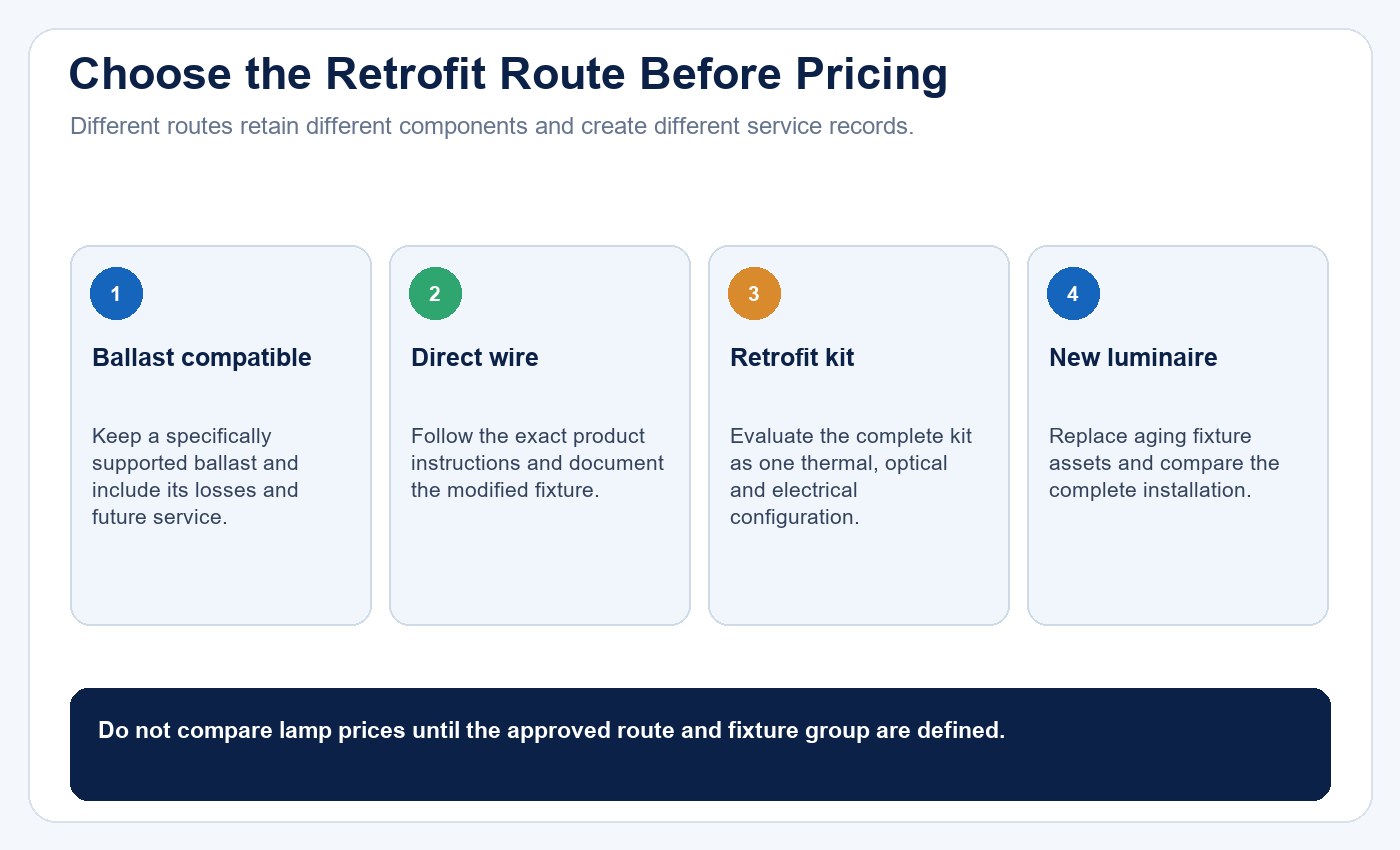
Each retrofit route retains different components and creates a different installation, documentation and maintenance boundary.
Use the LED retrofit options guide when the project includes several lamp or luminaire formats. For T9 rings, the essential decision is whether the approved product operates with the surveyed ballast, requires a documented conversion, forms part of a retrofit kit or should be replaced with a complete luminaire.
Check Mechanical and Thermal Fit
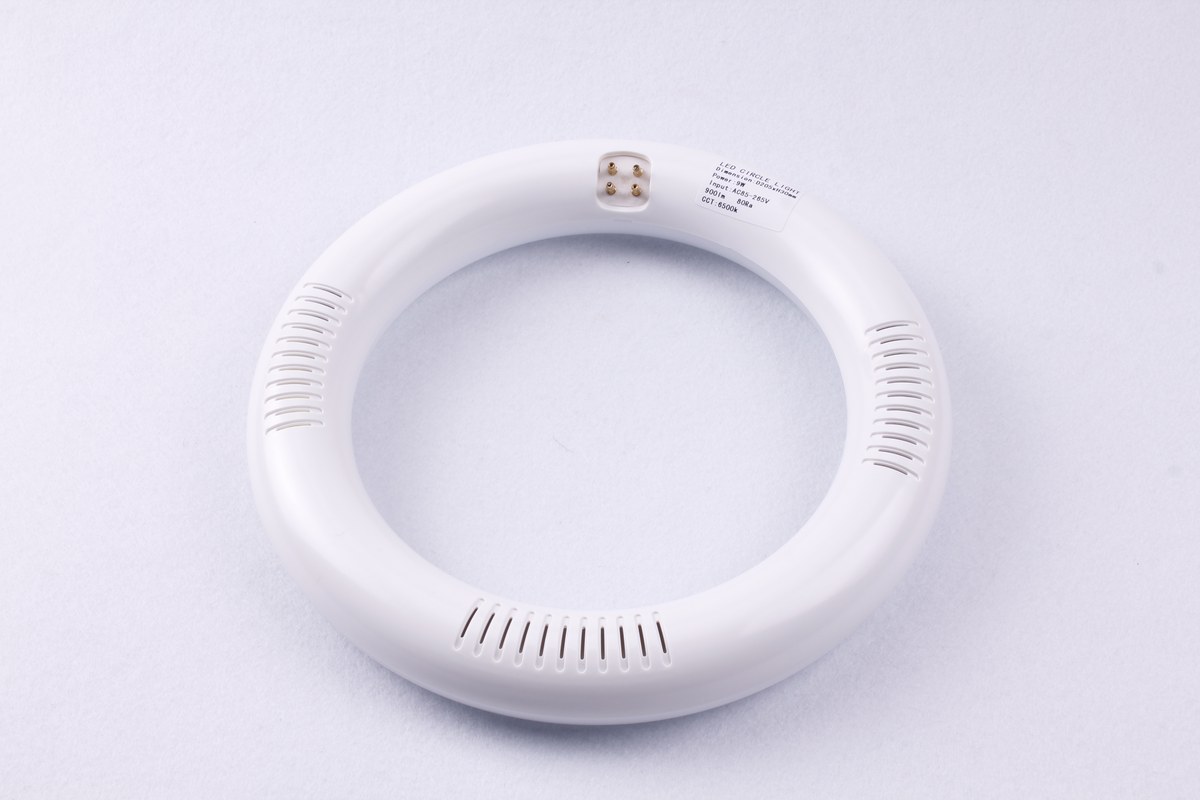
New Lights publishes four LED T9 circular sizes: 9W, 12W, 16W and 24W. Their listed outer dimensions differ, so match the exact fixture rather than the old wattage name alone.
Verify ring diameter, tube profile, connector orientation, fixing clips, diffuser clearance and access to the 3CCT switch. The lamp must remain secured in every normal mounting position.
LED electronics also need an acceptable thermal environment. A tight diffuser or enclosed ceiling fitting may run warmer than an open test setup. Request permitted ambient and case-temperature information and test the complete fixture after stabilisation.
Compare Light, Not “Equivalent Watts”
The New Lights table includes a “Power EqV.” column, but an equivalence label cannot prove that the retrofit maintains the original visual result. Compare total lumens, distribution, diffuser losses and measured illuminance.
Circular fluorescent lamps emit around the tube. An LED ring may distribute light differently because of board position and diffuser design. Test the assembled fixture for centre brightness, edge uniformity, glare and appearance from normal viewing angles.
The T9 circular LED light-distribution guide covers photometric evaluation in detail. For the financial model, do not count a lamp as an acceptable retrofit until the complete fixture meets the agreed illuminance, uniformity and visual criteria.
The New Lights family lists a broad efficacy range of 100–150 lm/W, but total model lumens were not retrieved. Obtain the declared lumen value and test basis for the ordered configuration.
Verify the 3CCT Setting
The published models offer 3000K, 4000K and 6500K selection. Confirm whether the switch is accessible only when de-energised and whether each setting changes power or lumen output.
Choose CCT for the task and surrounding finishes, not simply the highest number. A retrofit programme should define the setting and record it at installation to prevent inconsistent rooms. If one stock item supports several settings, packaging and installer instructions should make the selected position clear.
Color rendering, chromaticity consistency and flicker should be verified from model-level reports. A family claim is not enough for a regulated workplace or visually demanding application.
| Evidence layer | Minimum decision evidence | Avoid substituting |
|---|---|---|
| Mechanical | Dimensioned drawing and fitted sample | Nominal ring diameter alone |
| Electrical | Exact input architecture and wiring instructions | G10q base or generic bypass diagram |
| Optical | Model lumens, distribution and fixture-level pilot | “Equivalent wattage” label |
| Thermal | Permitted conditions and stabilized fixture check | Open-bench operation |
| Product compliance | Model-matched declaration, technical data and required registration | Family brochure or another model’s certificate |
Understand the EU Regulatory Context
Commission Regulation (EU) 2019/2020 establishes ecodesign requirements for light sources and separate control gears. Its calculation tables identify circular fluorescent categories, including FL T9 circular. Energy labelling and product-information duties may also apply to replacement light sources placed on the EU market.
RoHS restricts mercury in electrical and electronic equipment, subject to defined exemptions. The consolidated Annex III material shows the general-lighting exemption for non-linear tri-band phosphor lamps with tube diameter above 17 mm, such as T9, ending on 24 February 2025 after an interim mercury limit.
That history should not be simplified into “all T9 lamps are banned and must be removed.” Scope, special-purpose uses, placing on the market, existing stock and national enforcement require current legal review. Before publication or import, verify the latest consolidated texts and the exact product category.
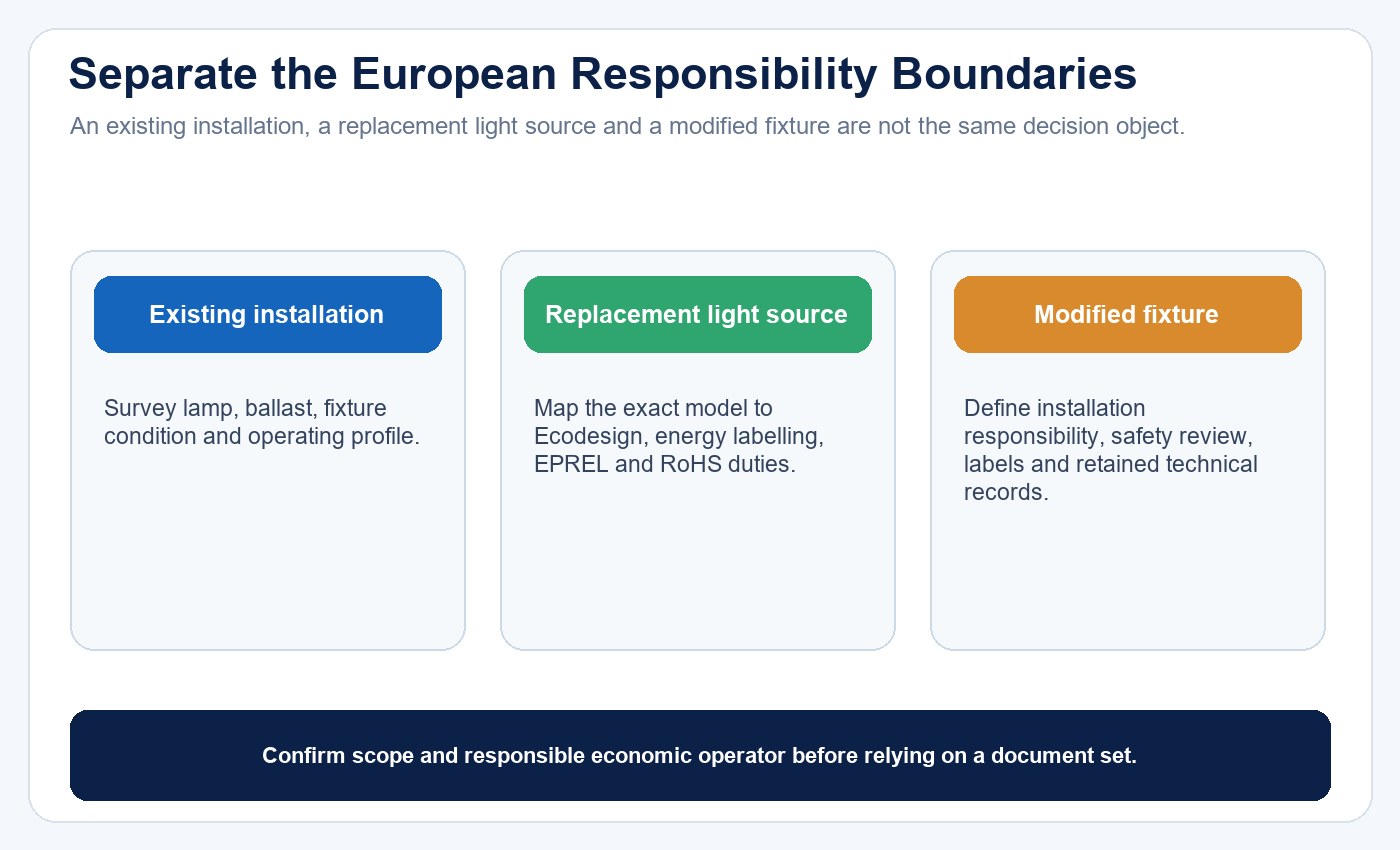
Separate an existing installation from a replacement light source placed on the market and from a fixture modified during conversion; the responsible evidence can differ at each boundary.
For an LED replacement, obtain the relevant declaration of conformity, technical documentation, substance evidence, labelling and registration information. Compliance belongs to the exact model and responsible economic operator, not to the generic phrase “LED T9.”
The European Commission states that Ecodesign rules for light sources and separate control gears apply to manufacturers and importers selling covered products in the EU. The current light-source framework also links supplier duties to energy labelling and EPREL for applicable models. Use the LED product compliance document checklist to bind each document and registration record to the exact model and responsible economic operator.
Choose Among Four Retrofit Paths
After the survey, compare:
- A tested LED lamp compatible with the existing control gear.
- An approved direct-wire LED lamp installed under its instructions.
- A retrofit kit replacing lamp and control components.
- A complete new luminaire.
The first may minimise labour but retain an aging ballast and its losses. Direct wiring can remove ballast losses but changes the fixture and requires qualified work. A kit may improve thermal and optical integration. A new luminaire costs more initially but can address damaged housings, controls and poor optics.
The correct choice depends on fixture condition, scale, access, required performance and compliance responsibility.
| Retrofit route | Existing components retained | Cost model must include | Release condition |
|---|---|---|---|
| Verified ballast-compatible lamp | Fixture and supported ballast | Lamp, ballast losses, future ballast service and pilot labour | Exact lamp-ballast pair passes |
| Documented direct-wire lamp | Fixture and suitable holder | Rewiring, labels, inspection, records and future replacement control | Converted assembly is approved and documented |
| Retrofit kit | Defined fixture body | Kit, labour, thermal/optical validation and technical-file responsibilities | Complete kit configuration passes |
| New luminaire | Building mounting point and supply | Luminaire, removal, installation, controls and commissioning | New installation meets project requirements |
Build the Energy Calculation
Use measured or verified system watts:
Annual energy saving (kWh) = (existing system W - retrofit system W) × annual operating hours ÷ 1000
Then calculate annual energy-value saving with the site tariff. Include time-of-use or demand effects only when supported by billing data. Do not use one European electricity price for every country and customer.
If the LED operates with a retained ballast, include the complete measured system power. If it is direct-wire, use the final assembly value. Controls should be modelled from actual schedules rather than a theoretical maximum.
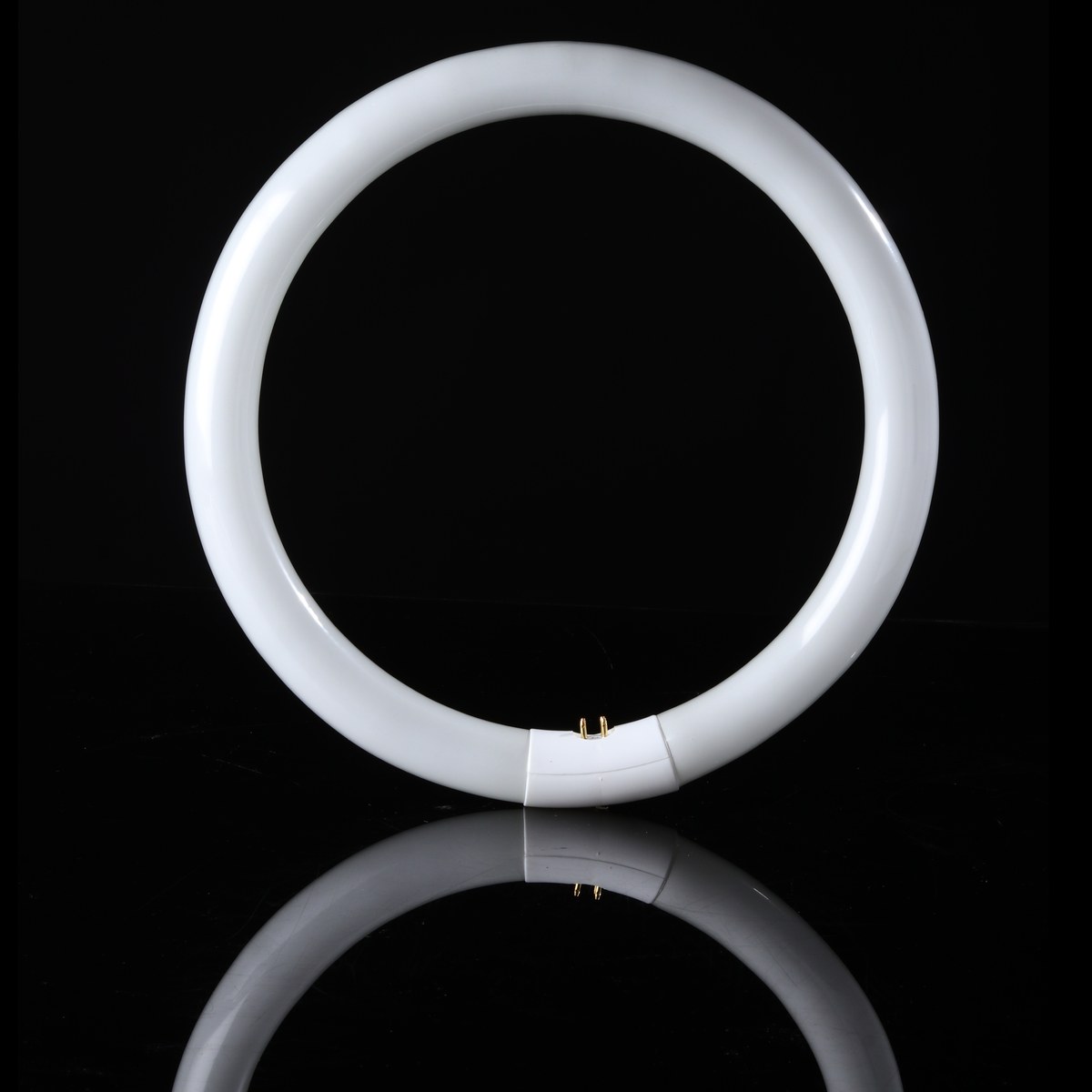
The broader LED tube versus fluorescent tube comparison explains why lamp watts alone do not define system performance. For this project model, use one row per fixture group when ballast type, annual hours, access cost or retrofit route differs.
Add Maintenance and Project Costs
The investment side may include lamps, drivers or kits, electrician labour, access equipment, surveys, disposal, labels, testing and project management. Maintenance savings may include avoided lamp and ballast replacements, labour, travel and disruption.
Use observed failure and labour records where available. Do not assume that a 25,000-hour product-page statement equals installed life in every enclosed fixture. Temperature, switching, driver design and operating conditions matter.
Simple payback can be expressed as:
Payback years = net initial project cost ÷ annual energy and maintenance saving
For longer projects, use discounted cash flow, replacement timing and sensitivity analysis. Test high and low cases for hours, tariff, labour and product life.
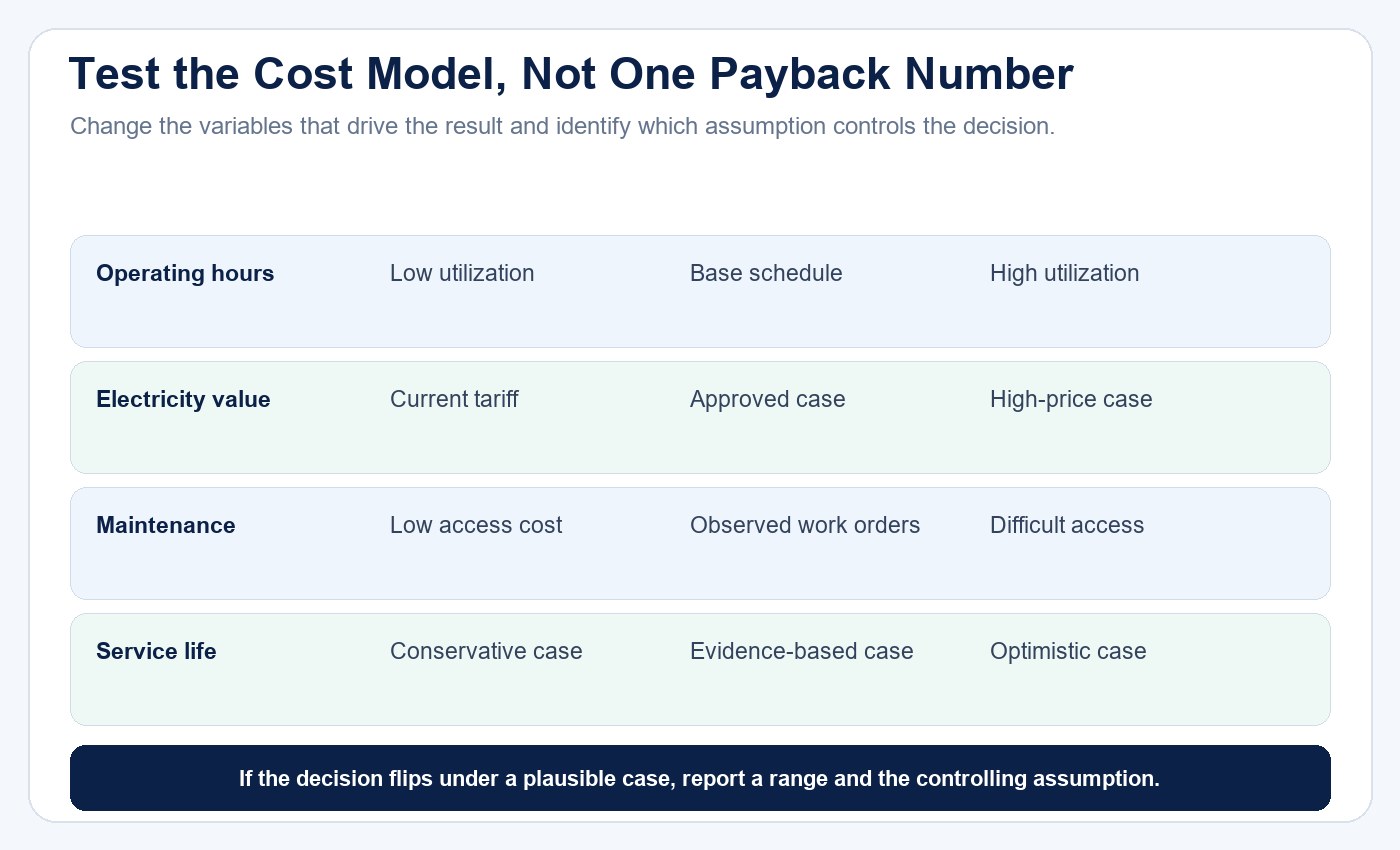
Test the business case against the variables most likely to change. A single payback number hides whether the result depends on optimistic hours, tariff or maintenance assumptions.
| Model input | Base evidence | Low and high cases | Common error |
|---|---|---|---|
| Existing system watts | Stabilized measurement by fixture group | Measurement range across surveyed fixtures | Using lamp watts and ignoring ballast losses |
| Retrofit system watts | Final installed configuration | Retained-ballast and direct-wire variants | Using a catalogue maximum as measured power |
| Annual hours | Controls record or operating schedule | Occupancy and seasonal range | Assuming continuous operation |
| Electricity value | Site tariff and billing structure | Current and approved planning cases | Applying one Europe-wide tariff |
| Maintenance cost | Work orders, labour, travel and access | Different failure and labour scenarios | Treating rated life as installed life |
| Initial project cost | Product, survey, access, conversion and testing | Route-specific quotations | Comparing lamp price only |
Pilot and Acceptance
Install representative samples across different fixture types. Verify electrical safety, power, temperature, switch-on behaviour, illuminance, distribution, CCT, flicker where required and diffuser fit.
Run the pilot long enough to reveal thermal or switching issues. Keep the original and retrofit measurements in one record. If the project includes rewiring, inspect labelling and documentation before rollout.
Acceptance criteria should be written before the sample is installed. “Looks brighter” is not sufficient.
Use the LED lighting sample evaluation checklist to keep identity, electrical, optical, thermal and documentation results in one record. If direct wiring is selected, the LED tube installation guide provides the general principle of identifying the operating type before work; the exact T9 model instruction still controls the conversion.
Procurement Checklist
Request:
- exact model, dimensions and G10q pin definition;
- input voltage and wiring architecture;
- ballast compatibility or bypass instructions;
- total lumens, efficacy and photometry;
- 3CCT behaviour and selected-setting record;
- temperature limits and enclosed-fixture guidance;
- flicker, lifetime and switching evidence;
- EU declaration and technical-file scope;
- warranty and approved installation method;
- traceability for product and revisions.
Conclusion
A European T9 circular retrofit should begin with the existing fixture, not a wattage comparison. Confirm the ballast and wiring, match dimensions, test thermal and optical performance, review current EU obligations and calculate economics from site data.
For a model-mapped review, compare the surveyed system with the current New Lights 3-CCT LED T9 circular lamp and send the old lamp, ballast, fixture photographs, dimensions, supply and target country when you contact New Lights. For repeat orders, the factory and manufacturing overview provides context for sample approval and change control.
FAQ
Is every G10q LED lamp a drop-in T9 replacement?
No. The base and shape do not establish input or ballast compatibility. Use the exact wiring instruction.
Should the fluorescent ballast be removed?
Only if the approved LED design and installation instructions require it. Qualified personnel must perform any modification.
Does the EU require all installed T9 lamps to be removed?
Do not make that general claim. Rules on placing products on the market, exemptions and existing installations require scope-specific review.
How is energy saving calculated?
Compare verified existing and retrofit system watts, multiply by operating hours and apply the site tariff.
Does “Power EqV.” prove equal light?
No. Compare total lumens, distribution, diffuser losses and measured task illuminance.
What costs belong in payback?
Include products, labour, access, rewiring, testing, disposal and maintenance changes, using documented site assumptions.
Editorial Sources
- New Lights, “LED T9 Circular Lamp”: https://www.new-lights.com/product/led-tube/led-t9-circular-lamp.html
- EUR-Lex, “Commission Regulation (EU) 2019/2020”: https://eur-lex.europa.eu/legal-content/EN/TXT/?uri=CELEX:32019R2020
- European Commission, “RoHS Directive”: https://environment.ec.europa.eu/topics/waste-and-recycling/rohs-directive_en
- European Commission, “Light Sources — Ecodesign and Energy Labelling”: https://energy-efficient-products.ec.europa.eu/product-list/light-sources_en
- EUR-Lex, “Directive 2011/65/EU consolidated text, Annex III”: https://eur-lex.europa.eu/eli/dir/2011/65/2025-01-01/eng