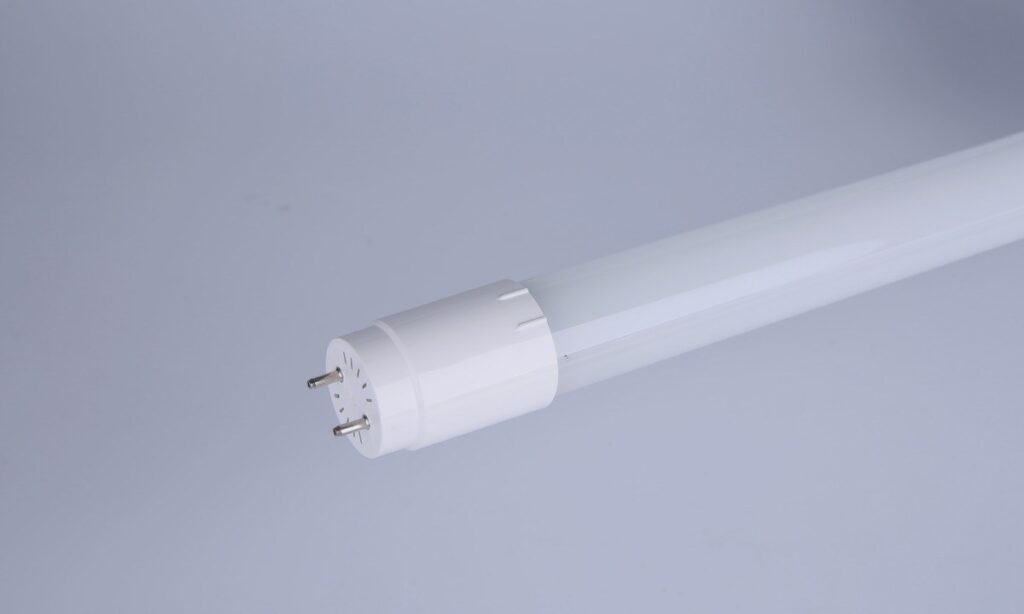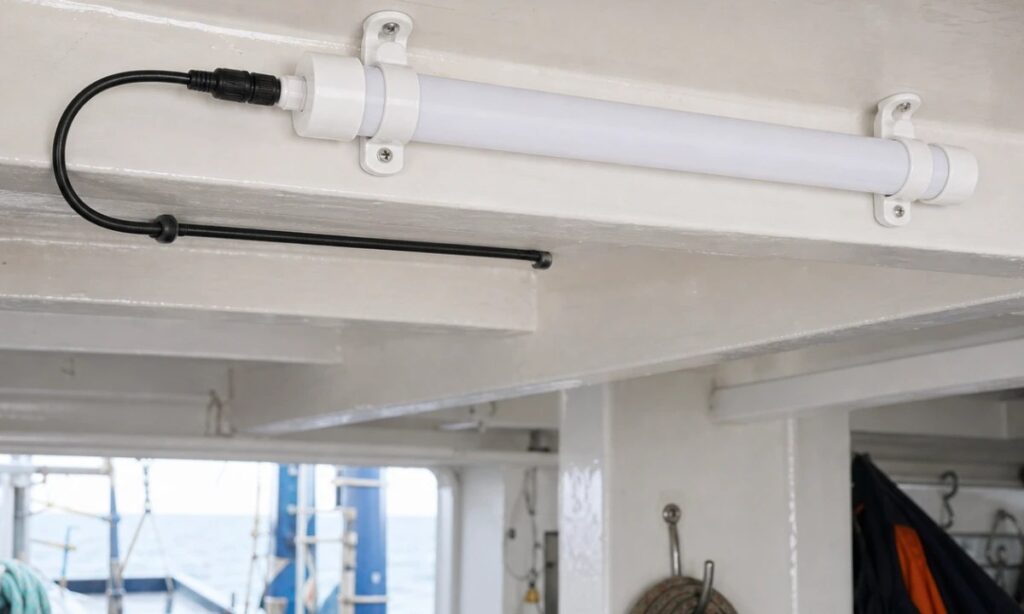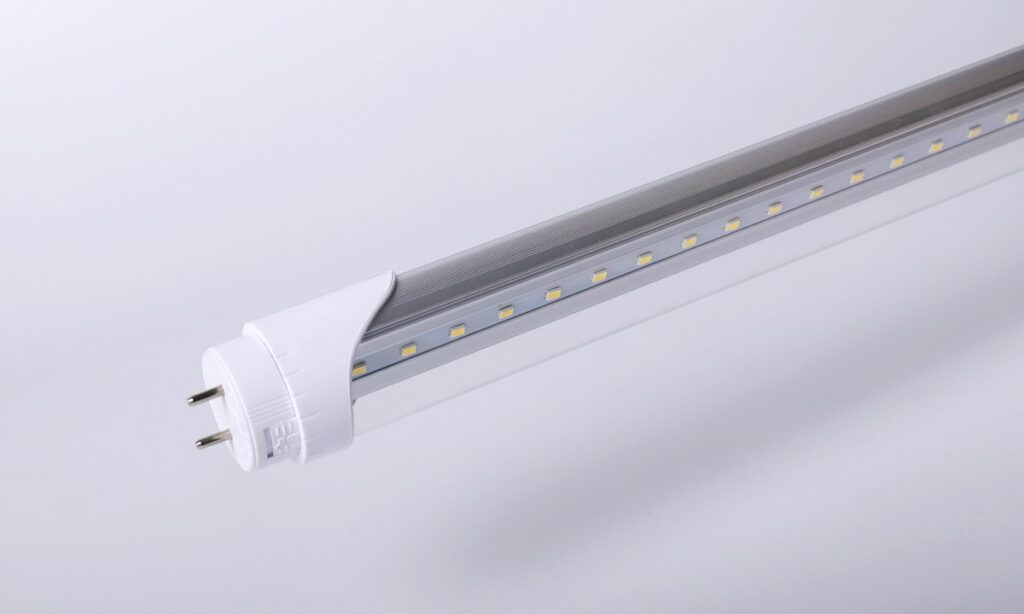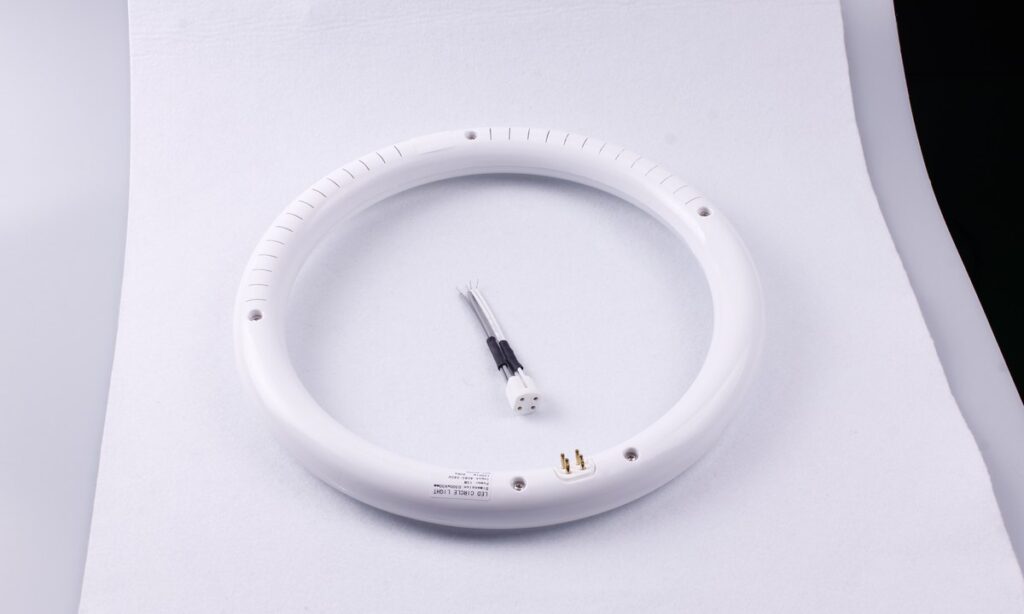


T5 and T8 LED tubes are not simply thin and thick versions of the same lamp. The names describe tube-size families, but a successful replacement also depends on length, base, lamp holders, existing control gear, wiring architecture, fixture condition and the exact instructions for the proposed LED tube.
This is why the question “Is T5 or T8 better?” is usually too broad. The better question is: “Which identified LED tube and operating method match this fixture, application and market?”
This guide compares the two families and provides a practical survey workflow for retrofit buyers. Model-specific instructions and qualified electrical work govern the final installation.
What Do T5 and T8 Mean?
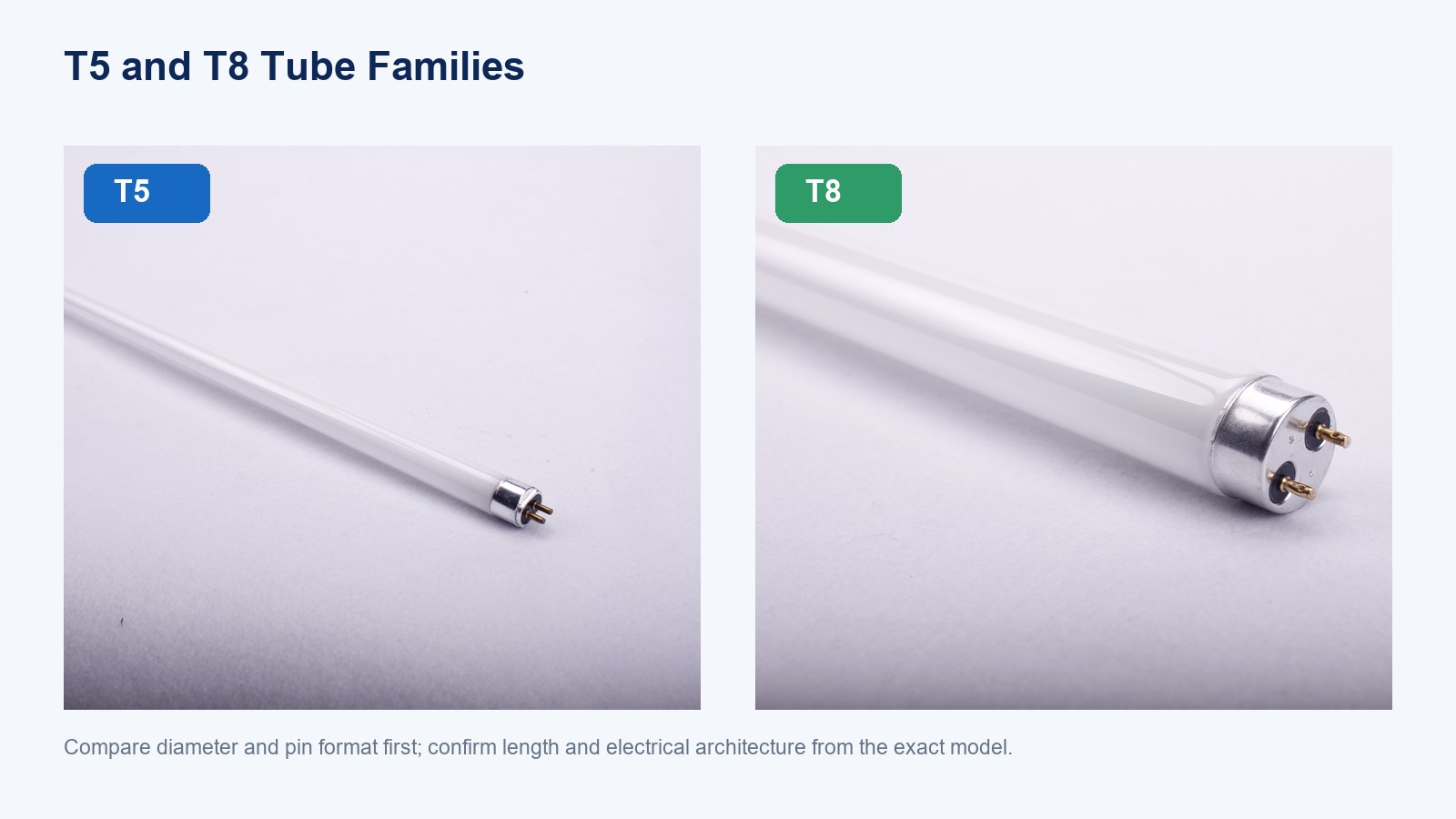
The T stands for tubular. The number historically represents the tube diameter in eighths of an inch. T5 is five-eighths of an inch, approximately 16 mm. T8 is eight-eighths of an inch, approximately one inch or 26 mm in common technical literature.
Diameter is the most visible difference, while length, base and electrical requirements remain separate selection fields. T5 fluorescent families commonly use a G5 miniature bi-pin base, while many common T8 fluorescent lamps use a larger medium bi-pin arrangement. Exact products and regional variants must still be checked.
The designation also does not describe LED wiring. A T8-shaped LED tube may be designed for a compatible fluorescent ballast, direct line voltage, a hybrid of those methods or a dedicated external LED driver. T5 LED replacements can likewise be offered for different systems.
T5 and T8 at a Glance
| Comparison point | T5 family | T8 family | What the buyer must verify |
|---|---|---|---|
| Nominal tube diameter | About 16 mm | About 26 mm | Exact product drawing |
| Common legacy base example | G5 miniature bi-pin | Medium bi-pin is common | Base and lamp-holder marking |
| Family variants | Includes HE, HO and other variants | Includes multiple lengths, outputs and architectures | Full legacy lamp code |
| LED operating method | May be ballast-compatible, direct-wire or another defined system | May be Type A, B, A+B, C or market equivalent | Exact model instructions |
| Physical interchangeability | Not assumed | Not assumed | Length, pin spacing, holder and fixture geometry |
| Electrical interchangeability | Not assumed | Not assumed | Ballast/driver, wiring, supply and controls |
The table is a survey aid, not an interchangeability chart. A compatible replacement must be established from the complete lamp and fixture evidence. Buyers comparing available formats can begin with the New Lights LED tube range and then match the exact product documentation to the surveyed system.
Difference 1: Diameter and Fixture Geometry
T5 tubes have a smaller diameter than T8 tubes. This can support compact fixture designs and changes the relationship between the source, reflector, lens and lamp holder. A tube that is physically slimmer is not automatically able to sit correctly in a fixture designed around another family.
Check the distance between holders, pin geometry, available space, reflector clearance and any protective lens. If an adaptor or holder replacement is proposed, it becomes part of the retrofit design and must be covered by the instructions and approvals for the system.
Fixture optics also matter. A tube’s light-emitting surface and distribution can interact differently with a reflector designed for a fluorescent lamp. The LED tube may emit over a limited portion of its circumference rather than in all directions. Physical fit therefore does not guarantee equivalent room distribution.
Difference 2: Length Is Not Determined by “T” Number
Neither T5 nor T8 identifies one universal length. Both families include several lengths, and nominal descriptions can hide important differences in overall dimensions or pin-to-pin spacing.
Record the complete code printed on the existing lamp and measure only as a cross-check. Do not order from a statement such as “four-foot tube” without verifying the manufacturer’s dimensional drawing. A nominally similar product may not engage the holders correctly or may correspond to a different legacy wattage family. The same evidence-first process is covered in the LED lighting sample evaluation checklist.
For T5 systems, distinguish high-efficiency and high-output variants where relevant. They can share the same basic diameter while differing in lamp code, output and control-gear requirements. The letters and numbers after T5 or T8 are part of the identity, not optional details.
Difference 3: Base and Lamp Holders
The lamp base establishes mechanical positioning and electrical contact. Common T5 and T8 fluorescent families use different bi-pin formats, so one should not be inserted into the other’s holder.
For LED retrofits, the holder condition and internal connection can also matter. Some direct-wire products require a particular shunted or non-shunted configuration. Some receive power at one end; others use opposite ends. These terms describe electrical architectures, not visual features.
Do not infer the holder’s wiring from appearance. The fixture must be inspected with power isolated, and the exact LED tube instructions must define the permitted configuration. Damaged, brittle, overheated or loose holders should be addressed as part of the retrofit rather than hidden by a new lamp.
Difference 4: Existing Ballast or Control Gear
Legacy fluorescent fixtures use ballasts matched to lamp type and operating method. A T5 ballast is not simply a smaller T8 ballast, and the label must be recorded. Age, model, start method, lamp count and wiring configuration can all affect a ballast-compatible LED proposal.
For plug-and-play or ballast-compatible LED tubes, verify the exact ballast model against the current lamp manufacturer’s compatibility list. LEDVANCE guidance, for example, distinguishes between an unevaluated blank entry and an incompatible entry and recommends testing representative fixtures even when a ballast is listed.
That representative test matters because a facility may contain several ballast revisions under visually identical fixtures. An inventory should count each relevant ballast and fixture configuration rather than assuming one sample describes the building.
Difference 5: LED Retrofit Architecture
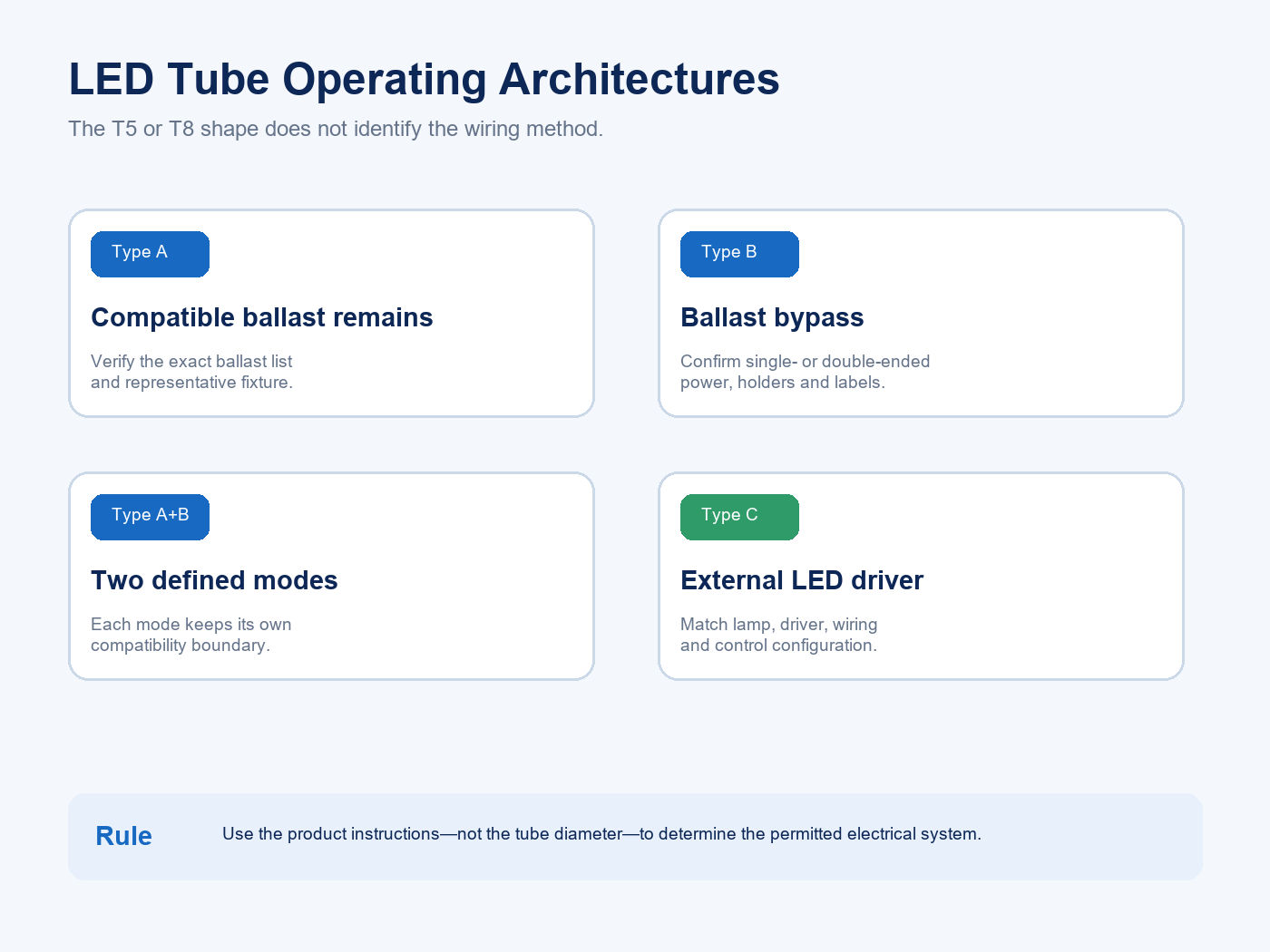
North American literature commonly describes linear LED replacement architectures as Type A, Type B, Type A+B and Type C. Other markets may use different terminology, so follow the exact product and local requirements.
Ballast-compatible or Type A
The LED tube operates on a listed compatible fluorescent ballast. Installation can be comparatively simple when the existing system is suitable, but the ballast remains a system component. Its compatibility, condition, losses and future maintenance remain relevant.
Ballast-bypass or Type B
The fluorescent ballast is removed or disconnected and the LED tube operates from the specified supply arrangement. Single-ended and double-ended products have different holder and wiring requirements. A Type B label does not reveal which arrangement applies.
Rewiring changes the fixture and must follow the product instructions, required labels and applicable electrical rules. It should be performed by qualified personnel.
Hybrid or Type A+B
A hybrid product may operate first with a compatible ballast and later in a defined direct-wire configuration. This can offer flexibility, but both modes still have model-specific requirements. “Hybrid” does not mean it works with every ballast and every line-voltage arrangement.
External-driver or Type C
The fluorescent ballast is replaced by a compatible LED driver that powers one or more LED tubes. This architecture can support a deliberately matched system and controls, but driver, lamp, wiring and configuration must be approved together.
Difference 6: Output and Distribution
Comparing the old fluorescent lamp wattage with the LED tube wattage does not establish equivalent lighting. Review delivered output, distribution, fixture interaction and the application’s lighting criteria.
An LED tube with a directional emitting surface may place more of its output toward the occupied space, but results depend on orientation and fixture design. Rotatable end caps or adjustable lamp positions may be relevant for some models. In a lensed troffer, open strip, high-bay or sign, the same tube can interact differently with the fixture.
Where lighting levels, uniformity or glare matter, use model-specific photometric information or a representative mock-up. Do not promise a universal one-for-one replacement based only on lumens. The broader LED tube versus fluorescent tube comparison explains why the complete operating system matters alongside lamp format.
Difference 7: Thermal and Enclosure Conditions
LED tubes contain electronic components whose operating temperature is affected by the fixture and environment. Verify whether the tube is permitted in enclosed or sealed luminaires, cold spaces, damp locations or other relevant conditions.
The old fixture may trap heat, restrict airflow or contain deteriorated wiring. A retrofit survey should assess the complete assembly, not only the lamp. If the environment exceeds the tube’s allowed range, choosing T5 instead of T8—or vice versa—does not solve the underlying mismatch.
Difference 8: Controls and Emergency Systems
Dimming, sensors and emergency functions require explicit compatibility. A ballast-compatible lamp may behave differently with a dimming ballast than with a standard ballast. A direct-wire lamp may require a specified control or emergency arrangement.
Identify every fixture connected to occupancy sensors, daylight controls, dimmers or emergency circuits. Ask for system documentation covering the proposed lamp, ballast or driver and control device. Do not assume that a product’s basic switching performance proves compatibility with the control system.
A Fixture Survey Before Choosing T5 or T8
For each fixture type, record:
- fixture manufacturer and model if available;
- existing lamp’s complete code;
- lamp quantity and length;
- base and holder type;
- ballast or driver manufacturer, model and age where known;
- supply voltage and frequency;
- wiring and start method as identified by qualified personnel;
- controls or emergency functions;
- fixture condition, lens and reflector;
- installation environment;
- required lighting result;
- quantity of each distinct configuration.
Photograph labels and wiring compartments without exposing credentials or unrelated information. Group identical configurations, but keep exceptions separate. This survey becomes the basis for a supplier’s compatibility review and pilot plan.
| Survey item | Evidence to capture | Decision it supports | Stop condition |
|---|---|---|---|
| Existing lamp | Full lamp code, base, overall length and pin spacing | T5 or T8 family and physical candidate | Marking is missing or dimensions conflict |
| Control gear | Ballast or driver maker, model, lamp count and wiring diagram | Type A or Type C compatibility review | Exact model is absent from approved documentation |
| Lamp holders | Holder type, condition, shunted status and internal wiring | Type B power-entry and holder requirements | Holder condition or wiring cannot be confirmed |
| Fixture | Manufacturer, model, reflector, lens and available clearance | Physical fit and optical interaction | Tube or adaptor interferes with the fixture |
| Circuit and controls | Supply, dimming, sensors and emergency function | Electrical and control-system compatibility | Proposed tube lacks system documentation |
| Pilot result | Installation record, input power, illuminance and observed behavior | Release or revise the rollout specification | Result differs from the acceptance criteria |

How to Decide Between T5 and T8 LED Tubes
For an existing fixture
Start from the existing system. If it is a T5 fixture, look for an LED solution explicitly designed for that T5 lamp family, length, base and operating architecture. Do the same for T8. Changing from one physical family to another may require holder, geometry and approval changes that make a complete luminaire replacement more appropriate.
For a new fixture
Do not choose a tube family in isolation. Compare the complete luminaire: distribution, efficiency, controls, serviceability, replacement strategy, compliance and total project cost. A tube-ready design may be useful when replaceability is important, while an integrated luminaire may offer different optical or control options.
For a mixed facility
Avoid one blanket purchase order. Segment the inventory by lamp, ballast, fixture and control configuration. Pilot each material configuration or use a replacement strategy supported by verified coverage. Maintain labels and records so future maintenance teams know how each fixture was converted. For overseas programs, the LED tube and fixture sourcing guide adds supplier-document and sample-control steps.
Questions for the Supplier
Ask the supplier to provide:
- exact LED tube model and drawing;
- supported legacy lamp family and length;
- base and holder requirements;
- operating architecture and power-entry method;
- current ballast compatibility list where applicable;
- installation instructions and retrofit labels;
- supply and control limitations;
- environmental and enclosure conditions;
- output, distribution and photometric evidence;
- test and compliance documents for the target market;
- sample coverage and production change-control process.
The response should preserve a clear mapping between every model and its evidence. A general T5/T8 brochure is not enough for a facility with several configurations. Drawings, instructions and supporting files can also be organized through the New Lights download center.
Frequently Asked Questions
Can a T5 LED tube replace a T8 tube directly?
Do not assume so. The families differ in diameter and commonly in base, holder and fixture geometry. Length and electrical architecture also require verification. Use a product specifically documented for the existing fixture or redesign the system through a qualified process.
Is T5 brighter than T8?
The designation does not determine brightness. Both families contain different products and outputs. Compare the exact luminaire result, not only tube diameter or legacy family name.
Can I keep the existing ballast?
Only with an LED tube designed for ballast operation and when the exact ballast is listed or otherwise approved by the lamp manufacturer. Check condition and test representative fixtures. Other LED tube architectures require a different system.
Is ballast bypass always the best option?
No. It removes ballast compatibility from the operating system but requires fixture modification, correct holders and wiring, labels, qualified installation and market-specific compliance. Compare safety, maintenance, controls and lifecycle implications for the project.
Should T5 and T8 tubes be mixed in one project?
A facility may legitimately contain both, but each configuration should have controlled replacement records. Do not mix lamps on a shared ballast or within a fixture unless the exact product instructions permit it.
Compatibility Comes Before the Tube Name
T5 is approximately 16 mm in diameter and T8 approximately 26 mm, but that visible difference is only the beginning. A reliable retrofit matches the complete identity: length, base, holder, ballast or driver, wiring architecture, controls, fixture, environment and target lighting result.
For a bounded review, provide lamp codes, ballast labels, fixture photos, supply, controls, quantities and destination-market requirements when you contact New Lights.
—
Editorial Sources
- Philips Lighting, “Technical Application Guide: Fluorescent Gear”: https://www.docs.lighting.philips.com/en_gb/oem/download/Technical_Application_Guide_Fluorescent_Gear.pdf
- Philips Lighting, “LEDtube Type A T5”: https://www.usa.lighting.philips.com/consumer/p/led-ledtube-type-a-t5/046677542429
- Philips Lighting, “LEDtube Type A T8 Specifications”: https://www.usa.lighting.philips.com/consumer/p/led-ledtube-type-a-t8/046677542108/specifications
- LEDVANCE, “LED Tubes Product Information Guide”: https://assets3.ledvanceus.com/media/resource/original/asset-13241728
- LEDVANCE, “Ballast Compatibility Guide”: https://assets3.ledvanceus.com/media/resource/original/asset-13120050