


 English
 Español
 Deutsch
We sincerely look forward to establishing a long-term development partnership with you with good quality and professional services.

In commercial lighting, the decision is rarely about one number. Buyers usually need to balance glare, color quality, driver performance, and project fit.
A lot of commercial lighting RFQs look straightforward until the specification sheet starts to pile up. One project asks for low glare. Another asks for CRI 90. Another says flicker-free, DALI, emergency option, and stable batch supply. On paper, each request sounds reasonable. In practice, not every space needs all three performance points pushed to the highest level, and not every supplier uses these terms with the same discipline.
That is where many buyers lose time. They are not only comparing luminaires. They are trying to reduce complaint risk, avoid installation surprises, protect repeat-order consistency, and make sure the product still works once it leaves the lab and enters a real office, school, retail floor, or chain-store rollout. UGR, CRI, and flicker performance matter, but they matter for different reasons. UGR is about discomfort glare, CRI is still widely used for color rendering even as the industry moves toward more complete color-quality metrics, and temporal light performance is increasingly expressed with measurable values such as Pst LM and SVM rather than a vague "flicker-free" claim.
Why These Three Terms Have Become More Important in LED Projects
In the fluorescent era, many projects were less demanding in how they compared optical behavior, spectral performance, and driver output. In LED lighting, that is no longer the case. Two products can have similar wattage, similar CCT, and even similar lumen output, yet behave very differently once they are installed. That is partly because LED systems allow much more freedom in spectral design and optical design, which is why older single-number thinking does not always tell the full story anymore. The CIE now recommends moving toward the General Colour Fidelity Index Rf while also acknowledging that Ra remains widely used in regulations and specifications, and the IES says specifications based only on average color fidelity should be reconsidered when more complete methods such as TM-30 are available.
For B2B buyers, this shift matters in a practical way. A product that looks acceptable in a sample room can still create problems after rollout if the diffuser, optics, LED package, and driver were not selected as a system. That is why experienced buyers no longer treat UGR, CRI, and flicker as decorative spec-sheet language. They treat them as clues about application fit and supply quality.
UGR: The Number Buyers Use to Protect Visual Comfort
UGR stands for Unified Glare Rating. The IES defines it as a measure of discomfort produced by a lighting system, and the IES also supports guidance explaining the proper uses and common misuses of UGR. That distinction matters. UGR is not a magic number attached to a luminaire forever. It is tied to the lighting system, the room assumptions, the observer position, and the installation context. LightingEurope likewise notes that the appropriate UGR should be used according to EN 12464-1 and that it should be calculated for overall visual comfort in the room.

In screen-based workspaces, glare control is often more important than pushing a single headline specification as high as possible.
This is why UGR matters most in spaces where people stay under the light for long periods and perform visual tasks repeatedly. Offices, schools, meeting rooms, healthcare administration areas, and training spaces all fall into this category. In these environments, glare complaints do not usually show up on day one as a formal defect. They show up later as eye fatigue, screen discomfort, poor visual acceptance, or tenant feedback. From a procurement perspective, that makes glare a risk-control issue, not just a lighting-design issue.
A common mistake is to compare one product labeled "UGR compliant" with another and assume the decision is finished. It is not. Buyers should ask how that UGR claim was derived, whether the product is intended for recessed, suspended, or surface installation, and whether the optical control still works at the actual mounting height and spacing of the project. A low-glare office panel and a general back-lit panel are not interchangeable just because both fit the same ceiling grid.
CRI: Still Useful, But Not Enough on Its Own
CRI remains one of the most familiar metrics in lighting procurement because it is easy to understand and still widely used in standards and specifications. The CIE's latest position statement says exactly that: Ra is still widely used, even while the industry should actively move toward Rf. The same statement also notes that color fidelity alone does not cover all aspects of color quality. The IES makes the same point from another direction: TM-30 provides a more complete method, and using only average color fidelity should be reevaluated case by case.
For commercial buyers, that leads to a more practical rule: CRI is a screening tool, not the whole decision. In many office, circulation, utility, and general commercial projects, CRI 80 is a workable baseline. That is consistent with broad market requirements as well. EU ecodesign rules set CRI ≥ 80 for most light sources, subject to listed exceptions, and ENERGY STAR specifications have long used Ra ≥ 80 as a common threshold in general-lighting categories.
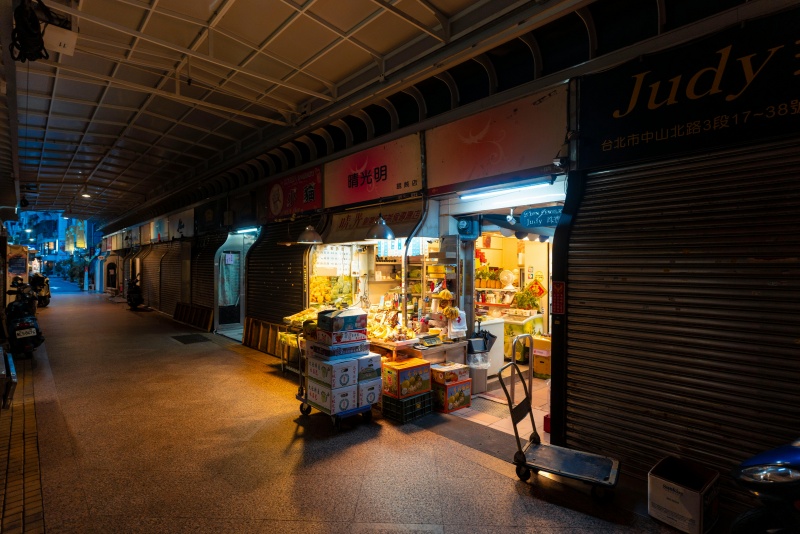
In retail and display spaces, color rendering affects how finishes, merchandise, and packaging are perceived at first glance.
But once the project moves into retail display, premium commercial interiors, showrooms, hospitality, or spaces where material color really influences perception, CRI 80 may not be enough. That is where buyers should look beyond the headline CRI and ask for R9, sample evaluation, or TM-30 data if the application justifies it. A merchandising zone, cosmetic display, branded interior, or decorative commercial space often needs a more careful color decision than a corridor, stair area, or warehouse aisle.
There is another commercial reality here: moving to higher color quality often affects efficacy, heat, cost, and sometimes lead time. So the right question is not "Is CRI 90 better?" The better question is, "Does this zone earn the extra cost and trade-off?"
Flicker-Free: Usually a Driver Question Disguised as a Marketing Phrase
This is the area where many spec sheets become vague. "Flicker-free" sounds reassuring, but serious buyers should treat it as an invitation to ask for data. EU ecodesign rules define flicker and stroboscopic effect with measurable metrics. In that framework, Pst LM is the flicker metric, where a value of 1 means a 50% probability of detection for the average observer, and SVM is the stroboscopic visibility metric, where 1 is the visibility threshold. The same regulation sets Pst LM ≤ 1.0 and SVM ≤ 0.4 at full load for covered LED and OLED light sources.
From a project standpoint, flicker performance matters in more places than many buyers expect. It affects long-stay office comfort, education spaces, healthcare interiors, camera-facing environments, dimming behavior, and the overall impression of product stability. LightingEurope also points out that good lighting quality includes the absence of flicker and stroboscopic effect, and stresses compatibility between LED products, drivers, and controls.
So when a supplier says "flicker-free," the useful follow-up is not "Good, next question." The useful follow-up is: Can you share Pst LM and SVM? Which driver is used? What happens under dimming? Is the result stable across the production batch?
What Buyers Should Really Compare
| What appears on the RFQ | What it really affects | What buyers should ask | Common mistake |
| UGR | Visual comfort, glare acceptance, complaint risk in task areas | Was the value based on realistic room assumptions? What mounting method and spacing was used? | Treating UGR as a fixed luminaire label rather than an installation-related result |
| CRI | Color fidelity, material appearance, merchandising quality | Is CRI 80 enough here, or does this zone justify CRI 90 plus R9 or TM-30 review? | Applying premium color specs to every zone without checking business value |
| Flicker-Free | Driver stability, visual comfort, dimming quality, camera behavior | Can the supplier provide Pst LM, SVM, driver details, and dimming compatibility? | Accepting "flicker-free" as a slogan with no measurable support |
| Same housing, same wattage, same CCT | Often not the same project performance | Are optics, diffuser, chips, and driver the same as the approved sample? | Assuming look-alike products will behave alike in a rollout |
Standard Product vs Project-Tuned Product
Not every project needs a custom luminaire, but many projects do need a project-tuned version of a standard platform. A distributor selling into mixed channels may prefer one stable, standard model. A chain-store rollout may need tighter optical consistency. A school project may care more about glare and maintenance access. A healthcare or office project may need dimming, emergency backup, or a market-specific compliance package.
That is usually where the most experienced manufacturers are useful. They do not start by selling customization for its own sake. They start by checking whether the standard product already solves the real application. At New Lights, we often help clients decide whether a standard panel or linear fixture is enough, or whether the project needs a different diffuser, driver, dimming option, mounting structure, or certification path before the order is approved. New Lights describes itself as an ISO 9001-certified OEM/ODM manufacturer with over 28 years of experience and supply support for multiple channels and overseas markets.
That kind of judgment matters because procurement risk rarely comes from one spec point alone. It usually comes from mismatch: the wrong glare control in an office, the wrong color level in display zones, the wrong driver in a dimming project, or the wrong assumption that the second order will behave exactly like the first sample.
Buyers do not usually regret asking one more technical question before approval. They regret discovering after installation that the headline spec did not describe the real-use result.
Pro Tip: 3 Questions to Ask Before You Approve a Lighting Model
- Which zone is this specification really for?
A low-glare requirement written for an office should not automatically be copied into every utility room, and a high-CRI display requirement should not automatically be applied to every circulation area. - What data supports the marketing words?
Ask for the basis of the UGR claim, the CRI level plus any relevant supporting metrics, and measurable flicker data such as Pst LM and SVM. - Can this performance be repeated at scale?
A good sample is not enough. Repeat-order consistency, driver stability, optical consistency, and documentation discipline matter much more once the project expands.
FAQ
Q1: What should buyers check first: UGR, CRI, or flicker-free?
Start with the application. If the project is screen-based or visually demanding, glare control often deserves early attention. If product appearance matters, color quality moves up the list. If the project includes dimming, cameras, or long-stay occupancy, flicker performance should be checked early rather than treated as an afterthought.
Q2: Does a low UGR value always mean the product is right for offices?
No. UGR claims need context. Buyers should check the installation assumptions, mounting height, room layout, and optical design rather than reading the number as a universal promise.
Q3: Is CRI 90 always better than CRI 80?
Not necessarily. CRI 90 can make sense in retail, premium interiors, and merchandise-focused zones. In many general commercial areas, CRI 80 is commercially reasonable and easier to balance with efficacy and cost.
Q4: How should buyers verify a "flicker-free" claim?
Ask for measurable data, especially Pst LM and SVM, and confirm the driver setup and dimming compatibility. That tells you much more than a brochure phrase.
Q5: Why do two lights with similar wattage and CCT perform differently in a project?
Because wattage and CCT do not describe everything. Optics, diffuser design, LED package, driver quality, and the intended application all affect the final result.
Q6: When should buyers request custom or project-based versions?
When the application has special demands such as low glare, specific controls, emergency function, market-specific certification, or tighter consistency across repeated batches and locations.
Q7: What is the biggest mistake in commercial lighting comparison?
Comparing only headline numbers. Good purchasing decisions usually come from matching the specification to the actual zone, user behavior, and maintenance reality of the project.
If you are comparing commercial lighting for offices, schools, retail spaces, or project supply, talk to New Lights about the application first, not just the datasheet headline. We can help you review low-glare options, color-quality priorities, driver and dimming compatibility, OEM/ODM requirements, and market-specific certification needs before you lock in the model.
Explore our commercial lighting range, OEM/ODM support, certification capabilities, or contact our team to discuss your project.
 GET IN TOUCH


