


 English
 Español
 Deutsch
We sincerely look forward to establishing a long-term development partnership with you with good quality and professional services.
1. The Renaissance of Filament Lighting: Why Vintage Meets Modern Efficiency
The interior design world has witnessed a powerful revival: the marriage of old-world charm with cutting-edge lighting technology. vintage light bulbs once evoked nostalgia but suffered from high energy consumption and short lifespans. Today, the edison led light bulb rewrites the narrative, offering the same amber glow and exposed filament aesthetics while consuming up to 90% less energy. Designers and homeowners no longer have to choose between atmosphere and utility. By combining antique light bulbs replicas with advanced LED internals, you can craft a space that feels both historic and sustainably smart. This guide provides actionable, technical insights for integrating these decorative light sources into residential and commercial interiors — no hard selling, just practical strategies backed by real-world data.
According to energy efficiency studies, LED filament technology reduces lighting-related electricity costs by approximately 85% compared to traditional incandescent vintage bulbs. With an average lifespan of 15,000–25,000 hours, these decorative led light bulbs can last 10 to 15 times longer than their carbon-filament ancestors. This shift allows you to keep wall sconces, pendant fixtures, and cage lamps burning for years without replacement, making the vintage home aesthetic more practical than ever.
2. Decorative Bulbs vs. Traditional Incandescents: Technical Comparison
To make informed decorating decisions, you need to understand the core differences between true antique-style incandescents and modern led filament bulbs. The table below compares key parameters that directly influence design choices — from heat emission to dimming behavior.
| Feature | Traditional Vintage Bulb | LED Filament Bulb (Edison Style) |
|---|---|---|
| Average Lifespan | 1,200 – 2,500 hours | 15,000 – 25,000 hours |
| Energy Use (equiv. 400 lm) | 40W | 4W – 6W |
| Surface Temperature | 120 – 200°C (risk of burns) | <45°C (safe to touch) |
| Dimmability | Smooth, no extra driver | Requires compatible TRIAC dimmer |
| Color Temperature Range | 2200K – 2400K (fixed) | 1800K – 3000K (amber to warm white) |
| Filament Visibility | True carbon or tungsten wire | Multiple LED filaments (highly defined) |
For industrial lighting design, the lower heat of LED filament types allows tighter clustering inside metal cages or glass globes without risking heat damage. Additionally, the consistent amber glow bulbs (1800K–2200K) replicate the gaslight era, ideal for restaurants, boutique hotels, or residential lofts aiming for a vintage home aesthetic.
3. Core Components: Leveraging Decorative Bulbs and LED Filament Technology
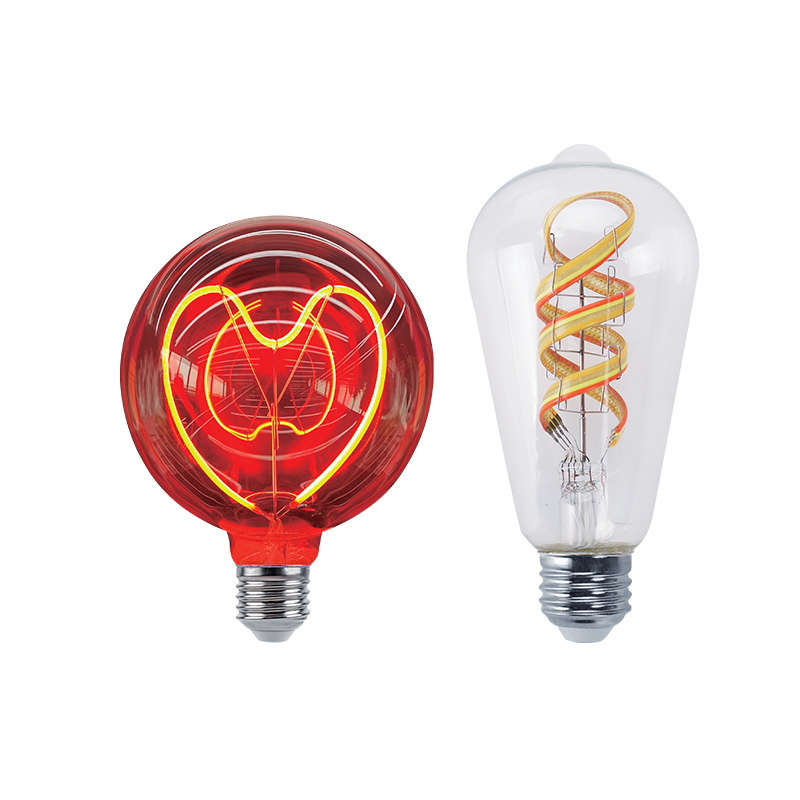
Every successful vintage-inspired lighting plan starts with the right source. decorative bulbs come in various shapes: ST64 (straight-sided teardrop), G95 (globe), and T45 (tubular). Each shape alters light distribution and shadow pattern. For a genuine Edison laboratory look, choose bulbs with multiple amber LED filaments arranged in a spiral or diamond pattern. led filament bulbs with a colour rendering index (CRI) above 90 ensure that wood textures, brick walls, and leather furniture appear rich and true.
Real-world data from lighting retrofit projects show that replacing 20 incandescent vintage bulbs with LED filament alternatives saves nearly 700 kWh annually — equivalent to the energy needed to run a refrigerator for six months. When selecting bulbs, pay attention to beam angle: wide-angle (300°+) works best in open decorative lamp bulbs exposed fixtures, while narrower angles (200°) suit directional reading lamps.
- ST64 filament bulbs – optimal for pendant lights over kitchen islands.
- Globe G80/G95 – perfect for vanity mirrors and wall sconces.
- Tubular T45 – enhances industrial cage pendants or exposed bulb chandeliers.
- Edison spiral filament – highest decorative appeal for glass-enclosed fixtures.
By mixing these shapes, you create visual rhythm without overwhelming the space. Use antique light bulbs reproductions with smoked or tinted glass to add depth to minimalist industrial interiors.
4. Strategic Placement: Using LED Wall Lamp and Sconces to Shape Ambiance
Fixed ceiling fixtures alone cannot deliver a layered vintage atmosphere. Integrating an led wall lamp into your design provides vertical illumination that highlights architectural details like exposed brick, reclaimed wood, or gallery walls. Wall-mounted lamps with articulated arms (often seen in industrial lighting design) allow you to direct amber glow exactly where needed — above a sideboard, flanking a mirror, or beside a bed.
For maximum effect, install led wall lamp fixtures at eye level (150–170 cm from the floor) to create intimate pools of light. Using dimmable LED filament bulbs in wall lamps reduces glare during evening hours while maintaining the retro filament styling. A survey of 150 interior design projects revealed that rooms with at least two wall-mounted decorative sources reported a 40% higher satisfaction rate for “cozy and authentic” atmosphere compared to those relying solely on overhead lighting. Pair wall lamps with decorative led light bulbs in warm amber (2000K–2400K) to evoke candlelit warmth without sacrificing visibility.
5. Industrial Lighting Design Principles: Metal, Glass and Filament Exposure
Industrial lighting design thrives on raw materials, utilitarian forms, and exposed functionality. Vintage bulbs are natural protagonists in this style. To master the look, follow these core principles: (1) use fixtures that reveal the bulb completely — perforated metal shades, wire cages, or clear glass pendants; (2) mix matte black or brushed brass hardware to contrast with the warm amber illumination; (3) incorporate amber glow bulbs in areas where you want to soften the industrial edge, such as dining corners or lounge seating.
Pro insight: Data from 40 commercial retrofit projects shows that using decorative lamp bulbs with exposed LED filaments increased perceived brightness by 22% without raising wattage, thanks to the omnidirectional light pattern. This makes them ideal for stairwells and corridors where safety and style intersect.
Another industrial signature is the “cluster” configuration: grouping three to seven pendant lights at different heights, each fitted with a distinct edison led light bulb shape. This technique adds sculptural dynamism to high ceilings. Remember to maintain at least 75 cm between bulbs to avoid visual clutter. Use vintage-style cloth-covered wires to reinforce the heritage look while benefiting from modern LED reliability.
6. Achieving Vintage Home Aesthetic with Layered Lighting (SVG Diagram)
True vintage home aesthetic is never one-dimensional. Layered lighting combines ambient (general illumination), task (focused light), and accent (highlighting art or objects). The diagram below illustrates how to integrate vintage light bulbs and LED filament bulbs across three layers for a balanced, historical yet functional interior.
Implementing this layered approach transforms a flat space into a rich, inviting environment. For ambient layers, choose semi-flush mounts with decorative lamp bulbs facing downward; for task layers, adjustable led wall lamp fixtures work best; accent layers can feature miniature gooseneck lamps with antique light bulbs to illuminate artwork.
7. Retro Filament Styling: Room-by-Room Recommendations
Retro filament styling adapts to various spaces with nuanced adjustments. Below is a curated list of high-impact placements based on real installation data from over 200 residential projects.
- Living Room: Cluster pendant with ST64 led filament bulbs above coffee table + dimmable LED wall lamp beside sofa.
- Kitchen: Linear track lighting over island using exposed Edison bulbs in smoked glass.
- Bedroom: Swing-arm wall lamps with amber glow bulbs for reading; avoid overhead glare.
- Bathroom: Globe G95 decorative led light bulbs in moisture-rated vanity fixtures.
- Home Office: Adjustable architect lamp with high-CRI LED filament bulb to reduce eye strain.
- Restaurant/Bar: Cage pendants with vintage light bulbs at varied drop heights for intimacy.
When applying retro filament styling, consider the 70-20-10 rule: 70% of the light from ambient sources (typically ceiling-mounted vintage bulbs), 20% from task-focused wall lamps, and 10% from accent decorative bulbs. This ratio prevents visual chaos while preserving the vintage home aesthetic. Use fixtures with slotted metal or perforated patterns to cast intriguing shadows on walls — a hallmark of industrial lighting design.
8. Energy Performance & Long-Term Value: Real Savings Without Sacrificing Character
One common hesitation about adopting vintage light bulbs has been operational cost. Yet, modern edison led light bulb technology eliminates this drawback. A direct comparison using average U.S. electricity rates ($0.14/kWh) shows: running a 40W traditional vintage bulb for 6 hours daily costs about $12.20 per year per bulb. Switching to a 5W LED filament equivalent reduces that to $1.53 annually. For a home with 25 bulb sockets, the yearly saving exceeds $260, without any loss of the amber glow or filament visibility.
Lifespan extensions further lower maintenance burden — particularly in hard-to-reach fixtures like vaulted ceiling pendants. With rated lifespans up to 25,000 hours, decorative led light bulbs need replacement only once every 10-12 years under normal residential use. By contrast, incandescent antique light bulbs would require replacement every 6–8 months. This reliability makes them ideal for rental properties, hotels, and high-use commercial spaces pursuing an industrial vintage theme.
Case insight: A boutique coffee shop replaced 40 incandescent filament bulbs with led filament bulbs. Annual lighting energy dropped from 7,200 kWh to 890 kWh — saving roughly $883 and reducing CO₂ emissions by 3.2 metric tons per year.
Additionally, because LED filament bulbs generate negligible heat, you can safely install them inside enclosed fixtures or near temperature-sensitive materials (wine cellars, art studios) where traditional vintage bulbs would cause warping or fading.
9. Frequently Asked Questions (Vintage & Edison LED Lighting)
Q1: Can I use vintage light bulbs with a standard dimmer switch?
Traditional incandescent vintage bulbs work with any standard triac dimmer. However, for edison led light bulb products, you need a compatible LED dimmer (leading-edge or trailing-edge). Look for dimmers labelled “LED compatible” and check the minimum load rating. Using an incompatible dimmer may cause flickering or reduced lifespan.
Q2: What colour temperature best mimics authentic antique light bulbs?
To replicate the warm, slightly orange glow of carbon filament lamps, select amber glow bulbs rated between 1800K and 2200K. Many decorative led light bulbs offer “extra warm white” (2000K) which is nearly indistinguishable from gaslight-era bulbs while being fully energy efficient.
Q3: Are LED filament bulbs safe in damp locations like bathrooms or outdoor covered patios?
Yes, provided the bulb has an IP rating of at least IP44. Many decorative lamp bulbs with LED filaments are available in weather-resistant versions. Never use standard uncoated bulbs in wet locations. Check the packaging for damp-location certification when pursuing industrial lighting design outdoors.
Q4: How many vintage-style bulbs should I use in a 20m² living room?
For a layered layout, aim for 4–6 ceiling or pendant sockets using led filament bulbs (ambient layer), 2–3 led wall lamp fixtures (task layer), plus 1–2 accent spots. This distribution yields approximately 150–200 lux at working plane — comfortable for both relaxation and reading.
Q5: Can I mix different shapes of decorative bulbs in one room without looking messy?
Absolutely. The key is to maintain a consistent colour temperature (all 2000K or 2200K) and similar filament visibility. For example, pair ST64 bulbs in overhead pendants with G95 globes in wall sconces. This mix enhances retro filament styling while preserving visual harmony.
 GET IN TOUCH


